
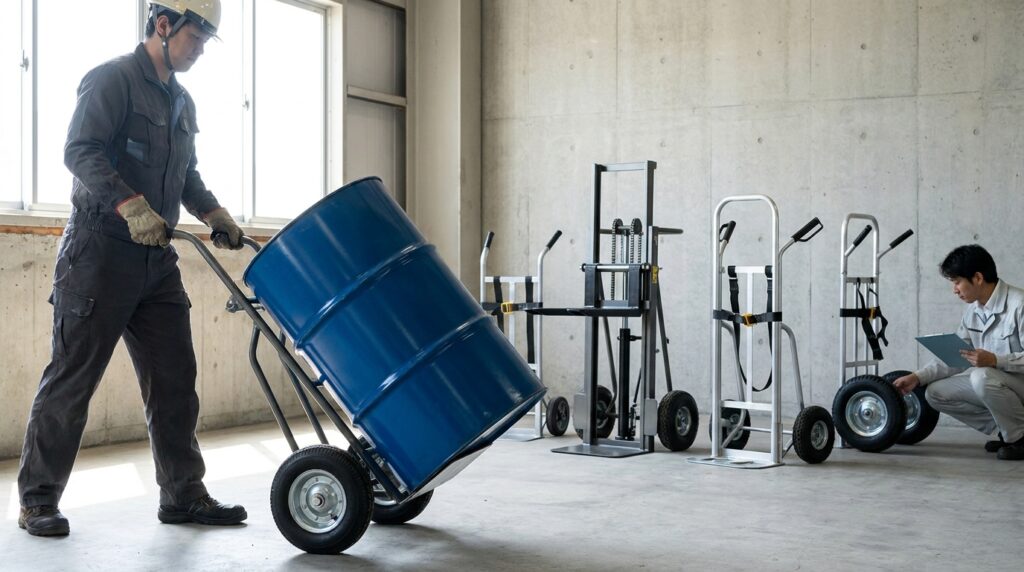
SEO Title: Drum Hand Trucks: Your Guide to Safe & Efficient Handling | Fredon Handling
Meta Description: Discover the various types of drum hand trucks, their key features, and crucial buying considerations for warehouse managers, plant engineers, and safety professionals. Optimize your operations with Fredon Handling.
Understanding Drum Hand Trucks: The Backbone of Industrial Material Movement
In any industrial or warehouse setting where the handling of drums is a regular occurrence, efficiency, safety, and ergonomics are paramount. Drums, whether they contain raw materials, finished products, or hazardous waste, often represent a significant investment and a potential safety risk if not managed properly. This is where drum hand trucks emerge as indispensable tools. These specialized pieces of equipment are designed to simplify the often cumbersome and hazardous task of moving drums, from storage to processing lines, loading docks, and disposal areas. Understanding the various types of drum hand trucks available, their features, and the critical factors to consider when making a purchase is essential for optimizing operations, minimizing injury, and ensuring regulatory compliance. Fredon Handling, with its commitment to providing robust and reliable material handling solutions, offers a comprehensive range of drum hand trucks to meet the diverse needs of industries.
The core purpose of a drum hand truck is to provide a mechanical advantage, reducing the physical strain on workers and mitigating the risk of back injuries, crushed fingers, and drum damage. They transform a potentially two-person, high-risk manual lift into a one-person, controlled operation. The right drum hand truck can dramatically improve throughput, reduce labor costs, and contribute to a safer working environment. This article will delve deep into the world of drum hand trucks, exploring their different classifications, the critical features to look for, and the factors that will guide you toward the most suitable choice for your specific application.
For those interested in learning more about the various aspects of handling equipment, a related article that provides valuable insights is available at this link: Fredon Handling. This resource delves into the company’s expertise in material handling solutions, offering a broader understanding of the types and features of equipment like drum hand trucks, along with essential buying considerations to help you make informed decisions.
Types of Drum Hand Trucks: A Spectrum of Solutions
The landscape of drum hand trucks is varied, with designs tailored to different drum materials, sizes, weights, and operational environments. Each type offers unique advantages, and selecting the correct one is the first step towards efficient and safe drum handling. Fredon Handling provides a wide array of options, ensuring there’s a solution for virtually any drum handling challenge.
Manual Drum Hand Trucks: The Workhorse
Manual drum hand trucks are the most common and often the most cost-effective solution for general-purpose drum movement. They rely on human power and leverage to lift and transport drums.
Standard Drum Dollies
These are simple, low-profile platforms with wheels, designed to cradle the base of a drum. The drum is tipped onto the dolly, and then the operator pushes or pulls the assembly. They are ideal for moving drums across smooth, level surfaces and are suitable for lighter drums.
- Material: Typically constructed from steel for durability and load-bearing capacity.
- Size & Weight: Varies, but generally designed to accommodate standard 55-gallon drums. Weights can range from 20-50 lbs depending on construction.
- Capacity: Usually rated for a specific weight limit, commonly 500-1000 lbs.
- Compatibility: Best suited for steel, plastic, or fiber drums with a relatively flat base.
Drum Trucks with Lifting Mechanisms
More advanced manual drum hand trucks incorporate a lifting mechanism, allowing the user to raise the drum off the ground for easier maneuvering, tilting, or positioning. These often feature a foot-operated hydraulic pump or a manual lever system.
- Hydraulic Drum Trucks: These are incredibly versatile. A foot pedal or hand lever activates a hydraulic cylinder to lift the drum. The drum can then be tilted forward to pour its contents or lifted high enough to be placed on a pallet or truck. This significantly reduces the physical effort required.
- Drum Material & Size: Capable of handling steel, plastic, and fiber drums, typically in standard 55-gallon sizes, but adjustable models can accommodate a range of diameters and heights.
- Weight & Capacity: Can handle heavier drums, with capacities often ranging from 500 lbs to over 1000 lbs. The weight of the truck itself can be substantial, from 100-200 lbs.
- Features: Many include a secure drum clamp or band for added safety, and some offer a ’tilt-and-pour’ feature for controlled dispensing.
- Examples: Fredon Handling’s range of hydraulic drum trucks are designed for robust performance in demanding environments.
- Mechanical Drum Trucks: These utilize a lever system and often a ratchet mechanism to lift and secure drums. They can be a good alternative to hydraulics in environments where hydraulic fluid is a concern.
Powered Drum Hand Trucks: For Heavy-Duty Demands
When dealing with very heavy drums, frequent movement, or when minimizing manual effort is a top priority, powered drum hand trucks are the solution. These units incorporate electric motors for lifting and often for propulsion.
Electric Drum Trucks
These trucks use electric motors to power the lifting mechanism and sometimes the drive wheels. They offer the highest level of ease of use and are ideal for high-volume operations or for workers who may have difficulty with manual lifting.
- Drum Material & Size: Similar to hydraulic trucks, they are designed for standard drums but can often accommodate a range of sizes and materials.
- Weight & Capacity: They typically have higher weight capacities, often exceeding 1000 lbs, and can handle the heaviest drums with ease. The trucks themselves can weigh several hundred pounds.
- Features: Key features include variable speed control, battery power (often with charging indicators), and robust safety features like emergency stop buttons and automatic braking.
- Examples: For facilities managing high volumes of heavy drums, an electric drum truck from Fredon Handling can be a transformative investment in efficiency and safety.
Drum Lifters and Stackers
While not strictly “hand trucks” in the traditional sense, drum lifters and stackers perform a similar function of moving and positioning drums, often with greater vertical reach. These can include powered stackers that can lift drums to significant heights for stacking or placing on high shelves.
Specialized Drum Hand Trucks
Beyond the basic classifications, there are specialized drum hand trucks designed for specific tasks or drum types.
Drum Palletizers and Dispensers
These units are designed not just to move drums but to facilitate the dispensing of their contents. They often feature a mechanism to securely hold a drum at a convenient pouring height and may include a tilting function for controlled flow.
- Application: Ideal for process industries where precise dispensing of drummed materials is required, such as in chemical, food, or pharmaceutical manufacturing.
- Features: Secure drum gripping, adjustable pouring heights, and robust tilting mechanisms are standard.
Drum Lifters for Reel Drums or Smaller Containers
Some applications may involve handling drums that are not standard 55-gallon cylindrical containers, or smaller containers that still require mechanical assistance. Specialized lifters exist for these niche requirements.
Key Features to Consider in Drum Hand Trucks
When evaluating drum hand trucks, several features directly impact their usability, safety, and suitability for your specific environment.
Lifting and Gripping Mechanisms
The way a drum hand truck secures and lifts a drum is critical for safe operation.
- Clamps and Bands: Robust, adjustable clamps or bands are essential for securely holding the drum’s rim or body, preventing slippage during movement or lifting. Double-banded systems offer increased security for heavier or taller drums.
- Tongs and Grabs: Some models use tongs or grabs that engage the drum’s rim from above. These can be effective for certain drum types but require careful operation.
- Tilting Capabilities: For dispensing, a smooth and controlled tilting mechanism is vital. This allows for precise pouring of liquids or solids without spillage. Look for mechanisms that provide a good range of motion and can be locked in position.
Maneuverability and Mobility
How easily the drum hand truck can be moved and navigated is a significant factor in operational efficiency.
- Wheel Types:
- Solid Rubber: Durable, provide good traction, and are resistant to punctures. Suitable for most warehouse floors.
- Polyurethane: Offer a smoother ride and are non-marking, ideal for cleanroom environments or floors that need protection.
- Pneumatic (Air-Filled): Provide superior shock absorption and are excellent for rough or uneven surfaces, but are prone to punctures.
- Number of Wheels: Most drum trucks have two large rear wheels and two smaller front casters for stability and maneuverability. Some specialized dollies might have four or more casters.
- Ergonomic Handles: Well-designed, comfortable handles reduce operator fatigue and improve control. Height adjustability can cater to different users.
Drum Compatibility: Material, Size, and Weight
Ensuring the drum hand truck is compatible with the drums you handle is non-negotiable.
- Drum Material:
- Steel Drums: Generally sturdy and can be handled by most drum trucks.
- Plastic Drums (HDPE): Lighter but can be more prone to deformation under pressure. Trucks with wide, flat contact points or secure banding are preferred.
- Fiber Drums: Often lighter and can be more susceptible to crushing. Ensure the truck’s gripping mechanism is gentle yet secure.
- Drum Size: Standard drum sizes are typically 55 gallons (208 liters), but variations exist (e.g., 30-gallon, 16-gallon). Many drum hand trucks are designed to be adjustable to accommodate a range of diameters and heights. Always check the specifications for minimum and maximum drum dimensions.
- Drum Weight and Capacity: This is perhaps the most critical specification. Always select a drum hand truck with a rated capacity significantly exceeding the maximum weight of the drums you intend to handle. Overloading a drum truck is a major safety hazard and can lead to equipment failure. Typical capacities range from 500 lbs to over 1000 lbs for manual units, and higher for powered options.
Safety Features
Safety should be the primary consideration when selecting any material handling equipment.
- Braking Systems: Especially important for powered units, but also a consideration for manual trucks, especially those with a lifting function. Secure locking mechanisms or parking brakes prevent unintended movement.
- Emergency Stops: Standard on powered units, these allow for immediate deactivation of the motor in case of an emergency.
- Stable Base: A wide, stable base prevents tipping, even when lifting or maneuvering a loaded drum.
- Secure Locking: Ensure the drum is firmly locked into the drum hand truck before lifting or moving.
- Visibility: Bright colors or reflective tape can enhance the visibility of the equipment in busy industrial environments.
Construction and Durability
The materials and build quality of a drum hand truck determine its longevity and reliability.
- Steel Construction: For most industrial applications, robust steel construction (e.g., welded steel frames) is preferred for its strength and durability. Powder coating or a high-quality paint finish helps prevent rust and corrosion.
- Hydraulic System Quality: For hydraulic trucks, the quality of the pump, seals, and cylinder is paramount for reliable lifting and safe operation. Reputable manufacturers use high-grade components.
Applications of Drum Hand Trucks: Where They Shine
The versatility of drum hand trucks makes them essential in a wide array of industrial settings and for numerous tasks.
Warehousing and Storage
- Moving Drums to and from Storage Racks: Easily transport drums from receiving to their designated storage locations and vice-versa.
- Loading and Unloading Trucks: Position drums for efficient loading onto trucks or remove them upon delivery.
- Inventory Management: Facilitate the movement of drums for stocktaking and organization.
Manufacturing and Production Lines
- Feeding Raw Materials: Transport drums of raw materials to mixing tanks, processing machines, or filling stations.
- Dispensing and Pouring: Utilize tilting drum hand trucks for controlled dispensing of liquids, powders, or granules into process vessels.
- Moving Finished Products: Transport drums of finished goods to packaging or shipping areas.
Chemical and Hazardous Material Handling
- Safe Transport of Chemicals: Dedicated drum hand trucks with features like secure clamping and stable bases are crucial for moving drums containing hazardous substances.
- Waste Disposal: Transport drums of hazardous waste to designated collection or treatment areas.
- Spill Containment: The ability to safely maneuver leaking drums to containment areas can prevent wider contamination.
Food and Beverage Industries
- Ingredient Handling: Move drums of food-grade ingredients to processing areas.
- Sanitation: Clean and maneuver drums within production facilities, ensuring compliance with strict hygiene standards.
Pharmaceutical Industry
- Cleanroom Operations: Specialized drum hand trucks made from non-contaminating materials and designed for easy cleaning are used to handle drums in pharmaceutical manufacturing.
- Process Integration: Safely move drums to and from sensitive processing equipment.
When considering the best options for transporting heavy drums, it’s essential to explore various types of drum hand trucks, their features, and important buying considerations. For a deeper understanding of material handling solutions, you might find it helpful to read a related article that discusses the broader aspects of material handling equipment. This resource can provide valuable insights into how to choose the right tools for your needs. You can check it out here: material handling.
Safety Considerations When Using Drum Hand Trucks
While drum hand trucks are designed to enhance safety, their improper use can still lead to accidents. Adherence to strict safety protocols is essential.
- Operator Training: All personnel operating drum hand trucks must receive comprehensive training on the specific equipment they will use. This training should cover safe operating procedures, load limits, hazard identification, and emergency protocols.
- Pre-Operation Inspection: Before each use, conduct a thorough visual inspection of the drum hand truck. Check for:
- Damaged wheels or casters
- Worn or frayed cables (on powered units)
- Leaks in hydraulic systems
- Loose or damaged bolts and welds
- Functioning braking mechanisms
- Secure and undamaged gripping mechanisms
- Know Your Load: Always be aware of the weight and contents of the drum you are handling. Never exceed the rated capacity of the drum hand truck. If the drum’s weight is unknown, treat it with extreme caution or have it weighed first.
- Clear Pathways: Ensure the path of travel is clear of obstructions, debris, and other personnel. Uneven surfaces, slippery floors, or cluttered aisles are major trip and fall hazards.
- Secure Drum Engagement: Before lifting or moving, ensure the drum is properly and securely engaged by the drum hand truck’s gripping mechanism. A drum that is not properly secured can slip and fall, causing injury or damage.
- Controlled Movement: Move at a slow, steady pace. Avoid sudden starts, stops, or turns, especially with heavy loads.
- Proper Braking: Always engage the brakes or locking mechanisms when stationary, especially on inclines or when unattended.
- Drum Integrity: Inspect drums for damage before handling. A damaged drum can fail under pressure or during transit.
- Ergonomics: Encourage proper posture and lifting techniques, even when using mechanical aids, to prevent long-term musculoskeletal injuries.
- Personal Protective Equipment (PPE): Operators should always wear appropriate PPE, including safety shoes, gloves, and eye protection.
- Regular Maintenance: Follow a schedule for regular maintenance and servicing of your drum hand trucks as recommended by the manufacturer. This is crucial for ensuring ongoing safety and reliability.
Maintenance Tips for Drum Hand Trucks
Proper maintenance of your drum hand trucks will extend their lifespan, ensure safe operation, and prevent costly downtime.
- Daily Checks:
- Inspect for any visible damage or wear.
- Check that all moving parts are free of debris.
- Verify that the lifting and gripping mechanisms operate smoothly.
- Ensure brakes or locking mechanisms engage effectively.
- Weekly Checks:
- Lubricate any pivot points or moving parts as recommended by the manufacturer.
- For hydraulic models, check the hydraulic fluid level and look for any signs of leaks. Top up or replace fluid as necessary, using the correct type.
- Inspect wheel bearings for proper function.
- Monthly/Quarterly Checks:
- Perform a more thorough inspection of welds, frame integrity, and overall structural soundness.
- Check for any signs of corrosion and address them promptly.
- For powered units, inspect battery connections and charging systems.
- Hydraulic System Care (for hydraulic drum trucks):
- Use only the recommended hydraulic fluid.
- Keep the hydraulic reservoir clean and free from contamination.
- If leaks are detected, have them repaired by a qualified technician immediately.
- Bleed air from the hydraulic system if lifting performance degrades.
- General Cleaning: Keep your drum hand trucks clean. Dirt, grime, and chemical residue can accelerate wear and corrosion.
- Repair Promptly: Do not operate a damaged or malfunctioning drum hand truck. Tag it as “out of service” and have it repaired by a qualified technician as soon as possible.
Buying Guide: Selecting the Right Drum Hand Truck for Your Needs
Choosing the correct drum hand truck involves a systematic evaluation of your operational requirements, drum types, and site conditions.
Assess Your Drum Handling Needs
- Drum Type and Material: What types of drums do you handle? (Steel, plastic, fiber, etc.) What are their typical sizes (gallons/liters) and dimensions (diameter, height)?
- Drum Weight: What is the maximum weight of the drums you need to move? Always add a safety margin.
- Frequency of Use: How often will the drum hand truck be used? For occasional use, a manual truck might suffice. For high-volume, daily use, a powered unit could offer significant ROI.
- Lifting Requirements: Do you need to lift drums to place them on pallets, conveyors, or to dispense contents? This dictates the necessity of a lifting mechanism and the required lift height.
- Dispensing Needs: If you frequently dispense drum contents, a tilting or specially designed dispensing truck is essential.
- Site Conditions: What type of flooring do you have? (Smooth concrete, rough asphalt, carpeted, etc.) Are there ramps, inclines, or tight spaces? This influences wheel choice and maneuverability requirements.
- Operator Capability: Consider the physical capabilities of your workforce. Powered units can significantly reduce physical strain.
Compare Features and Specifications
- Capacity: This is the non-negotiable starting point. Ensure it exceeds your heaviest drum weight by a safe margin (e.g., 20-25%).
- Lift Height: If lifting is required, confirm the maximum lift height meets your needs.
- Maneuverability: Evaluate the turning radius and ease of steering, especially in confined spaces.
- Ergonomics: Look for comfortable handles, intuitive controls, and adjustable features if multiple operators will use the equipment.
- Durability: Choose a unit constructed from robust materials suitable for your industrial environment. Consider powder coating for corrosion resistance.
- Ease of Maintenance: Simpler designs with accessible lubrication points and straightforward component replacement can reduce long-term maintenance costs.
Consider Fredon Handling Solutions
Fredon Handling offers a comprehensive selection of drum hand trucks designed for durability, safety, and efficiency. Our product range includes:
- Robust Manual Drum Trucks: Ideal for general-purpose lifting and moving of standard drums. Available in various capacities and configurations.
- Hydraulic Drum Trucks: Providing excellent leverage and lifting power for heavier drums and dispensing applications.
- Powered Drum Trucks: For high-volume operations and minimizing operator fatigue, our electric drum trucks deliver superior performance.
- Specialized Drum Handling Equipment: Explore our range of drum lifters, palletizers, and dispensers for specific process needs.
When you choose Fredon Handling, you’re investing in quality equipment backed by industry expertise. We understand the challenges of industrial material handling and are dedicated to providing solutions that enhance your operations.
Frequently Asked Questions About Drum Hand Trucks
Q1: What is the weight capacity I should look for in a drum hand truck?
You should always choose a drum hand truck with a rated capacity that is at least 20-25% higher than the heaviest drum you anticipate handling. For example, if your heaviest drum weighs 600 lbs, opt for a truck with a 750-1000 lb capacity or higher. This safety margin accounts for dynamic forces during movement and potential overloads.
Q2: Can a single drum hand truck handle both steel and plastic drums?
Many drum hand trucks are designed to be versatile and can handle both steel and plastic drums. However, it’s crucial to verify the drum gripping mechanism. Plastic drums are lighter but can deform. Trucks with wide, even contact points or secure, adjustable banding are best for plastic drums to prevent damage or slippage. Always check the manufacturer’s specifications for drum material compatibility.
Q3: How do I maintain a hydraulic drum hand truck?
Regular maintenance for hydraulic drum hand trucks includes daily visual inspections for leaks, damage, and proper operation. Weekly checks should involve ensuring the hydraulic fluid level is adequate and topping up with the correct type if needed. Lubricate pivot points and moving parts as recommended. Any detected leaks should be addressed immediately by a qualified technician, and the hydraulic system should be kept clean.
Q4: What are the advantages of powered drum hand trucks over manual ones?
Powered drum hand trucks offer significant advantages in terms of reduced physical exertion for operators, faster operation for high-volume tasks, and enhanced safety, especially when handling very heavy drums. They minimize the risk of musculoskeletal injuries and can improve overall productivity. While the initial investment is higher, the long-term benefits in efficiency and safety often justify the cost.
Q5: How can I ensure the drum hand truck is compatible with my facility’s floor surface?
The compatibility with your floor surface primarily depends on the type of wheels. Solid rubber or polyurethane wheels are generally suitable for most smooth industrial concrete floors. For rougher or outdoor surfaces, pneumatic (air-filled) tires offer better shock absorption but are prone to punctures. For cleanroom or delicate floor environments, non-marking polyurethane wheels are recommended. Always consider the load capacity and potential for floor damage when selecting wheel types.
Elevate Your Drum Handling Operations with Fredon Handling
Effective and safe drum handling is not just about moving containers; it’s about optimizing your entire workflow, protecting your assets, and most importantly, ensuring the well-being of your employees. The right drum hand truck is a critical component in achieving these goals. At Fredon Handling, we understand the diverse challenges faced by warehouse managers, plant engineers, safety professionals, and industrial equipment buyers. Our commitment is to provide durable, reliable, and ergonomically designed drum hand trucks and material handling equipment that meet the rigorous demands of modern industry.
We invite you to explore our extensive range of drum handling equipment at https://fredonhandling.com/drum-handling-equipment/. Whether you require robust manual solutions for everyday tasks or advanced powered equipment for high-volume operations, Fredon Handling has the expertise and the products to meet your needs.
Ready to optimize your drum handling process and enhance workplace safety? Contact Fredon Handling today for a personalized consultation. Our experts are ready to help you select the perfect drum hand truck for your specific application.