
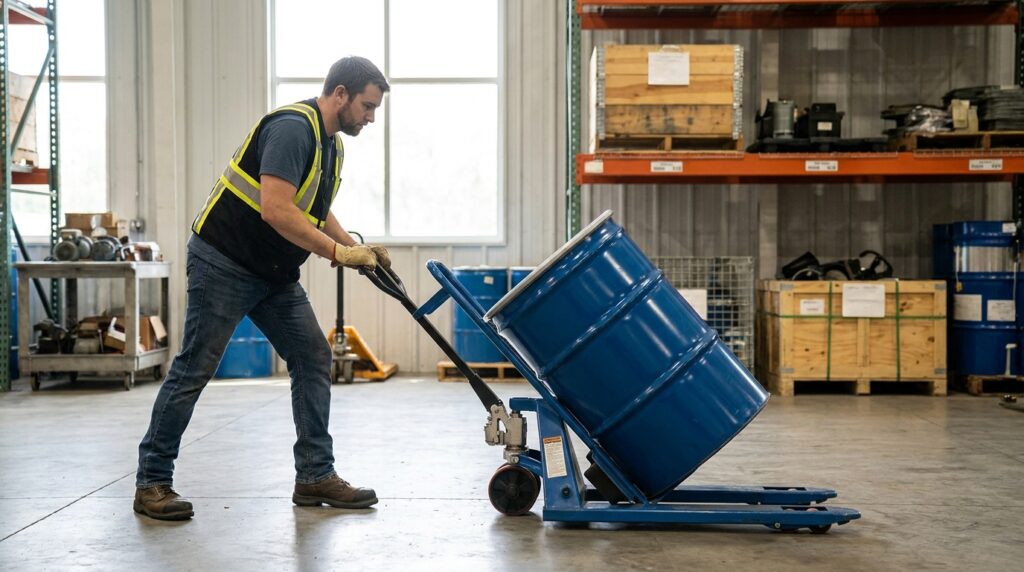
SEO Title: Safely Lift & Move 55-Gallon Drums: Your Comprehensive Guide
For more information on safe material handling practices, you may find the article “I Like Material Handling” helpful. It provides valuable insights and tips that complement the guidelines on how to safely lift and move a 55-gallon drum. You can read it by following this link: I Like Material Handling.
Meta Description: Master the art of safely lifting and moving 55-gallon drums. Discover equipment, best practices, and safety tips for warehouse managers, plant engineers, and industrial buyers.
The Critical Need for Safe 55-Gallon Drum Handling
In virtually every industrial setting, from chemical plants and food processing facilities to manufacturing floors and storage warehouses, the 55-gallon drum is a ubiquitous container. These workhorses of industry store and transport vast quantities of liquids, powders, and semi-solids. However, their considerable size, weight, and the often hazardous nature of their contents present significant challenges when it comes to safe lifting and movement. Mishandling these drums can lead to severe injuries, costly spills, environmental damage, and operational downtime. For warehouse managers, plant engineers, and industrial equipment buyers, understanding the principles and employing the right equipment for how to safely lift and move a 55-gallon drum is not just a matter of efficiency, but a fundamental requirement for maintaining a safe and productive workplace.
This comprehensive guide will delve into the intricacies of handling 55-gallon drums, providing practical insights, equipment comparisons, selection criteria, and essential safety protocols. Whether you’re dealing with standard steel drums, plastic drums, or specialized containers, our aim is to equip you with the knowledge to navigate these operations effectively and minimize risks.
Understanding the 55-Gallon Drum: Properties and Hazards
Before we explore the methods and equipment for handling, it’s crucial to understand the characteristics of a 55-gallon drum and the inherent risks associated with them.
Drum Materials and Construction
55-gallon drums are not monolithic in their construction. The materials used significantly impact their handling requirements and the type of equipment needed.
- Steel Drums: These are the most common type, offering robust containment for a wide range of substances. They are typically constructed from carbon steel, often with a protective lining to prevent corrosion or contamination. Steel drums can be open-head (with removable lids secured by rings) or tight-head (with two threaded bungs). Their weight and rigidity make them ideal for heavy-duty applications. A standard 55-gallon steel drum can weigh anywhere from 40-50 pounds when empty.
- Plastic Drums (HDPE): High-Density Polyethylene (HDPE) drums are lighter than steel and offer excellent resistance to corrosion and many chemicals that can attack steel. They are commonly used for food-grade products, corrosives, and materials where metal contamination is a concern. Plastic drums are typically open-head or tight-head. Their lighter empty weight (around 15-25 pounds) can sometimes lead to a false sense of security, but their bulk and potential for static electricity build-up when filled with certain materials require careful handling.
- Fiber Drums: Less common for hazardous materials but used for dry goods, powders, and certain non-hazardous liquids. They are constructed from compressed paper or fiberboard. While lighter and more environmentally friendly, they offer less structural integrity and moisture resistance compared to steel or plastic.
Size, Weight, and Capacity Considerations
The nominal capacity of a 55-gallon drum is approximately 208 liters or 55 US gallons. However, the actual weight of a drum varies dramatically based on its contents.
- Empty Drum Weight: As mentioned, empty steel drums can weigh 40-50 lbs, while HDPE drums are typically 15-25 lbs. This initial weight is a factor in manual handling considerations and the power required by mechanical aids.
- Full Drum Weight: This is where the true handling challenge lies. When filled, a 55-gallon drum can weigh significantly.
- Water, with a density of approximately 8.34 lbs/gallon, would make a full 55-gallon drum weigh around 450-460 lbs (55 gallons \* 8.34 lbs/gallon + drum weight).
- Many industrial chemicals, oils, and solvents are denser than water, pushing the total weight even higher, often exceeding 500-600 lbs.
- Powders and solids can also contribute to significant weight, depending on their bulk density.
- Center of Gravity: The center of gravity of a full drum is typically at its geometric center. However, as liquid sloshes or if the contents are unevenly distributed, the center of gravity can shift, making the drum unstable and unpredictable during movement. This dynamic instability is a critical hazard.
Inherent Hazards of 55-Gallon Drums
- Manual Lifting Injuries: Attempting to manually lift or tilt a full 55-gallon drum (weighing 500+ lbs) is a recipe for disaster. Back injuries, hernias, and crushed extremities are common outcomes of improper manual handling.
- Spills and Leaks: Dropping a drum, damaging its seams or bungs, or improper sealing can lead to spills. Depending on the contents, these spills can create slip hazards, fire risks, environmental contamination, or exposure to toxic fumes.
- Instability and Tipping: Drums are cylindrical, making them inherently unstable if not properly supported. Uneven surfaces, sudden movements, or improper stacking can cause them to roll or tip over.
- Chemical Exposure: Many substances stored in drums are hazardous. Contact with skin, eyes, or inhalation of vapors can cause severe health problems.
- Ergonomic Strain: Even with mechanical aids, repetitive drum handling tasks can lead to cumulative trauma disorders if ergonomic principles are not applied.
When considering the safe handling of heavy containers, it’s essential to also understand the proper techniques for moving other types of equipment. For instance, you might find it helpful to read about the best practices for transporting pallets in the related article on the Fredon Handling website. This resource provides valuable insights that can complement your knowledge on how to safely lift and move a 55-gallon drum, ensuring that you maintain safety and efficiency in your operations. You can check it out here.
Essential Equipment for Safe 55-Gallon Drum Handling
The cornerstone of safe and efficient 55-gallon drum handling is the use of appropriate equipment. Manual handling of full drums should be avoided whenever possible.
Drum Lifters and Tippers
These devices are designed to safely grip, lift, tilt, and pour the contents of drums. They significantly reduce the physical strain on operators and minimize the risk of spills.
- Drum Lifters: These are typically integrated into a lifting mechanism (like a forklift attachment or an overhead hoist) and use clamps, cradles, or other gripping mechanisms to secure the drum. They allow the drum to be lifted vertically, moved, and positioned without manual effort.
- Drum Tippers/Pourers: These often attach to a lifting device and provide a mechanism to safely tilt and pour the drum’s contents into another vessel or container. They allow for controlled pouring, reducing splashing and waste. Some advanced models offer features like drum rotation.
- Forklift Drum Clamps: These attachments mount onto a forklift’s mast and use hydraulic or mechanical jaws to grip the drum’s chime (the rolled rim). They are excellent for moving drums horizontally and stacking them. Some can also be used for tilting.
- Forklift Drum Grabs: Similar to clamps but often designed to lift drums from the top chime, offering a different gripping mechanism.
- Drum Positioners/Rotators: These devices, often integrated with lifters, allow for precise positioning and rotation of the drum, facilitating controlled pouring and emptying.
Drum Dollies and Carts
For moving drums horizontally across a floor, dollies and carts are indispensable. They take the weight off the operator and allow for easy maneuvering.
- Drum Dollies: These are typically low-profile platforms with wheels, designed to cradle a drum and allow it to be rolled. They are good for short distances and relatively smooth surfaces. Some have a lip to prevent the drum from sliding off.
- Drum Carts/Trucks: These are more robust wheeled devices that often stand upright and use a frame to support the drum. They might have a foot lever or kickstand to help tilt the drum onto the cart for transport.
- Ergonomic Drum Carts: Designed with features like foot-pedal operation or spring-loaded mechanisms to reduce the effort required to tilt and secure the drum.
Drum Palletizers and Stackers
When it comes to efficient storage and material flow, equipment that can palletize or stack drums is crucial.
- Drum Palletizers: These automated or semi-automated machines can lift drums and place them precisely onto pallets, often in specific configurations for stable stacking.
- Drum Stackers: For vertical storage, drum stackers allow drums to be safely piled to a certain height. This is particularly useful in warehouses where space is at a premium. These can be manual, semi-electric, or fully electric.
Drum Handling Attachments for Cranes and Hoists
In facilities with overhead lifting capabilities, specialized drum handling attachments can be used with cranes or hoists.
- Drum Grabs/Lifters for Hoists: These are designed to attach to an overhead hoist and securely grip the drum for vertical transport. They come in various configurations, including single drum lifters, double drum lifters, and rotating models.
Dedicated Drum Handling Solutions
Fredon Handling offers a comprehensive range of drum handling equipment tailored to specific needs. Explore our solutions at https://fredonhandling.com/drum-handling-equipment/ for detailed product specifications and capabilities.
When considering the best practices for lifting and moving heavy objects like a 55-gallon drum, it’s essential to understand the broader context of material handling. For more insights on this topic, you can explore a related article that delves into the fundamentals of material handling, which can enhance your understanding of safe lifting techniques. This resource can be found here. By familiarizing yourself with these principles, you can ensure a safer and more efficient approach to handling various materials.
Safe Drum Handling Techniques and Best Practices
Even with the best equipment, proper technique and adherence to safety protocols are paramount.
Pre-Operation Checks
Before any drum handling operation, a thorough inspection of the drum and the equipment is essential.
- Drum Inspection:
- Check for any signs of damage, such as dents, punctures, or corrosion, especially around the seams and bungs.
- Ensure bungs are securely tightened (for tight-head drums) or lids are properly sealed and secured with locking rings (for open-head drums).
- Verify the drum’s labeling. Is it clearly marked with its contents, any hazards, and its weight?
- Assess the drum’s condition for integrity. If it appears compromised, do not attempt to lift or move it.
- Equipment Inspection:
- Inspect the lifting mechanism, clamps, chains, straps, and other components for wear, damage, or proper function.
- Test hydraulic or electric systems to ensure they are operating smoothly and without leaks.
- Ensure all safety guards and interlocks are in place and functional.
- Check that the equipment is rated for the weight and type of drum being handled.
Operating Procedures: Lifting and Moving
The actual process of lifting and moving a drum requires precision and care.
- Positioning the Equipment:
- For forklift attachments, approach the drum squarely and ensure the forks or clamping mechanism are aligned correctly.
- For overhead hoists, position the lifting attachment directly above the drum’s center of gravity.
- Ensure the floor surface is clear of obstructions and suitable for the intended movement.
- Securing the Drum:
- Clamps/Grabs: Ensure the jaws or clamps are fully engaged around the drum’s chime. Listen for any engagement indicators or visual cues that confirm a secure grip.
- Cradles/Straps: For other types of lifters, ensure the drum is seated correctly in the cradle and any securing straps are taut and properly fastened.
- Lifting and Lowering:
- Lift the drum slowly and smoothly, observing for any signs of instability or slippage.
- Maintain a stable, upright position during vertical lifts.
- When lowering, ensure the destination surface is clear and stable. Lower the drum gently to avoid impact.
- Moving the Drum:
- With Forklifts: Travel at a safe, slow speed. Keep the drum as low to the ground as possible for stability. Avoid sudden starts, stops, or turns. Be aware of overhead clearances.
- With Dollies/Carts: Push or pull smoothly. Use the wheels to guide the drum. Be mindful of inclines and the potential for the drum to roll away.
- Pouring and Discharging:
- Use dedicated drum tippers or pourers for controlled discharge.
- Position the receiving vessel directly beneath the drum’s opening.
- Tilt the drum slowly and steadily, observing the flow of contents.
- Avoid overfilling the receiving container.
- Once empty, return the drum to an upright position before disengaging the lifting mechanism.
Stacking and Storage
Proper stacking and storage prevent accidents and maintain drum integrity.
- Stable Surfaces: Always store drums on a level, stable, and load-bearing surface. Avoid storing on uneven ground, slopes, or directly on soil.
- Proper Racking: Utilize appropriate drum racking systems designed for the weight and type of drums.
- Sequential Stacking: For non-racked storage, stack drums in a stable, pyramid-like formation. Avoid excessively high stacks, which increase the risk of toppling.
- Chime-on-Chime: When stacking steel drums, ensure the bottom chime of the upper drum rests securely within the top chime of the lower drum for maximum stability. Plastic drums may require specialized stacking aids.
- Separation: Store incompatible chemicals separately to prevent dangerous reactions in case of a spill or leak.
- Clear Aisles: Maintain clear and unobstructed aisles around stored drums to allow for safe access and emergency egress.
Safety Considerations and Risk Mitigation
Safety must be the top priority in all drum handling operations.
Personal Protective Equipment (PPE)
Appropriate PPE is essential for anyone involved in drum handling.
- Safety Footwear: Steel-toed boots are a must to protect against dropped drums or falling objects.
- Gloves: Chemical-resistant gloves are crucial, especially when handling drums containing hazardous materials. The type of glove will depend on the specific chemical.
- Eye Protection: Safety glasses or goggles should always be worn to protect against splashes or airborne particles. A face shield may be necessary for certain operations.
- Protective Clothing: Depending on the hazard, chemical-resistant aprons, suits, or coveralls may be required.
- Hearing Protection: If operating noisy equipment or in a loud environment, earplugs or earmuffs are necessary.
Training and Competency
Proper training is non-negotiable for all personnel involved in drum handling.
- Equipment Operation: Operators must be trained and certified on the specific drum handling equipment they will use. This includes understanding load capacities, operating procedures, safety features, and emergency shutdowns.
- Hazard Recognition: Training should cover the identification of drum damage, hazardous materials, and unsafe conditions.
- Emergency Procedures: Personnel must be familiar with spill response, first aid, and emergency evacuation procedures.
- Ergonomics: Understanding proper lifting techniques, even when using mechanical aids, can help prevent musculoskeletal injuries.
Spill Prevention and Response
Spills are an unfortunate reality in industrial settings, but preparedness can mitigate their impact.
- Containment: Have spill containment kits readily available. These should include absorbent materials, booms, and appropriate disposal bags.
- Ventilation: Ensure adequate ventilation in areas where drums are stored or handled, especially if they contain volatile substances.
- Reporting: Establish a clear procedure for reporting all spills, no matter how small.
- Cleanup: Train personnel on safe spill cleanup procedures, ensuring they use appropriate PPE and dispose of contaminated materials according to regulations.
Facility Design and Maintenance
A well-designed and maintained facility plays a significant role in safe drum handling.
- Flooring: Ensure floors are level, non-slip, and can support the weight of loaded drums and handling equipment.
- Lighting: Adequate lighting is essential for visibility during all operations.
- Access: Provide clear and accessible pathways for moving drums and operating equipment.
- Ventilation Systems: Proper ventilation can help control hazardous fumes and vapors.
- Regular Inspections: Conduct regular facility inspections to identify and address potential hazards.
Selecting the Right Drum Handling Equipment
Choosing the correct equipment is crucial for efficiency and safety.
Key Selection Factors
- Type of Drum: Steel, plastic, or fiber? Open-head or tight-head? This dictates the gripping mechanism and compatibility.
- Weight and Volume: The maximum weight and volume of the drums you handle will determine the required lifting capacity of the equipment.
- Frequency of Handling: For high-volume operations, automated solutions or powered equipment are essential. For intermittent use, manual aids might suffice.
- Distance of Travel: Will drums be moved short distances on a factory floor, or long distances across a warehouse? This influences the choice between dollies, carts, or forklift attachments.
- Lifting Requirements: Do you need to lift drums to high shelving, onto a truck, or into a process vessel? This will dictate the required lift height and reach.
- Pouring Needs: Do you need to pour contents? If so, how precise does the pour need to be? This points towards specialized tippers and pourers.
- Environment: Are there chemical hazards, dust, or specific temperature requirements? This can influence material choices for equipment and necessary safety features.
- Existing Infrastructure: Do you have forklifts, overhead cranes, or just floor space? This will constrain your options.
- Budget: While safety and efficiency are paramount, budget constraints will influence the level of automation or sophistication of the equipment.
Equipment Comparisons: A Practical Overview
Let’s compare common equipment types for how to safely lift and move a 55-gallon drum:
| Equipment Type | Best For | Pros | Cons | Fredon Handling Relevance |
| :– | :- | :– | : | : |
| Forklift Drum Clamp | Moving drums horizontally, stacking, short-distance transport | Fast, efficient with existing forklifts, good for moderate to high volume, secure grip. | Requires a forklift, can be less precise for pouring, may require operator skill. | Offers various forklift drum clamp solutions. |
| Drum Dolly/Cart | Short-distance horizontal movement, emptying onto low surfaces | Simple, cost-effective, minimal training required, takes weight off operator. | Limited lift height, can be difficult on uneven surfaces, manual effort still required for tilting. | Provides basic drum dollies and ergonomic carts. |
| Drum Lifter/Tippers | Lifting, precise pouring, controlled dispensing of contents | Minimizes manual effort, reduces spill risk, precise control over pouring, adaptable to hoists/forks. | Can be more complex, higher cost than basic dollies. | Extensive range of drum lifters and tippers available. |
| Overhead Hoist Attachment | Vertical lifting in areas with overhead crane access, precise positioning | Excellent for high lifts, frees up floor space, highly controlled vertical movement. | Requires existing overhead crane infrastructure, can be more expensive upfront. | Offers drum attachments for hoists and cranes. |
| Manual Drum Lifter | Basic lifting and maneuvering for lighter drums or less frequent use | Low cost, simple operation, good for occasional tasks. | Significant manual effort, limited lift height, not suitable for heavy drums or high volume. | May offer basic manual options or components. |
Investing in Quality Equipment
When selecting drum handling equipment, prioritize durability, reliability, and safety features. Investing in high-quality equipment from reputable manufacturers like Fredon Handling not only ensures operational efficiency but also significantly reduces the risk of accidents and long-term costs associated with repairs and downtime. Always consult product specifications and, if necessary, speak with a Fredon Handling expert to ensure the equipment is perfectly matched to your needs.
Maintenance and Longevity of Drum Handling Equipment
Proper maintenance ensures your drum handling equipment remains safe and operational.
Routine Inspections
- Daily Checks: Before each shift, visually inspect critical components like hydraulic lines, hoses, chains, cables, and gripping mechanisms for any signs of wear, leaks, or damage.
- Weekly Checks: Perform more detailed inspections, checking fluid levels (for hydraulic equipment), bolt tightness, and the function of all safety devices. Test all operational movements.
Lubrication
- Follow the manufacturer’s recommended lubrication schedule. Moving parts, pivot points, and bearings require regular lubrication to prevent wear and ensure smooth operation. Use the specified types of lubricants.
Hydraulic System Maintenance
- For hydraulic equipment, regularly check hydraulic fluid levels and condition. Contaminated or low fluid can lead to system failure and damage. Replace filters as per the manufacturer’s recommendations.
Battery Maintenance (for Electric Equipment)
- If using electric-powered drum handlers, follow the manufacturer’s guidelines for battery charging, watering (if applicable), and general maintenance to ensure optimal performance and lifespan.
Repair and Replacement
- Address any identified wear or damage immediately. Do not operate equipment that is known to be faulty.
- Use only genuine replacement parts to maintain the integrity and safety of the equipment.
- Schedule professional servicing for complex repairs or periodic safety audits.
By implementing a robust maintenance program, you can extend the life of your drum handling equipment, prevent unexpected breakdowns, and, most importantly, ensure the ongoing safety of your operations.
Frequently Asked Questions (FAQs)
Q1: What is the primary hazard when lifting a 55-gallon drum manually?
A1: The primary hazard is severe musculoskeletal injury, such as back strains, hernias, or crushed limbs, due to the immense weight of a full drum (often exceeding 500-600 lbs).
Q2: Can I use a standard pallet jack to move a 55-gallon drum?
A2: Generally, no. Standard pallet jacks are designed for flat, square-cornered pallets. While some specialized pallet jacks can accommodate drums, it’s typically unsafe and inefficient. Drum dollies, carts, or forklift attachments are the recommended solutions for moving drums horizontally.
Q3: What type of PPE is essential for handling drums containing hazardous chemicals?
A3: Essential PPE includes chemical-resistant gloves (appropriate for the specific chemical), safety glasses or goggles, a face shield (if splash risk is high), and chemical-resistant protective clothing (apron, suit, etc.). Steel-toed safety footwear is also critical.
Q4: How can I ensure the stability of stacked 55-gallon drums?
A4: Stack drums on level, stable surfaces. Utilize proper drum racking if available. When stacking directly, use a stable, pyramid-like formation, ensuring the chime of the upper drum securely engages with the chime of the lower drum. Avoid excessively high stacks.
Q5: Is it safe to store 55-gallon drums outdoors?
A5: Storing drums outdoors can be acceptable for certain non-hazardous materials if proper precautions are taken. This includes using stable, elevated surfaces, protecting drums from direct sunlight and extreme temperatures, and ensuring containment in case of leaks. However, for hazardous materials, indoor, controlled storage is strongly recommended and often legally mandated. Always consult local regulations and manufacturer guidelines.
Conclusion: Prioritizing Safety and Efficiency in Drum Handling
Mastering how to safely lift and move a 55-gallon drum is a critical competency for any industrial operation. The significant weight and potential hazards associated with these common containers demand a proactive approach to safety and the judicious use of appropriate equipment. By understanding drum characteristics, investing in the right tools, adhering to best practices, and prioritizing continuous training and maintenance, you can create a safer, more productive, and more efficient working environment.
Fredon Handling is your partner in achieving this. We offer a comprehensive range of high-quality drum handling equipment, from basic dollies to advanced lifters and tippers, designed to meet the diverse needs of industrial environments.
Ready to enhance your drum handling safety and efficiency? Contact Fredon Handling today for a consultation and discover the perfect solution for your facility.