
SEO Title: Prevent Drum Mishaps: Expert Guide to Safe Handling, Spill Control & Equipment Choices | Fredon Handling
Meta Description: Master drum handling safety. Learn how to prevent spills, injuries, and damage with expert advice on equipment selection, operation, and maintenance. Optimize your warehouse with Fredon Handling solutions.
Understanding the Risks of Drum Handling: A Proactive Approach
Handling drums, whether filled with raw materials, finished products, or waste, presents inherent risks within industrial environments. These cylindrical containers, often heavy and unwieldy, can lead to significant hazards if not managed with the right equipment, procedures, and awareness. The primary concerns revolve around preventing costly and dangerous spills, safeguarding personnel from injuries, and protecting the drums themselves from damage, which can compromise their contents and create further safety issues.
A proactive approach to drum handling is paramount for any operation that involves these containers. This means not only reacting to incidents but actively identifying potential points of failure and implementing preventative measures. The goal is to create a work environment where drum handling is efficient, safe, and cost-effective. Ignoring these risks can result in substantial financial losses due to product spoilage, environmental cleanup costs, equipment downtime, and most critically, severe worker injuries that can have long-lasting consequences for individuals and the company.
The High Stakes of Drum Mishaps
The consequences of a drum handling incident extend far beyond the immediate event. A ruptured drum can release hazardous chemicals, leading to environmental contamination and demanding expensive remediation efforts. This can trigger regulatory fines and damage a company’s reputation. For employees, exposure to spilled materials can cause immediate health problems, from skin irritation to severe chemical burns or respiratory issues. Long-term health effects are also a concern.
Furthermore, injuries sustained during drum handling, such as back strains, dropped-object trauma, or crushed limbs, can lead to lost workdays, increased insurance premiums, and decreased morale. Damaged drums themselves may be unusable, leading to product loss and the cost of replacement. Inadequate handling can also lead to dented or deformed drums, which might not stack properly, creating instability and increasing the risk of further accidents.
Identifying Common Drum Handling Hazards
To effectively prevent issues, it’s crucial to pinpoint the common hazards associated with drum handling. These can be categorized as follows:
- Manual Lifting and Carrying: The most basic and often most dangerous method. Overexertion from lifting heavy drums can lead to musculoskeletal injuries. Improper grip or balance can result in dropped drums.
- Mechanical Strain: Using the wrong type of lifting equipment, overloading it, or improper attachment can cause equipment failure, leading to drops or strain on the drum.
- Environmental Factors: Uneven flooring, slippery surfaces (due to oil, water, or product leaks), poor lighting, and confined spaces can significantly increase the risk of accidents.
- Drum Integrity Issues: Drums that are corroded, dented, or improperly sealed are more prone to leaks or rupture during handling.
- Human Error: Lack of training, rushing, complacency, and distractions are significant contributors to accidents.
In addition to the strategies outlined in our article on how to prevent spills, injuries, and drum damage during handling, you may find it beneficial to explore our related article on best practices for safe material handling. This resource provides comprehensive insights into the proper techniques and equipment needed to ensure a secure and efficient handling process. For more information, visit this page to connect with our experts and enhance your safety protocols.
Choosing the Right Drum Handling Equipment: The Foundation of Safety
The cornerstone of preventing spills, injuries, and drum damage lies in selecting the appropriate drum handling equipment. This isn’t a one-size-fits-all decision; it requires a thorough understanding of the types of drums being handled, the materials they contain, the frequency of handling, and the existing infrastructure of the facility. Investing in the right equipment is not an expense; it’s a strategic investment in safety, efficiency, and operational integrity.
At Fredon Handling, we understand the diverse needs of industrial operations. Our range of drum handling solutions is designed to address these specific challenges, offering robust and reliable options for various applications. Explore our comprehensive drum handling equipment solutions at https://fredonhandling.com/drum-handling-equipment/.
Understanding Drum Types and Their Material Properties
Drums come in various materials, and each has implications for handling and compatibility with certain chemicals. Understanding these differences is crucial for selecting the right handling equipment and ensuring safe containment.
- Steel Drums: These are robust and offer excellent protection for a wide range of substances, including flammable liquids and hazardous chemicals. They are durable and can withstand rough handling, but their weight can be a significant factor. Steel drums are susceptible to rust if not properly coated or maintained.
- Plastic (Polyethylene) Drums: Lighter than steel, plastic drums are corrosion-resistant and often translucent, allowing for visual inspection of contents. They are ideal for many chemicals, food products, and water. However, they can be susceptible to punctures from sharp objects and may degrade under prolonged UV exposure or extreme temperatures.
- Fiber Drums: Constructed from compressed paperboard or composite materials, fiber drums are lightweight and cost-effective, often used for non-hazardous solids, powders, and some liquids. They offer good protection against moisture and contamination but are not suitable for hazardous liquids or applications requiring high impact resistance.
Key Equipment Categories for Drum Handling
Fredon Handling offers a variety of equipment designed to safely and efficiently manage drums. Each category serves a specific purpose, addressing different aspects of the handling process:
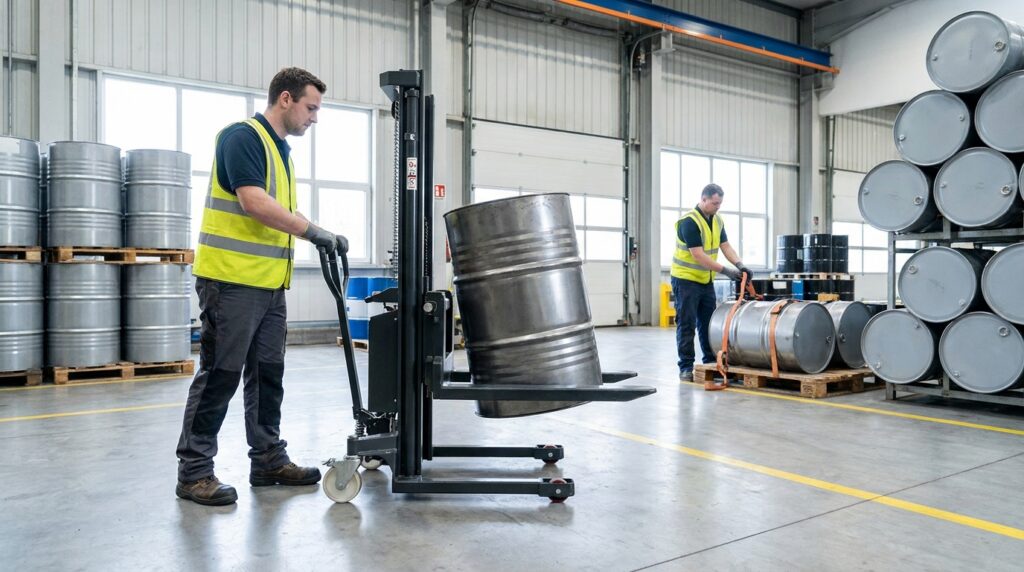
- Drum Lifters/Lifters: These devices are designed to lift drums from the ground or a pallet. They can be manual or powered, utilizing hydraulic, electric, or pneumatic systems. Lifters are essential for moving drums to higher levels, into processing equipment, or onto transport vehicles, minimizing manual lifting and the associated risks.
- Drum Trucks/Dollies: For horizontal movement of drums, drum trucks and dollies are invaluable. They allow a single operator to tilt and roll a drum, reducing the physical strain. Options range from simple hand trucks with a drum gripping mechanism to more sophisticated models with powered assistance for tilting and discharging.
- Drum Palletizers/Depalletizers: These automated or semi-automated systems are used to stack drums onto or remove them from pallets. They are crucial for efficient warehouse storage and logistics, reducing the need for manual stacking and the risk of unstable stacks.
- Drum Rotators/Tippers: For emptying or mixing the contents of a drum, rotators and tippers are indispensable. They allow for controlled tilting and pouring, preventing spills and ensuring complete discharge. Many models are designed to secure the drum firmly during the tipping operation.
- Drum Clamp Attachments: These attachments can be fitted to forklifts, telehandlers, or other lifting equipment, allowing for the secure gripping and lifting of drums. They provide a stable and efficient way to transport drums across longer distances within a facility.
Matching Equipment to Drum Size, Weight, and Capacity
The specifications of the drums being handled directly influence the choice of equipment.
- Drum Size: Standard drums, often referred to as 55-gallon drums (approximately 208 liters), are the most common. However, drums can vary significantly in diameter and height. Ensure the gripping mechanism or cradle of your handling equipment is designed to accommodate the specific drum dimensions.
- Drum Weight: The empty weight of a drum, combined with the weight of its contents, determines the total load the equipment must safely lift. Always verify the maximum safe working load (SWL) of any drum handling equipment and ensure it significantly exceeds the maximum expected drum weight. For 55-gallon drums, the filled weight can easily exceed 500 lbs (227 kg).
- Drum Capacity: While capacity often refers to the volume a drum can hold, it’s also a factor in its overall stability and how it needs to be handled, especially when partially filled. Equipment designed for full drums might require adjustments or different handling strategies for partially full ones.
Implementing Safe Drum Handling Procedures and Training
Even with the best equipment, safe drum handling relies on robust procedures and well-trained personnel. A comprehensive safety program encompasses every stage of the drum’s journey within the facility, from receipt to disposal.
Developing Standard Operating Procedures (SOPs)
Clear and concise Standard Operating Procedures (SOPs) are the backbone of any effective safety program. These documents should detail:
- Equipment Operation: Step-by-step instructions on how to safely operate each piece of drum handling equipment, including pre-operation checks, proper attachment methods, and safe movement protocols.
- Inspection Protocols: Regular inspection guidelines for both drums and handling equipment. This includes checking for leaks, damage, corrosion, proper labeling, and functional integrity of all equipment components.
- Loading and Unloading Procedures: Safe methods for placing drums onto and removing them from pallets, forklifts, and processing machinery.
- Stacking and Storage Guidelines: Best practices for stacking drums to ensure stability and prevent toppling. This should include recommended maximum stack heights and the importance of level storage areas.
- Emergency Response: Clear protocols for responding to spills, equipment malfunctions, or injuries, including the location of safety equipment and contact information for emergency services.
Comprehensive Training for Personnel
The most advanced equipment is ineffective if operators are not properly trained. Training should be:
- Role-Specific: Tailored to the specific tasks and equipment each employee will use.
- Hands-On: Practical training sessions where operators can practice using the equipment under supervision.
- Regularly Refreshed: Periodic refresher courses to reinforce safe practices and introduce any updates to procedures or equipment.
- Inclusive of Hazard Recognition: Training should emphasize hazard identification, encouraging employees to report any unsafe conditions they observe.
- Documentation: All training should be documented, including attendance records and competency assessments.
The Importance of Personal Protective Equipment (PPE)
Appropriate Personal Protective Equipment (PPE) is non-negotiable for anyone involved in drum handling. This typically includes:
- Safety Gloves: Chemical-resistant gloves are essential for protecting hands from contact with drum contents and providing a better grip.
- Safety Footwear: Steel-toed boots are crucial to protect feet from dropped drums or heavy objects.
- Eye Protection: Safety glasses or goggles are necessary to prevent splashes from entering the eyes.
- Protective Clothing: Aprons or chemical-resistant suits may be required depending on the nature of the materials being handled.
- Hearing Protection: If using noisy equipment like forklifts or during certain manual operations.
Maintaining Equipment and Preventing Drum Damage
Regular maintenance of drum handling equipment and diligent inspection of drums are critical for preventing failures that could lead to accidents and damage. A proactive maintenance schedule minimizes downtime and extends the lifespan of your assets.
Preventive Maintenance for Drum Handling Equipment
A robust preventive maintenance program should include:
- Daily Inspections: Operators should perform a visual check of their equipment before each use. This includes looking for obvious damage, leaks, loose parts, and checking tire pressure (if applicable).
- Weekly/Monthly Checks: More in-depth checks by maintenance personnel, focusing on hydraulic systems, lubrication points, braking systems, lifting chains, and the integrity of gripping mechanisms.
- Annual Servicing: Comprehensive servicing by qualified technicians, including thorough testing of all safety features and replacement of worn parts.
- Record Keeping: Maintaining detailed logs of all maintenance activities, repairs, and inspections. This helps track equipment history and identify recurring issues.
Strategies for Preventing Drum Damage
Damage to drums can occur during handling, storage, or transport. Proactive measures include:
- Proper Lifting Techniques: Using equipment that securely grips or cradles the drum, avoiding sudden jolts or impacts.
- Smooth Operations: Operators should move drums smoothly, avoiding sharp turns, sudden stops, or collisions with walls, racks, or other equipment.
- Appropriate Storage Surfaces: Drums should be stored on level, stable surfaces free from debris, sharp objects, or uneven terrain.
- Securing During Transit: When moving drums on forklifts or other vehicles, ensure they are properly secured to prevent shifting or falling. Drum cradles or pallet restraints can be very effective.
- Environmental Considerations: Protect drums from extreme temperatures, direct sunlight, and corrosive environments that can weaken their material integrity.
In addition to learning effective strategies for preventing spills, injuries, and drum damage during handling, you may find it beneficial to explore related topics that enhance workplace safety. For instance, an insightful article on ergonomics in material handling can provide valuable tips on how to minimize physical strain while managing heavy loads. Understanding these principles can further contribute to a safer and more efficient working environment.
Optimizing Warehouse Layout and Workflow for Drum Safety
The physical layout of a warehouse and the efficiency of workflows play a significant role in the safety of drum handling operations. A well-designed space minimizes unnecessary movements and reduces the likelihood of congestion and accidents.
Designing for Efficient and Safe Drum Movement
Consider the following when designing or optimizing your warehouse for drum handling:
- Clear Pathways: Designate clear, unobstructed aisles for the movement of drums. Ensure these aisles are wide enough to accommodate the widest drums and equipment with adequate clearance.
- Designated Drum Handling Zones: Establish specific areas for receiving, staging, processing, and storing drums. This helps to organize operations and prevent cross-traffic with other material handling activities.
- Adequate Lighting: Ensure all areas where drums are handled and stored are well-lit to improve visibility and reduce the risk of trips, falls, and collisions.
- Flooring Integrity: Maintain floors in good condition, free from cracks, potholes, or slippery substances. Epoxy coatings can provide durable, easy-to-clean surfaces in drum handling areas.
- Proximity to Processing: Position drum handling areas logically in relation to the equipment or processes where drums are used or emptied. This reduces travel distances and the potential for damage during transport.
Workflow Analysis and Improvement
Regularly analyzing your drum handling workflows can uncover opportunities for improvement and risk reduction:
- Minimize Double Handling: Streamline processes to reduce the number of times a drum needs to be moved or repositioned.
- Batch Processing: Grouping similar drum handling tasks can improve efficiency and reduce the frequency of equipment setup and breakdown.
- Ergonomic Considerations: Evaluate workflows for opportunities to reduce manual strain, such as ensuring drums are at an optimal height for loading or unloading.
- Utilizing Gravity: Where possible, design workflows that utilize gravity to assist with movement, reducing the need for powered lifting.
Case Study Example: Implementing a Drum Lifter System
A chemical processing plant was experiencing frequent back injuries and minor spills due to manual drum tilting for product dispensing. After assessing their needs, Fredon Handling recommended and supplied several hydraulic drum lifter-tippers. These units allowed operators to securely lift a drum, transport it to the dispensing station, and then tilt it with controlled precision using a hydraulic lever. The result was a significant reduction in reported back injuries, a marked decrease in product spillage, and a more efficient dispensing process. This illustrates how targeted equipment can directly address specific operational risks and improve overall safety.
In addition to exploring effective strategies for preventing spills, injuries, and drum damage during handling, you may find it beneficial to read a related article that delves into best practices for safe material handling. This insightful piece offers valuable tips and techniques that can further enhance workplace safety and efficiency. You can check it out here: best practices for safe material handling. By implementing these recommendations, you can create a safer environment for your team and reduce the risk of accidents.
Frequently Asked Questions About Drum Handling
Here are some common questions about ensuring safe and effective drum handling.
What is the most common hazard in drum handling?
The most common hazards in drum handling are musculoskeletal injuries (like back strains) resulting from manual lifting and carrying, and spills caused by dropping drums, improper pouring, or compromised drum integrity.
How often should drum handling equipment be inspected?
Drum handling equipment should undergo a daily visual inspection by the operator before use and more thorough inspections by maintenance personnel on a weekly or monthly basis, depending on the equipment type and usage frequency. Annual servicing by professionals is also recommended.
What type of drums is most challenging to handle?
The most challenging drums to handle are typically heavy steel drums due to their weight, and drums containing hazardous materials that require specialized containment and handling procedures to prevent spills and exposure. Drums of varying sizes and shapes within the same facility can also pose a challenge if equipment isn’t versatile.
Can forklifts safely handle all types of drums?
Forklifts can safely handle drums, but only when fitted with the appropriate drum handling attachments (e.g., drum clamps, drum grapples, drum dispensers). Simply trying to lift a drum with standard forks can lead to instability, damage, and accidents. It’s crucial to use equipment designed for drum securement.
What are the legal implications of drum handling accidents?
Drum handling accidents can lead to significant legal and financial consequences, including workers’ compensation claims, OSHA fines for safety violations, environmental remediation costs, and potential lawsuits from injured parties. Compliance with safety regulations is paramount.
How can I ensure my drums are compatible with the materials they contain?
Always consult the Material Safety Data Sheet (MSDS) or Safety Data Sheet (SDS) for the material being stored. This document will specify the recommended drum material (steel, plastic, etc.) and any specific handling or storage requirements to prevent degradation or dangerous reactions. Fredon Handling can advise on equipment suitable for various drum materials and contents.
Partner with Fredon Handling for Superior Drum Handling Solutions
Effectively preventing spills, injuries, and drum damage requires a multi-faceted approach, combining the right equipment, rigorous procedures, comprehensive training, and a commitment to continuous improvement. At Fredon Handling, we are dedicated to providing our clients with the most reliable and efficient drum handling solutions available. Our expertise in industrial equipment, coupled with our commitment to safety and operational excellence, makes us the ideal partner for optimizing your warehouse operations.
We understand that every facility has unique challenges. That’s why we offer personalized consultations to help you assess your specific needs and identify the most effective solutions. Whether you’re looking for advanced drum lifters, versatile drum trucks, or robust drum clamp attachments, Fredon Handling has the products and the knowledge to enhance your safety and productivity.
Ready to elevate your drum handling safety and efficiency? Contact Fredon Handling today for a free consultation. Our team of experts is eager to discuss your requirements and provide tailored solutions that protect your people, your products, and your bottom line.