
SEO Title: Monorail Crane Systems: Revolutionizing Material Handling in Manufacturing & Warehousing
Meta Description: Discover the design, benefits, and diverse applications of monorail crane systems. This comprehensive guide from Fredon Handling helps managers, operators, and buyers select the right system for their industrial needs.
URL Slug: monorail-crane-systems-design-benefits-applications
Understanding Monorail Crane Systems: An Overview
In the demanding environments of modern manufacturing, warehousing, and industrial operations, efficient and safe material handling is not just a preference; it’s a critical component of productivity and profitability. Among the array of lifting and moving solutions available, monorail crane systems stand out for their versatility, space-saving design, and ability to integrate seamlessly into complex workflows. This article delves deep into the world of monorail cranes, exploring their fundamental design principles, the compelling advantages they offer, and the wide spectrum of applications where they excel. Whether you are a manufacturing manager looking to optimize production flow, a warehouse operator seeking to improve throughput, an engineer designing a new facility, or a maintenance team responsible for upkeep, understanding monorail systems is essential for making informed decisions that drive operational excellence.
Fredon Handling, a trusted partner in industrial material handling solutions, is dedicated to providing expertise and cutting-edge equipment that meets the evolving needs of our clients. This guide aims to equip you with the knowledge necessary to evaluate if a monorail crane system is the right investment for your operations, covering everything from initial design considerations to ongoing maintenance and safety protocols.
For those interested in exploring more about material handling solutions, a related article on the benefits and applications of various crane systems can be found at Fredon Handling. This resource provides valuable insights into the different types of crane systems available, including monorail cranes, and discusses their design considerations, advantages, and practical uses across various industries.
The Core Design and Functionality of Monorail Crane Systems
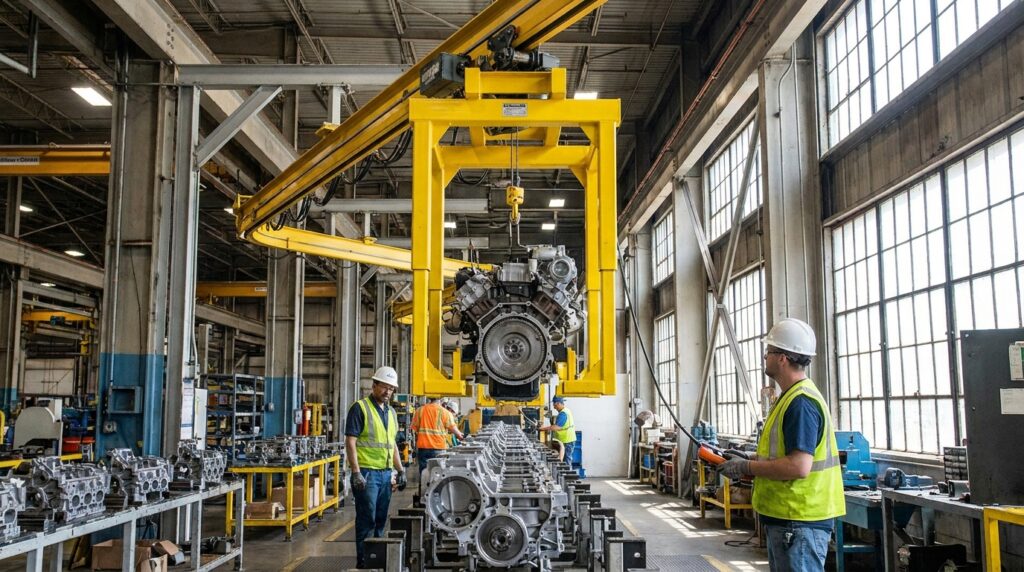
At its heart, a monorail crane system is a type of overhead material handling equipment that utilizes a single fixed track, or “rail,” to transport loads. This rail is typically suspended from the structure of a building or mounted on independent support columns, allowing the crane to travel horizontally along a predetermined path. The “crane” component typically refers to the trolley or hoist unit that moves along the rail, carrying the lifting mechanism and the load.
Anatomy of a Monorail System
A typical monorail crane system comprises several key components, each playing a vital role in its operation:
- Monorail Track: This is the backbone of the system, a specially designed steel beam or rail along which the trolley travels. The profile of the rail is crucial, designed to guide the trolley smoothly and securely. Common types include I-beams, H-beams, and specialized extruded profiles, chosen based on load capacity, travel speed, and environmental conditions. The track is supported by hangers or brackets, which are securely attached to the building’s superstructure or independent support columns.
- Trolley: The trolley is the mobile unit that runs on the monorail track. It is equipped with wheels or rollers that engage with the rail, allowing for frictionless movement. Trolleys can be manually pushed, electrically powered, or pneumatically driven, depending on the application’s requirements for speed, effort, and load weight. The trolley serves as the interface between the monorail track and the hoist.
- Hoist: Mounted on the trolley, the hoist is the lifting and lowering mechanism. It typically consists of a drum or a lifting chain, driven by an electric motor or a manual crank. The hoist is responsible for raising and lowering the load, often via a hook, lifting clamp, or other specialized lifting attachment.
- End Trucks (for Runway Systems): While a simple monorail might involve a trolley directly on the rail, more complex systems, especially those with longer travel distances or integrated with bridge cranes, may use end trucks. These are assemblies at the ends of the monorail section that attach to a bridge crane, allowing the entire crane to travel along the monorail.
- Power and Control Systems: For powered monorail systems, electric motors drive the trolley and the hoist. Control is typically managed through pendant push-button stations, radio remote controls, or integrated PLC (Programmable Logic Controller) systems for automated operation. The electrical supply is often delivered via a festoon system, a series of cables suspended along the monorail.
How it Works: A Seamless Journey
The operation of a monorail crane system is straightforward yet highly effective. A load is attached to the hoist’s lifting attachment. The hoist then raises the load off the ground. Once the load is secured and lifted, the trolley, carrying the hoist and load, is propelled along the monorail track. This movement can be manual, requiring physical effort to push the load, or automated through electric motors. The system allows for precise positioning of the load within the designated path of the monorail. When the load needs to be moved to a different location, the trolley simply travels along the track. The ability to integrate multiple monorail sections, switches, and turntables allows for complex routing and transfers, creating a comprehensive material handling network.
Material Choices and Construction
The materials used in the construction of monorail systems are chosen for their strength, durability, and resistance to wear and tear in industrial environments. High-strength steel is the primary material for monorail tracks and structural components. Trolley wheels are often made from durable materials like steel or polyurethane, designed for smooth rolling and longevity. Hoist components, including chains and wire ropes, are engineered to meet stringent safety and load-bearing requirements, often adhering to standards set by organizations like ASME.
Significant Benefits of Implementing Monorail Crane Systems
The adoption of monorail crane systems offers a multitude of advantages that directly impact operational efficiency, safety, and cost-effectiveness in industrial settings. These benefits are particularly pronounced in facilities where space is at a premium or where continuous, repetitive material movement is a core function.
Space Optimization and Facility Layout Flexibility
One of the most compelling advantages of monorail systems is their ability to utilize vertical space and operate above ground-level activities. By suspending the track overhead, monorails clear valuable floor space, which can then be used for production machinery, storage, or pedestrian walkways. This is a significant advantage in crowded manufacturing plants or busy warehouses where maximizing usable area is critical.
Furthermore, monorail systems offer exceptional flexibility in facility layout. Tracks can be routed around obstacles, integrated into building structures, or extended as production needs evolve. Unlike ground-based conveyors or forklifts, monorails are not confined by aisle widths or floor conditions. The potential to incorporate switches, turntables, and multiple intersecting tracks allows for sophisticated routing, enabling loads to be transported to virtually any point within the covered area. This adaptability makes them ideal for dynamic environments that undergo frequent layout changes or expansions.
Enhanced Operational Efficiency and Throughput
Monorail systems are designed for efficient and continuous material movement. Powered trolleys and hoists can transport loads quickly and reliably, reducing cycle times for material transfer. This consistent speed and predictability contribute to smoother production flows, minimizing bottlenecks and improving overall throughput. For repetitive tasks, such as moving components from a staging area to an assembly line or transferring finished goods to a shipping dock, monorails can operate continuously, ensuring materials are always available when and where needed.
Manual monorails can also boost efficiency by reducing the physical strain on operators, allowing them to move heavier loads with less effort and more quickly than they could manually. This translates to faster task completion and reduced fatigue.
Improved Safety and Reduced Risk of Accidents
Safety is paramount in any industrial operation, and monorail crane systems contribute significantly to a safer working environment. By lifting and transporting loads overhead, they eliminate the risk of pedestrian collisions with moving loads, a common hazard associated with forklifts and other ground-based material handling equipment. This separation of material flow from personnel traffic drastically reduces the potential for accidents.
Modern monorail systems are equipped with advanced safety features, including overload protection, emergency stop buttons, and limit switches, which prevent over-hoisting or over-travel. Regular inspections and adherence to ASME B30 standards for overhead lifting devices, as well as OSHA regulations concerning workplace safety, are crucial for maintaining the inherent safety of these systems. The controlled movement of loads also minimizes the risk of dropped loads due to mishandling or equipment malfunction.
Reduced Product Damage and Improved Product Integrity
The smooth, controlled movement provided by monorail systems significantly reduces the risk of product damage. Loads are less likely to be jostled, bumped, or dropped compared to movement by less precise methods. This is especially important for fragile materials, sensitive electronic components, or finished goods that need to maintain their cosmetic integrity. The gentle handling afforded by a well-designed monorail system helps preserve product quality throughout the material handling process.
Cost-Effectiveness and Long-Term ROI
While the initial investment in a monorail system can be substantial, its long-term cost-effectiveness is often a deciding factor. The reduction in labor costs due to increased efficiency, the minimized expenses associated with product damage and accidents, and the extended lifespan of the equipment contribute to a strong return on investment (ROI). Furthermore, the ability to integrate monorails into existing infrastructure without extensive floor modifications can also lead to significant cost savings during installation. The low maintenance requirements, when proper procedures are followed, also contribute to lower operational expenses over the system’s life.
Versatility and Adaptability
The inherent design of monorail systems makes them incredibly versatile. They can be configured to handle a wide range of load types and weights, from small, individual components to large, heavy assemblies. Specialized lifting attachments, such as vacuum lifters, magnetic lifters, or custom grippers, can be integrated with the hoist to accommodate unique product handling needs. As mentioned, their ability to be reconfigured or expanded makes them adaptable to changing production demands and facility layouts, offering a long-term solution rather than a fixed-point system.
Diverse Applications of Monorail Crane Systems
The inherent flexibility, efficiency, and safety of monorail crane systems make them suitable for a vast array of industrial applications across numerous sectors. Their ability to integrate into existing workflows and adapt to specific operational requirements is a key factor in their widespread adoption.
Manufacturing: Streamlining Production Lines
In manufacturing environments, monorail systems are instrumental in creating efficient and continuous production lines.
- Automotive Manufacturing: Monorails are extensively used to transport car bodies, engines, transmissions, and individual components along assembly lines. They enable precise positioning of parts during assembly, improve worker ergonomics by bringing components to an optimal working height, and ensure a steady flow of materials to various stations. Systems can be configured with complex switching to move vehicles between different stages of assembly or painting.
- Aerospace Industry: The stringent requirements for precision and safety in aerospace manufacturing make monorails an ideal choice. They are used for handling large aircraft components, such as fuselage sections, wings, and engines, ensuring delicate materials are moved without damage. Overhead systems also keep critical floor space free for complex assembly operations.
- General Manufacturing: Across industries like electronics, machinery, and consumer goods, monorails facilitate the movement of raw materials, work-in-progress, and finished products. They can be used for loading and unloading CNC machines, transporting parts between workstations, and moving finished goods to packaging or shipping areas.
Warehousing and Logistics: Optimizing Storage and Order Fulfillment
Warehousing and logistics operations benefit greatly from the space-saving and efficiency-boosting capabilities of monorail systems.
- High-Density Storage: In facilities with limited floor space, overhead monorails can be used in conjunction with automated storage and retrieval systems (AS/RS) or for manual replenishment of pallet racks. This allows for more efficient utilization of vertical storage space.
- Order Picking and Fulfillment: Monorails can transport picking carts or directly lift and move products from storage locations to packing stations, significantly improving order fulfillment speed and accuracy. They can be integrated with warehouse management systems (WMS) for automated routing and task assignment.
- Cross-Docking Operations: In busy cross-docking facilities, monorails can quickly transfer incoming goods to outbound shipping areas, minimizing storage time and improving inventory flow.
Food and Beverage Processing: Maintaining Hygiene and Efficiency
The food and beverage industry demands high standards of hygiene and reliable material handling. Monorail systems can be designed to meet these requirements.
- Hygienic Design: Stainless steel construction, smooth surfaces, and easy-to-clean designs are essential for monorails used in food processing. They can transport ingredients, intermediate products, and finished goods without contaminating them.
- Cold Storage Facilities: Monorails are effective in cold storage environments, where floor-based equipment can be hampered by ice and limited maneuverability. Overhead systems ensure reliable operation even in sub-zero temperatures.
- Packaging and Palletizing: Monorails can move packaged goods to palletizing stations or directly to loading docks, streamlining the outbound logistics process.
Foundries and Heavy Industry: Robust Material Handling Solutions
In environments with extreme conditions, such as foundries and heavy manufacturing, robust monorail systems are crucial.
- High-Temperature Applications: Monorails in foundries can transport molten metal in ladles or handle hot castings, requiring specialized heat-resistant components and designs.
- Heavy Lifting: High-capacity monorails are capable of lifting and moving very heavy loads, such as large industrial machinery components, structural steel, or finished products like large generators or turbines.
- Corrosive Environments: Systems can be constructed with corrosion-resistant materials to withstand harsh chemical or environmental conditions found in certain industrial plants.
Other Notable Applications
- Paint Shops and Finishing Operations: Monorails are ideal for moving items through various stages of painting, drying, and finishing, ensuring consistent exposure and preventing contamination.
- Assembly Operations: From simple component placement to the assembly of complex products, monorails provide precise and efficient material delivery.
- Automated Warehouses: Integration with AS/RS and automated guided vehicles (AGVs) for a complete automated material handling solution.
Monorail crane systems have become increasingly popular in various industries due to their efficient design and versatility. For those interested in exploring more about the advantages and applications of these systems, a related article can provide valuable insights. You can find additional information about the company behind these innovations and their commitment to quality by visiting this link. Understanding the benefits of monorail cranes can help businesses optimize their operations and improve productivity.
Selecting the Right Monorail Crane System: Key Considerations
Choosing the appropriate monorail crane system requires a thorough understanding of your specific operational needs and site conditions. A one-size-fits-all approach will not suffice. Fredon Handling emphasizes a consultative process to ensure you select a system that maximizes performance, safety, and longevity.
Load Capacity and Frequency of Use
The first and most critical factor is the maximum weight your system will need to lift and transport. This will dictate the required strength of the monorail track, trolley, and hoist. Consider not only the heaviest single item but also the combined weight if multiple loads are moved simultaneously.
Equally important is the frequency of use. Will the system operate continuously throughout a shift, or will it be used intermittently? High-cycle applications demand more robust components and potentially higher-duty class equipment to ensure durability and minimize wear.
Travel Distance and Speed Requirements
Determine the total travel distance the system needs to cover. This will influence the number of track sections, support structures, and the type of drive system required for the trolley. For longer distances, powered trolleys are essential.
Consider the desired travel speed. If rapid movement is necessary to maintain production flow or meet deadlines, a higher-speed trolley drive system will be required. Conversely, if precise, slow positioning is paramount, a variable-speed drive might be more appropriate.
Environmental Conditions and Facility Constraints
The environment in which the monorail system will operate is a crucial determinant of material selection and design.
- Temperature: Extreme heat or cold can affect material performance.
- Corrosive Elements: Exposure to chemicals, moisture, or salt requires corrosion-resistant materials like stainless steel or specialized coatings.
- Dust and Debris: In dusty environments, sealed components and regular cleaning are vital.
- Explosive Atmospheres: For hazardous locations, explosion-proof (XP) rated components are mandatory to comply with safety regulations.
Facility constraints also play a significant role. Ceiling height, existing structural support, and the presence of other overhead equipment will influence the feasible track layout and mounting options.
Power Source and Control Preferences
Decide whether a manual, electric, or pneumatic drive system is most suitable for your trolley and hoist operations.
- Manual: Cost-effective for light loads and infrequent use, but requires significant operator effort.
- Electric: The most common choice, offering consistent power, speed control, and automation capabilities.
- Pneumatic: Useful in environments where electricity is a concern (e.g., wet areas) or where spark-free operation is critical.
Control systems range from simple pendant push-buttons to sophisticated radio remote controls and fully integrated PLC systems for automated movement and sequencing.
Integration with Existing Systems
Consider how the monorail system will interface with other material handling equipment and production machinery. Will it need to transfer loads to or from conveyors, AGVs, or other cranes? Understanding these integration points is vital for a cohesive and efficient workflow.
Safety Standards and Regulations
Compliance with relevant safety standards is non-negotiable. Ensure that any proposed system adheres to:
- OSHA (Occupational Safety and Health Administration): General workplace safety regulations, including those pertaining to lifting devices.
- ASME (American Society of Mechanical Engineers): Specifically, ASME B30 standards, which provide detailed safety requirements for various lifting and hoisting equipment, including overhead cranes.
- Local Building Codes: Ensure structural integrity and compliance with local regulations.
Fredon Handling’s experienced team can guide you through these considerations to recommend a tailored solution.
Safety Protocols and Maintenance for Monorail Crane Systems
The long-term reliability, safety, and operational efficiency of any monorail crane system depend heavily on a robust maintenance program and strict adherence to safety protocols. Proactive care is far more cost-effective than reactive repairs and, more importantly, crucial for preventing accidents.
Daily and Weekly Inspections
Before each shift, operators should perform a visual inspection of the monorail system. This includes:
- Track: Check for visible damage, debris, or obstructions on the rail. Ensure hangers and supports appear secure.
- Trolley: Inspect wheels for wear or damage. Listen for unusual noises during operation.
- Hoist: Examine the load chain or wire rope for kinks, wear, or damage. Check the hook for deformation or cracks.
- Controls: Test emergency stop buttons and verify that all operational controls function correctly.
- Safety Devices: Ensure limit switches and overload protection mechanisms are functioning as intended.
Weekly inspections can be more in-depth, involving checking lubrication levels, examining electrical connections, and testing brake systems.
Periodic Professional Inspections and Preventative Maintenance
Beyond daily checks, scheduled, periodic inspections by qualified maintenance personnel are essential. These should occur at intervals determined by the manufacturer’s recommendations, usage frequency, and environmental conditions, often aligning with ASME B30.11 standards for underhung hoists and monorails.
- Lubrication: Regularly lubricate all moving parts, including trolley wheels, hoist mechanisms, and any drive components, according to the manufacturer’s specifications. Proper lubrication reduces friction, minimizes wear, and prevents premature component failure.
- Wear Assessment: Closely monitor critical components for signs of wear, such as worn trolley wheels, stretched hoist chains, or damaged trolley guides. Replace parts showing excessive wear before they fail.
- Structural Integrity: Periodically inspect the integrity of the monorail track, supports, and hangers. Ensure that bolt tightness is maintained and that there is no evidence of structural fatigue or deformation.
- Electrical Systems: Inspect electrical cables, festoon systems, motors, and control panels for any signs of damage, corrosion, or loose connections.
- Load Testing: In some cases, periodic load testing may be recommended or required by regulations to verify the system’s capacity and structural integrity.
Operator Training and Competency
A well-trained operator is the first line of defense for safety and system longevity. Comprehensive training should cover:
- Proper operation of the specific monorail system.
- Understanding load limits and capacity charts.
- Correct rigging and load attachment procedures.
- Recognizing and reporting potential hazards or system malfunctions.
- Emergency procedures.
- Daily inspection routines.
Refresher training should be conducted periodically to reinforce safe practices and introduce any updates or changes to the system or procedures.
Adherence to OSHA and ASME Standards
It is crucial to ensure that all maintenance and operational practices comply with relevant OSHA regulations and ASME B30 standards. These standards provide guidelines for inspection frequencies, maintenance procedures, and safety requirements, ensuring that the equipment is operated and maintained to the highest safety benchmarks. Regularly reviewing these standards and updating internal protocols accordingly is a sign of a mature safety program.
Record Keeping
Maintain detailed records of all inspections, maintenance activities, repairs, and operator training. This documentation is invaluable for tracking system performance, identifying recurring issues, scheduling future maintenance, and demonstrating compliance with safety regulations.
By implementing a diligent safety and maintenance program, businesses can ensure their monorail crane systems operate reliably, safely, and efficiently for many years, protecting both personnel and assets.
Frequently Asked Questions About Monorail Crane Systems
Q1: What is the primary advantage of a monorail crane system over other overhead lifting solutions?
The primary advantage of a monorail crane system lies in its space-saving design and extreme flexibility. By utilizing a single, suspended track, it clears valuable floor space, allowing for more efficient facility layouts and unimpeded pedestrian or vehicular traffic. Its ability to be routed around obstacles and integrated with switches and turntables offers a highly adaptable material handling path.
Q2: Can monorail systems be used in hazardous or explosive environments?
Yes, monorail systems can be designed for hazardous environments. This typically involves specifying explosion-proof (XP) rated components for motors, controls, and electrical systems to prevent ignition sources in atmospheres containing flammable gases, vapors, or dusts. Proper design and adherence to ATEX or similar classifications are critical in these applications.
Q3: How do I determine the correct load capacity for my monorail system?
Determining the correct load capacity involves assessing the heaviest single load you will lift, considering the frequency of lifting that maximum load, and factoring in any potential for simultaneous lifting or dynamic loads. It’s crucial to also account for the weight of rigging attachments. Consulting with a material handling expert like Fredon Handling is recommended to ensure an accurate capacity assessment.
Q4: What kind of maintenance is typically required for a monorail crane system?
Maintenance typically involves regular visual inspections of the track, trolley, and hoist; lubrication of moving parts; checks for wear on wheels, chains, and hooks; and periodic inspections of electrical and control systems. The frequency and depth of maintenance are dependent on the system’s usage, environment, and manufacturer recommendations. Adhering to a preventative maintenance schedule is key.
Q5: Can monorail systems be automated?
Absolutely. Monorail systems can be highly automated. Trolleys can be equipped with variable-speed drives, position control systems, and integrated with PLC systems and warehouse management software (WMS) for fully automated routing, sequencing, and material flow management. This integration can create highly efficient, lights-out operations for certain tasks.
Partner with Fredon Handling for Your Material Handling Needs
In today’s competitive industrial landscape, optimizing material handling is crucial for driving efficiency, ensuring safety, and maximizing profitability. Monorail crane systems offer a powerful, versatile, and space-saving solution that can transform your operations. From streamlining intricate manufacturing processes to optimizing warehouse logistics, the benefits are clear and substantial.
At Fredon Handling, we understand the complexities of industrial material handling. Our team of experts is dedicated to providing tailored solutions that meet the unique challenges and demands of your business. We offer a comprehensive range of monorail systems and related equipment, backed by extensive industry knowledge and a commitment to exceptional service.
Whether you are looking to upgrade your existing material handling infrastructure, design a new facility layout, or simply explore the possibilities of enhancing your operational efficiency, Fredon Handling is your trusted partner. We provide expert consultation, custom design, reliable equipment, and ongoing support to ensure you achieve your operational goals.
Don’t let inefficient material handling hold your business back. Contact Fredon Handling today to discuss your requirements and discover how our monorail crane systems can revolutionize your operations.