
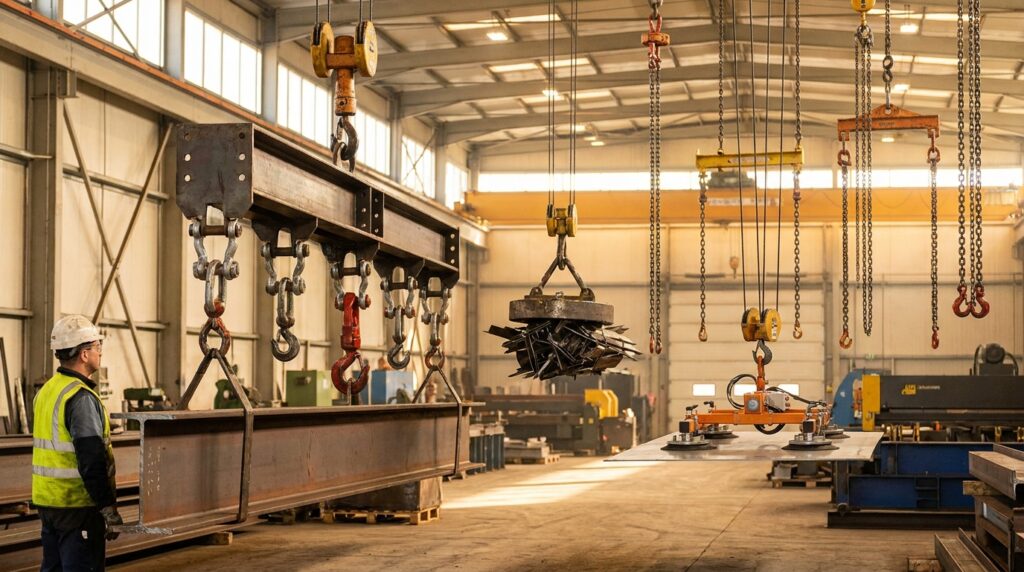
SEO Title: Below-the-Hook Lifting Devices: A Comprehensive Guide for Industrial Applications
Meta Description: Explore the essential types, applications, selection criteria, and safety considerations for below-the-hook (BTH) lifting devices. Optimize your industrial lifting operations with Fredon Handling.
Suggested URL Slug: below-the-hook-lifting-devices-guide
Understanding Below-the-Hook Lifting Devices for Enhanced Industrial Operations
In the demanding world of manufacturing, warehousing, and heavy industry, efficient and safe material handling is paramount. At the heart of many lifting operations lies the below-the-hook (BTH) lifting device. These specialized pieces of equipment are crucial for connecting a crane or hoist to the load, ensuring secure and stable transport. Fredon Handling understands that selecting the right BTH device is not just about lifting; it’s about optimizing workflow, minimizing risk, and maximizing productivity. This comprehensive guide will delve into the diverse world of BTH devices, equipping manufacturing managers, warehouse operators, engineers, maintenance teams, and industrial equipment buyers with the knowledge needed to make informed decisions.
For those interested in understanding more about the various tools that enhance efficiency in material handling, a related article titled “Types of Material Handling Equipment: Essential Tools for Efficiency” provides valuable insights. This article delves into different types of equipment used in the industry, complementing the knowledge gained from exploring below-the-hook lifting devices. You can read the article here: Types of Material Handling Equipment: Essential Tools for Efficiency.
## The Indispensable Role of Below-the-Hook Lifting Devices
Below-the-hook lifting devices are engineered to attach directly to the load. They act as the intermediary between the overhead lifting equipment, such as an overhead crane or hoist, and the object being moved. The primary function of a BTH device is to provide a secure connection point, distribute the load evenly, and often to orient or manipulate the load during the lifting process. Without the correct BTH device, lifting many types of industrial goods would be impossible, impractical, or exceedingly dangerous. Their design must account for the load’s shape, weight, material properties, and the specific environment of operation.
## Why BTH Devices are Critical for Safety and Efficiency
Safety is non-negotiable in any industrial lifting scenario. BTH devices are designed with safety as a top priority, adhering to stringent standards like those set by ASME (The American Society of Mechanical Engineers) and OSHA (Occupational Safety and Health Administration). Improperly rigged loads can lead to dropped items, equipment damage, and severe injuries or fatalities. A well-chosen BTH device ensures the load remains stable, balanced, and securely attached throughout the entire lift, transfer, and placement process.
Beyond safety, BTH devices significantly enhance efficiency. They can streamline operations by:
- Reducing Rigging Time: Specialized devices can dramatically cut down the time and labor required to prepare a load for lifting compared to manual rigging with slings and chains.
- Improving Load Stability: Many BTH devices are designed to grip, cradle, or secure loads in a way that prevents shifting or tipping during transit.
- Enabling Specialized Lifts: Certain loads, due to their shape or material, require specific BTH solutions to be lifted safely and effectively.
- Facilitating Load Manipulation: Some BTH devices allow for rotation, tilting, or other movements of the load, eliminating the need for additional manual intervention or equipment.
The selection and proper use of BTH devices are foundational to achieving operational excellence in any industrial setting.
## Exploring the Diverse Landscape of Below-the-Hook Lifting Devices
The variety of BTH devices available is vast, reflecting the diverse needs of industrial lifting. Each type is engineered for specific applications and load characteristics. Understanding these distinctions is key to selecting the most appropriate device for your operation.
## Slings: The Versatile Foundation
Slings are among the most common BTH devices, offering flexibility and adaptability for a wide range of loads. They are typically made from materials like wire rope, chain, synthetic webbing, or even natural fiber.
### Wire Rope Slings
Constructed from multiple strands of steel wire twisted together, wire rope slings are known for their high tensile strength and durability. They are resistant to abrasion and impact, making them suitable for rough handling environments.
- Types: Eye and eye, single leg, multi-leg (two, three, or four), choker, endless.
- Applications: General lifting of heavy machinery, structural steel, pipe, and general industrial goods.
- Considerations: Can be susceptible to kinking and crushing if mishandled. Requires careful inspection for broken wires and corrosion.
### Chain Slings
Chain slings, made from high-strength alloy steel, offer exceptional durability and resistance to heat and abrasion. They are often preferred for their flexibility and ability to conform to irregular load shapes.
- Types: Single, double, triple, and quadruple leg configurations. Various hook and coupling options.
- Applications: Lifting heavy, abrasive, or hot materials, such as foundry castings, scrap metal, and hot coils.
- Considerations: Can be heavier than other sling types. Subject to wear and deformation, requiring regular inspection and proof testing.
### Synthetic Webbing Slings
Made from strong, lightweight synthetic fibers like polyester, nylon, or polypropylene, webbing slings are an excellent choice when protecting the load surface is critical. They are flexible, offer a high strength-to-weight ratio, and are resistant to moisture and chemicals (depending on the material).
- Types: Flat woven, endless, eye and eye, twisted eye, reversed eye.
- Applications: Lifting delicate equipment, finished goods, painted surfaces, and loads sensitive to abrasion or crushing. Widely used in manufacturing, aerospace, and general warehousing.
- Considerations: Susceptible to UV degradation, cuts, and chemical damage. Requires careful inspection for abrasions, cuts, and heat damage. Fredon Handling offers a comprehensive range of synthetic slings designed for various industrial applications.
### Combination Slings
These slings combine different materials, such as webbing with chain or wire rope, to leverage the strengths of each. For instance, a synthetic web sling with chain legs can offer abrasion resistance on the legs while providing soft contact with the load.
## Mechanical Grabs and Clamps: Secure Grip Solutions
Mechanical grabs and clamps utilize the load’s weight or mechanical force to create a secure grip. They are ideal for lifting items with edges, holes, or specific profiles.
### Plate Clamps
Designed to lift steel plates, these clamps grip the edge of the plate. They come in various types for vertical, horizontal, or pivoting lifting.
- Types: Vertical plate clamps, horizontal plate clamps, swivel and rotating clamps.
- Applications: Moving and assembling large steel plates in fabrication shops, shipbuilding, and construction.
- Considerations: Load capacity is critical, and the clamp must be applied to an adequate edge thickness.
### Beam Clamps (Trolley Clamps)
These devices are designed to attach to the flange of an I-beam or H-beam, allowing a hoist or crane to be moved along the beam. They function as adjustable trolleys.
- Types: Adjustable beam clamps, fixed beam clamps.
- Applications: Creating temporary lifting points or enabling the movement of hoists along overhead runways.
- Considerations: Ensure the clamp is rated for the beam’s flange width and the intended load.
### Pipe Grabs and Clamps
Specially designed to securely grip pipes, these devices prevent them from rolling or slipping during lifting.
- Types: Various designs for different pipe diameters and materials.
- Applications: Handling pipes in construction, oil and gas, and manufacturing.
### Drum Lifters and Grabs
These BTH devices are specifically designed to lift and transport drums, often allowing for tipping or pouring.
- Types: Single drum lifters, double drum lifters, horizontal drum lifters, drum tippers.
- Applications: Moving and emptying drums in chemical plants, warehouses, and manufacturing facilities.
## Engineered Lifting Devices: Precision and Specialization
Beyond slings and basic grabs, a wide array of engineered BTH devices are developed for highly specific lifting and manipulation tasks. These often involve custom designs or complex mechanical actions.
### Lifting Beams (Spreader Bars)
Lifting beams are rigid structures that distribute the load’s weight over a wider area and provide multiple attachment points. They are crucial for preventing distortion or damage to the load, especially for long or flexible items.
- Types: Single point, multi-point, adjustable, custom-designed.
- Applications: Lifting large, awkward, or sensitive loads such as coils, pre-fabricated building sections, heavy machinery, and long pipes.
- Considerations: The beam itself adds weight to the lift, and its design must match the load’s center of gravity and attachment points. Fredon Handling provides expert consultation and sourcing for custom lifting beam solutions.
### C-Hooks
C-hooks are shaped like the letter “C” and are used to lift coils of steel or wire rope by engaging the inner diameter of the coil.
- Types: Manual, powered, with coil grab attachments.
- Applications: Moving and handling large coils of metal in steel mills, fabrication facilities, and warehouses.
- Considerations: Requires careful alignment to ensure the hook engages the coil properly.
### Vacuum Lifters
These devices use vacuum cups to create a strong seal with a smooth, non-porous surface of the load. They are ideal for materials like glass, sheet metal, and finished panels where clamping might cause damage.
- Types: Various configurations for different load sizes, shapes, and weights. Powered by electric or compressed air.
- Applications: Handling large glass panes in construction and manufacturing, moving sheet metal, and lifting polished or finished materials.
- Considerations: Requires a suitable load surface. Vacuum system integrity is critical for safety. Explore Fredon Handling’s range of vacuum lifting solutions for delicate material handling.
### Coil Lifters and Grabs
Specialized devices for lifting and maneuvering coils of material, often allowing for horizontal or vertical orientation.
- Types: Horizontal coil grabs, vertical coil lifters, fully automatic coil manipulators.
- Applications: Steel mills, metal fabrication, and printing industries.
### Container Handling Attachments
These BTH devices are designed specifically for lifting and moving intermodal shipping containers.
- Types: Container spreaders (top-lift, bottom-lift), container grapples.
- Applications: Ports, intermodal yards, and large logistics centers.
### Manipulators and Positioners
More complex BTH devices that offer advanced control over load orientation, rotation, and manipulation.
- Types: Articulated arm manipulators, robotic end-effectors, custom-designed positioners.
- Applications: Assembly lines, precise placement tasks, handling hazardous materials, and ergonomic lifting assistance. Fredon Handling partners with clients to engineer bespoke manipulator solutions.
## Critical Criteria for Selecting the Right Below-the-Hook Device
The selection process for a BTH device is multifaceted. It requires a thorough assessment of the load, the lifting equipment, and the operational environment. Rushing this decision can lead to inefficiencies, increased risk, and costly downtime.
## Load Characteristics: The Primary Consideration
The most critical factor in selecting a BTH device is understanding the load itself.
- Weight: This dictates the minimum working load limit (WLL) of the device. Always select a device with a WLL significantly exceeding the maximum anticipated load.
- Size and Shape: Irregular shapes, long lengths, or bulky dimensions may necessitate spreader beams, custom slings, or specialized grabs.
- Material and Surface Properties: Delicate, polished, or painted surfaces require non-damaging solutions like vacuum lifters or soft webbing slings. Abrasive or hot materials demand robust chain or wire rope slings.
- Center of Gravity: Understanding the load’s center of gravity is vital for ensuring it remains balanced during the lift. This influences the design of lifting beams and the placement of lifting points.
- Material Integrity: The load must be structurally sound enough to withstand the forces applied by the BTH device. For instance, thin-walled containers or fragile components may require specialized handling.
## Lifting Equipment and Environment: Matching Capabilities
The BTH device must be compatible with your existing lifting infrastructure and the operational surroundings.
- Crane/Hoist Capacity: The combined weight of the load, the BTH device, and any rigging must not exceed the rated capacity of the crane or hoist.
- Hook Type and Size: The hook on the crane or hoist must be compatible with the attachment points on the BTH device (e.g., shackles, eye bolts).
- Headroom Limitations: Some BTH devices, like spreader beams, can reduce available headroom. This must be factored into the selection to ensure sufficient clearance.
- Operating Environment: Consider factors such as temperature extremes, corrosive atmospheres, or the presence of flammable materials, which may require specific material choices for the BTH device.
- Frequency of Use and Duty Cycle: For high-frequency or demanding applications, more robust and durable BTH devices may be necessary to ensure longevity and minimize maintenance.
## Safety Standards and Regulatory Compliance
Adherence to safety regulations is paramount.
- ASME B30 Standards: The ASME B30 committee publishes standards for various lifting equipment. For example, ASME B30.20 covers Below-the-Hook Lifting Devices, specifying design, inspection, and use requirements.
- OSHA Requirements: OSHA mandates safe lifting practices and requires employers to provide safe working conditions. This includes ensuring that all lifting equipment, including BTH devices, is in good condition and suitable for the task.
- Manufacturer’s Specifications: Always refer to the manufacturer’s specifications and operating manuals for correct usage, load limits, and maintenance.
## Cost-Effectiveness and ROI: Long-Term Value
While initial cost is a factor, consider the total cost of ownership.
- Durability and Lifespan: A slightly more expensive but more durable device can offer a better return on investment over time by reducing replacement frequency and downtime.
- Efficiency Gains: The time saved in rigging, the reduction in product damage, and the improved safety can all contribute to a significant return on investment.
- Maintenance Costs: Some devices require more frequent or specialized maintenance than others.
Fredon Handling works closely with clients to assess these criteria, ensuring the optimal BTH solution is identified for their unique operational challenges.
For those interested in learning more about the various aspects of lifting equipment, a related article that provides valuable insights is available at this link. It discusses the importance of selecting the right lifting devices for specific applications, which complements the information on Below-the-Hook Lifting Devices and their diverse types and uses. Understanding these elements can significantly enhance safety and efficiency in lifting operations.
## Ensuring Safety and Best Practices with Below-the-Hook Devices
The inherent risks associated with lifting operations are significantly amplified without a robust safety culture and strict adherence to best practices when using BTH devices. Safety is not an afterthought; it is an integral part of the entire lifting process, from selection and inspection to operation and maintenance.
## Pre-Use Inspection: The First Line of Defense
Every BTH device must undergo a thorough pre-use inspection before each lift. This visual and functional check is critical for identifying potential hazards.
- Visual Inspection: Look for any signs of damage, wear, or deformation. This includes:
- Slings: Cuts, abrasions, tears, punctures, chemical degradation, UV damage, broken wires (wire rope), heat damage, kinks, twists.
- Chains: Elongation, nicks, gouges, cracks, corrosion, distortion.
- Hooks: Cracks, distortion, excessive wear on the throat or tip.
- Shackles and Connectors: Cracks, deformation, damaged threads.
- Mechanical Devices: Proper functioning of jaws, grips, vacuum seals, and electrical/pneumatic systems.
- Functional Checks: Test any moving parts for smooth operation. For vacuum lifters, verify vacuum generation and retention. Ensure locking mechanisms engage securely.
- Load Chart Verification: Confirm the device’s Working Load Limit (WLL) is appropriate for the load being lifted.
- Tagging and Documentation: Devices that fail inspection should be immediately tagged “DO NOT USE” and removed from service. Maintain records of all inspections.
## Proper Rigging and Load Securing Techniques
The way a BTH device is attached to the load and the lifting equipment is as important as the device itself.
- Load Balancing: Ensure the load is evenly distributed and the BTH device is attached at points that maintain stability. Use a spreader bar if the load is prone to bending or distortion.
- Secure Attachment: Verify that all connections are secure and properly seated. For example, ensure shackles are fully seated and the pin is secured.
- Avoid Sharp Edges: Use padding or protective sleeves when slings might come into contact with sharp edges on the load.
- Center of Gravity Alignment: Position the lifting device directly over the load’s center of gravity to prevent uncontrolled swinging.
- Clearance: Ensure sufficient clearance for the load and the BTH device to pass through doorways, under obstructions, and during transit.
## Operator Training and Competency
Only trained and authorized personnel should operate lifting equipment and attach BTH devices.
- Understanding Load Charts: Operators must know how to read and interpret load charts for BTH devices.
- Inspection Procedures: Training should cover detailed pre-use inspection protocols.
- Safe Operating Practices: Operators need to understand best practices for maneuvering loads, avoiding sudden movements, and managing swing.
- Emergency Procedures: Training should include protocols for handling emergency situations, such as a dropped load or equipment malfunction.
## Maintenance and Repair Guidelines
Regular and preventative maintenance is crucial for the longevity and reliability of BTH devices.
- Scheduled Inspections: Beyond pre-use checks, implement a schedule for more in-depth periodic inspections, often conducted by a qualified person.
- Manufacturer Recommendations: Follow the manufacturer’s guidelines for lubrication, calibration, and part replacement.
- Repair Procedures: Repairs should only be performed by qualified technicians using manufacturer-approved parts. Never attempt to repair a damaged BTH device yourself.
- Proof Testing: Certain BTH devices, particularly chains and custom-engineered equipment, may require periodic proof testing to verify their structural integrity under load.
By prioritizing these safety measures, Fredon Handling helps clients cultivate a robust safety culture, minimize risks, and ensure compliance with industry standards like ASME B30.20 and OSHA regulations.
When exploring the various types of below-the-hook lifting devices, it’s essential to understand their applications and how to select the right one for your needs. A related article that delves into the broader topic of material handling can provide valuable insights into the principles and practices that govern this field. For more information on the fundamentals of material handling, you can read the article found here. This resource complements the discussion on lifting devices by highlighting the importance of efficient and safe material movement in various industries.
## Maintenance and Longevity of Your Lifting Equipment
The lifespan and reliable performance of below-the-hook lifting devices are directly tied to the quality of their maintenance. A proactive maintenance program not only ensures safety but also maximizes the return on investment by extending the operational life of your equipment and minimizing costly downtime.
## Routine Inspections: The Cornerstones of Maintenance
As highlighted previously, pre-use inspections are critical. However, scheduled, more in-depth inspections by trained personnel are also essential.
- Periodic Inspections: These are more comprehensive than daily checks and should be conducted at regular intervals (e.g., monthly, quarterly, annually) based on usage intensity, manufacturer recommendations, and the operating environment. A qualified person should perform these.
- Record Keeping: Maintaining detailed records of all inspections, including any defects found and repairs made, is crucial for tracking the history of the device and identifying recurring issues.
- Damage Assessment: During periodic inspections, pay close attention to any signs of:
- Wear and Tear: Look for thinning of metal components, abrasion on slings, or deformation of hooks.
- Corrosion: Especially important in humid or chemical environments, corrosion can significantly weaken metal parts.
- Cracks: These can form in metal components due to stress and fatigue.
- Stretching or Elongation: Particularly relevant for chain slings, which can lose their original dimensions over time.
## Lubrication and Cleaning: Preserving Functionality
- Moving Parts: For mechanical grabs, clamps, and manipulators, ensure all moving parts are properly lubricated according to the manufacturer’s specifications. This prevents wear and maintains smooth operation.
- Surface Cleaning: Regularly clean BTH devices to remove dirt, grease, or corrosive materials that can accelerate wear or mask underlying damage. This is especially important for vacuum lifters where seals need to be clean for proper function.
## Repair and Replacement Strategies
- Timely Repairs: Address any identified defects immediately. Minor issues, if ignored, can quickly escalate into major problems, potentially leading to catastrophic failure.
- Qualified Technicians: Only allow qualified and trained technicians to perform repairs. They should use manufacturer-approved replacement parts to ensure the device retains its original safety and performance specifications.
- Component Replacement: Certain components, like synthetic slings or vacuum cups, have a finite lifespan and will need to be replaced proactively based on wear and tear or manufacturer guidelines. Fredon Handling can assist in sourcing genuine replacement parts and recommending qualified repair services.
- Retirement of Equipment: Establish clear criteria for retiring BTH devices that are beyond repair or have reached the end of their service life. This prevents the continued use of unsafe equipment.
## Specialized Maintenance Considerations
- Vacuum Lifters: Regular checks of vacuum pumps, hoses, seals, and filters are necessary. Leak tests should be performed to ensure reliable vacuum generation.
- Hydraulic/Pneumatic Devices: Ensure hydraulic fluid levels are correct and hoses are free from leaks or damage. For pneumatic systems, check air pressure regulators and filters.
By investing in a comprehensive maintenance program, businesses can ensure their below-the-hook lifting devices remain safe, reliable, and efficient assets for years to come, contributing to overall operational success.
## Frequently Asked Questions About Below-the-Hook Lifting Devices
Q1: What is the difference between an overhead crane and a below-the-hook lifting device?
An overhead crane or hoist is the primary lifting mechanism (e.g., the motor, trolley, bridge). The below-the-hook lifting device is the equipment that connects the crane’s hook to the load being lifted, providing the interface for secure attachment and handling.
Q2: How often should I inspect my BTH lifting devices?
OSHA and ASME standards require frequent inspections. A thorough pre-use inspection by the operator is mandatory before each lift. More in-depth periodic inspections by a qualified person should be performed regularly (e.g., monthly, quarterly, annually) based on usage and environmental factors.
Q3: Can I use a BTH device with a load heavier than its stated Working Load Limit (WLL)?
Absolutely not. Using a BTH device above its WLL is extremely dangerous and can lead to equipment failure, property damage, and severe injury or death. Always ensure the WLL of the device, combined with any other rigging, is greater than the load’s weight.
Q4: What is the importance of ASME B30.20?
ASME B30.20 is a crucial safety standard that specifically addresses Below-the-Hook Lifting Devices. It provides guidelines for their design, construction, inspection, testing, maintenance, and use. Adhering to this standard helps ensure the safe operation of these critical pieces of equipment.
Q5: How do I know if I need a custom-engineered BTH device?
If your loads are unusually shaped, delicate, heavy, or require specific manipulation (e.g., rotation, tilting), and standard BTH devices cannot safely or efficiently handle them, you likely need a custom-engineered solution. Fredon Handling specializes in designing and sourcing bespoke lifting solutions.
## Partner with Fredon Handling for Your Lifting Solutions
Selecting and maintaining the right below-the-hook lifting devices is a critical aspect of operational safety, efficiency, and productivity in any industrial environment. At Fredon Handling, we are dedicated to providing expert guidance and a comprehensive range of high-quality lifting solutions to meet the diverse needs of manufacturing, warehousing, and heavy industry.
Whether you require versatile slings, robust mechanical grabs, specialized engineered devices, or custom-designed manipulators, our experienced team is equipped to help you identify the perfect equipment for your specific application. We understand the complexities of load handling and are committed to ensuring your lifting operations are safe, compliant, and optimized for peak performance.
Don’t compromise on safety or efficiency. Contact Fredon Handling today to discuss your below-the-hook lifting device requirements and discover how our expertise can elevate your material handling operations.