
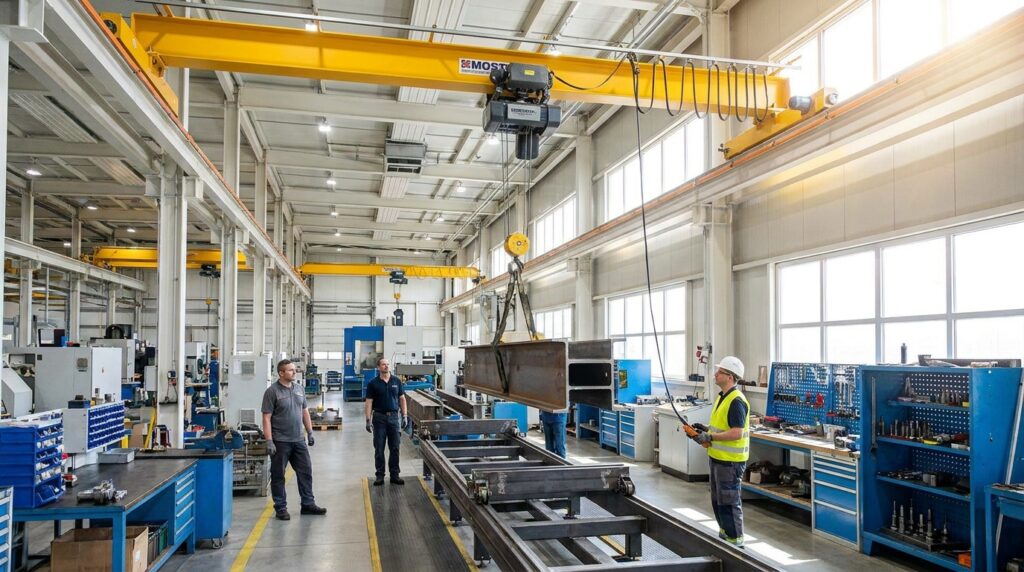
Revolutionizing Workplace Efficiency: A Comprehensive Guide to Workstation Bridge Cranes
In the dynamic world of modern manufacturing and warehousing, optimizing material handling processes is paramount to achieving peak productivity, ensuring worker safety, and controlling operational costs. Traditional, free-standing overhead cranes, while powerful, often require extensive building modifications and significant floor space. This is where workstation bridge cranes emerge as a highly effective, adaptable, and cost-efficient solution. Designed for precise lifting and precise movement within defined work areas, these systems are transforming how businesses handle components, assemblies, and finished goods.
At Fredon Handling, we understand the critical role efficient material flow plays in your success. Our expertise lies in providing tailored lifting solutions that integrate seamlessly into your existing operations. This comprehensive guide delves into the world of workstation bridge cranes, exploring their inherent benefits, diverse types, crucial design considerations, and how selecting the right system can significantly enhance your operational capabilities.
For those interested in exploring more about the practical applications and innovative designs of workstation bridge cranes, the article available at Fredon Handling Projects provides valuable insights. This resource showcases various projects that highlight the benefits and versatility of workstation bridge cranes in different industrial settings, complementing the information on their types and design considerations.
The Multifaceted Advantages of Workstation Bridge Cranes
Workstation bridge cranes offer a compelling suite of benefits that directly address common challenges faced by manufacturing and warehousing operations. Their strategic deployment can lead to tangible improvements in productivity, safety, and overall operational fluidity.
Enhanced Productivity and Throughput
One of the most significant advantages of workstation bridge cranes is their ability to streamline material movement within a specific work cell or area. By providing a dedicated lifting and traversing capability, they eliminate the need for manual lifting or the reliance on slower, less direct methods. This direct access to overhead lifting power allows operators to move materials quickly and precisely, reducing cycle times for assembly, inspection, or packaging processes.
Consider an assembly line where heavy components need to be repeatedly positioned. A workstation bridge crane equipped with a suitable lifting attachment can effortlessly suspend and guide these parts into place, freeing up human operators for more value-added tasks. This not only speeds up the assembly process but also reduces the physical strain on workers, contributing to a more sustainable and efficient workforce. The ability to precisely control the load’s position further minimizes errors and rework, directly impacting throughput and product quality.
Improved Ergonomics and Worker Safety
The physical demands of manual material handling are a significant contributor to workplace injuries, including strains, sprains, and musculoskeletal disorders. Workstation bridge cranes directly mitigate these risks by taking over the heavy lifting. By providing a controlled, mechanical means of moving loads, they drastically reduce the potential for operator injury.
Furthermore, the controlled movement afforded by these cranes minimizes the risk of dropped loads or collisions with surrounding equipment and personnel. OSHA and ASME standards emphasize the importance of minimizing manual lifting of heavy or awkward objects. Workstation bridge cranes are a direct solution to comply with these safety regulations, creating a safer working environment. For instance, a machine shop operator needing to load a heavy workpiece onto a CNC machine can utilize a workstation bridge crane, eliminating the need for strenuous manual maneuvering and the associated risks. This focus on ergonomics also leads to increased job satisfaction and reduced absenteeism.
Space Optimization and Versatility
Unlike large, building-spanning overhead cranes, workstation bridge cranes are designed to cover specific work areas, such as assembly stations, machining cells, or inspection zones. This localized approach means they require less structural support and can often be integrated into existing facilities without major building modifications. They can be mounted to the building’s structure or supported by their own freestanding framework, offering flexibility in installation.
This versatility is crucial for businesses looking to enhance their material handling capabilities without undertaking costly infrastructure overhauls. A repair and maintenance workshop, for example, might install workstation bridge cranes over several service bays, allowing technicians to easily lift and position heavy engine components or machinery parts, all without obstructing critical walkways or other operational areas. The modular nature of some workstation crane systems also allows for future expansion or reconfiguration as operational needs evolve.
Cost-Effectiveness and ROI
While the initial investment in a workstation bridge crane is a consideration, the long-term cost savings and return on investment (ROI) are substantial. Reduced injuries translate into lower workers’ compensation claims and decreased downtime due to accidents. Increased productivity and efficiency lead to higher output and potentially reduced labor costs per unit. The longevity and durability of well-maintained workstation crane systems also ensure a long service life, further enhancing their cost-effectiveness.
The ability to implement these systems without extensive building modifications also significantly reduces upfront capital expenditure compared to traditional overhead crane installations. For businesses with limited budgets or in leased facilities, workstation bridge cranes offer an accessible path to upgrading their material handling capabilities.
Exploring the Diverse Landscape of Workstation Bridge Crane Types
The term “workstation bridge crane” encompasses a range of systems, each designed to meet specific operational requirements. Understanding these different types is crucial for selecting the most appropriate solution for your facility.
Underslung vs. Top-Running Bridge Cranes
The primary distinction lies in how the bridge is suspended or supported.
- Underslung Workstation Bridge Cranes: These systems are typically suspended from the building’s existing roof structure or a dedicated overhead support system. The hoist and trolley travel underneath the bridge. This design is ideal when floor space is at a premium, as the support structure is overhead. Underslung cranes are often preferred in facilities with lower ceilings or where floor-mounted columns would impede operations. They can be very effective for covering smaller, defined areas.
- Top-Running Workstation Bridge Cranes: In this configuration, the bridge runs on top of elevated runway beams, which are usually supported by free-standing columns or the building’s structure. The hoist and trolley travel along the bridge. Top-running systems can often achieve higher lift heights and may be more suitable for heavier loads or longer spans, though the supporting structure can take up more vertical space.
Monorail Systems
While not strictly a bridge crane, monorail systems share many of the same benefits for workstation material handling. A monorail consists of a single fixed rail from which a hoist and trolley are suspended. Loads can be moved along the straight or curved path of the rail.
Monorails are exceptionally versatile for point-to-point material transport within a defined area. They are excellent for applications requiring movement along assembly lines, through doorways, or to specific workstations. Their simplicity often translates to lower initial costs and easier installation. A common application is transporting parts from a staging area directly to a machine tool or assembly bench.
Jib Cranes (as a Workstation Solution)
Jib cranes, particularly wall-mounted or freestanding models, can also serve as effective workstation lifting solutions. A jib crane features a horizontal boom (jib) that supports a hoist and trolley. The jib can rotate, allowing the load to be moved in a semicircular or full circular pattern around the mast.
- Wall-Mounted Jib Cranes: These are attached to a supporting wall, offering excellent space-saving benefits. They are ideal for covering a semicircular area adjacent to the wall.
- Freestanding Jib Cranes: These are mounted on a substantial foundation or base, allowing them to be placed anywhere within a facility. They offer greater coverage and can support heavier loads than wall-mounted versions.
Jib cranes are often used for repetitive lifting tasks at individual workstations, such as loading and unloading machine tools, servicing assembly stations, or handling tools and dies. Their ability to articulate and reach into specific areas makes them highly practical.
Articulating Jib Cranes
A more advanced form of jib crane, the articulating jib crane, features two hinged arms. This allows for greater flexibility and the ability to reach over obstacles or into confined spaces. The multiple articulation points enable precise positioning of loads in complex environments, making them valuable for intricate assembly or maintenance tasks.
Enclosed Track Systems (ETS)
Enclosed track systems offer a lightweight and often more economical alternative to traditional steel beam cranes. They consist of a series of interlocking extruded aluminum or steel tracks that form a runway. The hoist and trolley run within the enclosed track, protecting them from dust and debris.
ETS are particularly well-suited for lighter duty applications and frequent movement over shorter distances. Their modular design makes them easy to install and reconfigure. Examples include their use in cleanroom environments or where low headroom is a concern. The enclosed nature of the track also reduces friction, leading to easier manual or motorized movement.
Crucial Design Considerations for Optimal Performance
Selecting the right workstation bridge crane system requires a thorough understanding of your operational needs. Neglecting key design considerations can lead to an underperforming system, increased costs, or even safety hazards.
Load Capacity and Duty Cycle
The most fundamental consideration is the maximum weight the crane needs to lift. This includes the weight of the load itself, plus any lifting attachments (e.g., slings, hooks, manipulators). It is always advisable to select a crane with a capacity that exceeds your maximum expected load by a comfortable margin to ensure safe operation and longevity.
Equally important is understanding the duty cycle – how frequently the crane will be used and the intensity of that use. OSHA and ASME provide guidelines for classifying cranes based on their duty cycles, ranging from infrequent use to continuous heavy-duty operation. A crane operating in a high-volume production environment will require a more robust design and higher-rated components than one used for occasional maintenance tasks.
Span and Reach Requirements
The “span” refers to the distance the bridge crane can travel horizontally, typically the length of the runway. The “reach” refers to how far the hoist and trolley can move along the bridge. Carefully map out the areas that need to be covered by the crane. Overlapping coverage might be necessary to ensure all necessary points are accessible.
For jib cranes, the boom length dictates the reach. The articulation points and rotation capabilities of jib cranes and articulating jib cranes need to be considered to ensure they can access all required areas without obstruction.
Headroom and Vertical Lift
The available vertical space (headroom) in your facility is a critical factor. The crane system, including the hoist and trolley, will occupy a certain amount of vertical space. You need to ensure there is sufficient clearance for the crane to operate fully, including lifting the load to its maximum height, without colliding with the building structure, lighting, or other overhead elements.
The required vertical lift is the total distance a load needs to be moved from its pickup point to its final placement. This, combined with the height of the load itself, will determine the overall travel distance required.
Lifting Attachments and End Effectors
The type of lifting attachment, often referred to as an “end effector,” is crucial for safely and efficiently handling your specific loads. This could include:
- Standard Hoist Hooks: For general-purpose lifting with slings or straps.
- Vacuum Lifters: Ideal for smooth, non-porous surfaces like glass, sheet metal, or plastics.
- Manipulators: Robotic-like arms that can grip, rotate, and position loads with high precision.
- Spreader Bars: Used to distribute the load over a wider area or to lift long, unwieldy objects.
- Coil Grabs or Drum Lifters: Specialized tools for handling specific shapes of materials.
The selection of the end effector should be based on the material type, shape, weight, and the required manipulation. Fredon Handling can assist in recommending the most suitable attachments for your application.
Control Systems and Automation
Workstation bridge cranes can be operated manually, via pendant controls, or through more advanced automated systems.
- Pendant Controls: These are typically attached to the hoist and allow operators to control movement from a nearby position.
- Radio Remote Controls: Offer greater freedom of movement for the operator.
- Automation: For highly repetitive tasks or complex sequences, integration with PLCs (Programmable Logic Controllers) and other automation systems can enable features like automatic load positioning, interlocks, and integration into larger production control networks.
The level of automation should align with the complexity of the task, the need for precision, and the desire to minimize operator intervention.
Power Requirements and Infrastructure
Consider the available power supply at the workstation. Most electric cranes require a specific voltage and phase. If your facility’s power infrastructure is insufficient, upgrades may be necessary. Battery-powered options are also available for greater mobility or in areas where fixed power connections are impractical.
Environmental Considerations
The operating environment can influence material selection and design. If the crane will be used in corrosive atmospheres, wash-down areas, or extreme temperatures, specialized materials and protective coatings will be required. For cleanroom applications, the crane must be designed to minimize particulate generation.
In exploring the advantages and design aspects of workstation bridge cranes, it’s beneficial to consider related topics that enhance understanding of material handling solutions. For instance, an insightful article on the fundamentals of ergonomic lifting equipment can provide valuable context and complement the information found in the piece about workstation bridge cranes. You can read more about this in the article available here. This connection can help in making informed decisions regarding the best equipment for specific operational needs.
Safety First: Ensuring Compliant and Secure Operations
Safety is non-negotiable when implementing any material handling equipment. Workstation bridge cranes, when properly designed, installed, and operated, significantly enhance workplace safety. However, adhering to safety regulations and best practices is paramount.
Adherence to OSHA and ASME Standards
In the United States, the Occupational Safety and Health Administration (OSHA) and the American Society of Mechanical Engineers (ASME) set the standards for overhead lifting equipment. Key ASME standards relevant to workstation bridge cranes include:
- ASME B30.11: Monorails and Underhung Cranes
- ASME B30.16: Overhead Hoists (Underhung)
- ASME B30.17: Overhead and Gantry Cranes (Top Running Bridge, Single or Double Girder)
These standards cover design, inspection, maintenance, and operation of lifting equipment. Employers are responsible for ensuring their equipment meets these requirements. Fredon Handling designs and supplies equipment that complies with these critical standards.
Pre-Operational Inspections and Routine Checks
A thorough pre-operational inspection should be conducted before each shift or use of the crane. This includes checking:
- Rope or chain condition: Looking for kinks, fraying, or wear.
- Hook and latch: Ensuring the latch is functional and the hook is not deformed.
- Brakes: Testing their holding power.
- Controls: Verifying all buttons and functions operate correctly.
- Limit switches: Confirming they function to prevent over-travel.
- Structural integrity: Looking for any signs of damage or wear.
Regular, documented inspections by qualified personnel are also mandated by OSHA. These periodic inspections go beyond daily checks and assess the overall condition and safety of the crane.
Operator Training and Certification
Only trained and authorized personnel should operate workstation bridge cranes. Training should cover:
- Crane operation: How to safely move loads, use controls, and avoid hazardous situations.
- Load weight limitations: Understanding the capacity of the crane and hoist.
- Inspection procedures: How to perform pre-operational checks.
- Emergency procedures: What to do in case of a malfunction or accident.
Proper training minimizes the risk of human error, a common cause of lifting-related incidents.
Load Stability and Rigging Practices
Ensuring loads are properly rigged is crucial for stability during lifting. This involves using the correct type and number of slings, ensuring the load is balanced, and that the center of gravity is directly below the hoist hook. Improper rigging can lead to loads shifting or tipping during transit, potentially causing damage or injury.
Fall Protection (where applicable)
For maintenance or adjustments performed at height, fall protection measures might be necessary, in accordance with OSHA standards. This is particularly relevant for accessing runway beams or maintenance points on taller crane structures.
Maintaining Peak Performance: Essential Maintenance Guidance
Regular and proactive maintenance is key to ensuring the longevity, reliability, and safe operation of your workstation bridge crane. Neglecting maintenance can lead to unexpected breakdowns, costly repairs, and potentially dangerous situations.
Preventative Maintenance Schedules
Establish a comprehensive preventative maintenance (PM) schedule based on the manufacturer’s recommendations and your specific operating conditions. This schedule should include:
- Daily checks: As outlined in the safety section.
- Weekly or monthly inspections: More in-depth checks of critical components like gears, bearings, and electrical connections.
- Annual or semi-annual thorough inspections: Performed by qualified technicians, these often involve disassembly of certain components for detailed examination and lubrication.
Lubrication
Proper lubrication of moving parts, such as hoist gears, trolley wheels, and runway components, is essential to reduce friction, prevent wear, and ensure smooth operation. Use only lubricants recommended by the manufacturer.
Component Wear and Tear
Regularly inspect critical components for signs of wear and tear. This includes:
- Hoist ropes or chains: Look for fraying, broken wires, kinks, or excessive elongation.
- Brake linings: Check for wear and ensure proper adjustment.
- Trolley wheels and bearings: Inspect for flat spots, cracks, or excessive play.
- Electrical contacts and wiring: Look for corrosion, fraying, or loose connections.
Addressing wear before it leads to failure can prevent costly downtime and safety incidents.
Load Testing
Periodic load testing, as recommended by ASME and local regulations, is crucial to verify the crane’s lifting capacity and structural integrity. Load testing should only be performed by qualified individuals using calibrated test weights.
Keeping Records
Maintain detailed records of all inspections, maintenance activities, repairs, and load tests. These records are vital for tracking the crane’s history, identifying recurring issues, and demonstrating compliance with safety regulations.
Choosing the Right Partner: Purchasing Advice from Fredon Handling
Investing in a workstation bridge crane is a significant decision that can profoundly impact your operational efficiency and profitability. Selecting the right system and supplier is crucial for a successful outcome.
Define Your Needs Clearly
Before engaging with suppliers, thoroughly assess your operational requirements. This includes:
- Maximum load capacity: What is the heaviest item you will lift?
- Frequency of use: How often will the crane be operated?
- Coverage area: What specific zones need to be served?
- Headroom and available space: What are the physical limitations of your facility?
- Type of materials to be handled: Will specialized lifting attachments be required?
- Budget: What is your investment range?
Seek Expert Consultation
Engaging with experienced material handling specialists like Fredon Handling is invaluable. We can:
- Assess your site and operations: To identify optimal solutions.
- Recommend appropriate crane types and configurations: Based on your specific needs.
- Assist with load calculations and capacity requirements: To ensure you select a safe and effective system.
- Advise on lifting attachments and controls: To maximize functionality.
- Provide information on compliance with safety standards: Ensuring your investment is safe and legal.
Evaluate Supplier Reliability and Support
When choosing a supplier, consider:
- Experience and reputation: Look for a company with a proven track record in providing and supporting workstation crane solutions.
- Product quality and certifications: Ensure the equipment meets relevant industry standards (e.g., ASME, OSHA compliance).
- After-sales support: What kind of warranty, maintenance, and spare parts availability is offered?
- Installation and commissioning services: Will the supplier handle the installation and ensure proper commissioning?
Fredon Handling offers a comprehensive range of workstation bridge cranes and related material handling solutions, backed by extensive engineering expertise and a commitment to customer support. We pride ourselves on delivering systems that are not only efficient and reliable but also designed with your long-term operational success in mind. Our team is ready to partner with you to analyze your needs and engineer the perfect lifting solution.
Understanding Total Cost of Ownership
Beyond the initial purchase price, consider the total cost of ownership, which includes installation, training, maintenance, spare parts, and potential upgrades. A slightly higher initial investment in a higher-quality, more durable system can often lead to lower overall costs over its lifespan.
Frequently Asked Questions About Workstation Bridge Cranes
Q1: How do workstation bridge cranes differ from large overhead cranes?
Workstation bridge cranes are designed for localized material handling within specific work areas or cells, offering a more compact and often more cost-effective solution than large overhead cranes that typically span entire factory bays or warehouses. They require less structural support and are ideal for improving efficiency at individual workstations.
Q2: What is the maximum load capacity typically offered by workstation bridge cranes?
Workstation bridge cranes can range in capacity from very light duty (a few hundred pounds) for simple lifting tasks to significantly heavier capacities for industrial applications, often exceeding several tons. The specific capacity depends on the design, type of crane (e.g., jib crane vs. bridge crane), and the intended application.
Q3: Are workstation bridge cranes suitable for outdoor use?
Yes, workstation bridge cranes can be designed for outdoor use. However, they will require specific environmental considerations, such as corrosion-resistant materials, weatherproofing of electrical components, and potentially protection against wind and debris. Fredon Handling can engineer custom solutions for outdoor environments.
Q4: How long does it typically take to install a workstation bridge crane?
Installation time can vary significantly based on the complexity of the system, the type of mounting (e.g., building-supported vs. freestanding), and any necessary facility modifications. Simple jib cranes can be installed in a day or two, while more complex bridge crane systems might take several days to a week. Fredon Handling provides detailed project timelines during the proposal phase.
Q5: Can workstation bridge cranes be integrated with automated production systems?
Absolutely. Many workstation bridge cranes can be equipped with advanced controls, including PLC integration, servo drives, and communication interfaces, allowing them to be seamlessly integrated into automated production lines and robotic work cells. This enables features like automated load positioning and synchronized material movement.
Elevate Your Operations with Fredon Handling
Workstation bridge cranes represent a powerful and versatile solution for enhancing material handling efficiency, improving worker safety, and optimizing your operational space. By understanding the diverse types available and meticulously considering design factors, you can select a system that delivers maximum value.
At Fredon Handling, we are dedicated to providing expert guidance and top-tier material handling equipment. We partner with our clients to engineer solutions that not only meet but exceed their expectations.
Ready to revolutionize your workplace efficiency? Contact Fredon Handling today to discuss your material handling challenges and discover how our workstation bridge crane solutions can drive your business forward.
SEO Title: Workstation Bridge Cranes: Boost Efficiency & Safety | Fredon Handling
Meta Description: Explore the benefits, types, and design considerations of workstation bridge cranes. Enhance productivity and safety with expert solutions from Fredon Handling.
Suggested URL Slug: workstation-bridge-cranes-benefits-types-design