
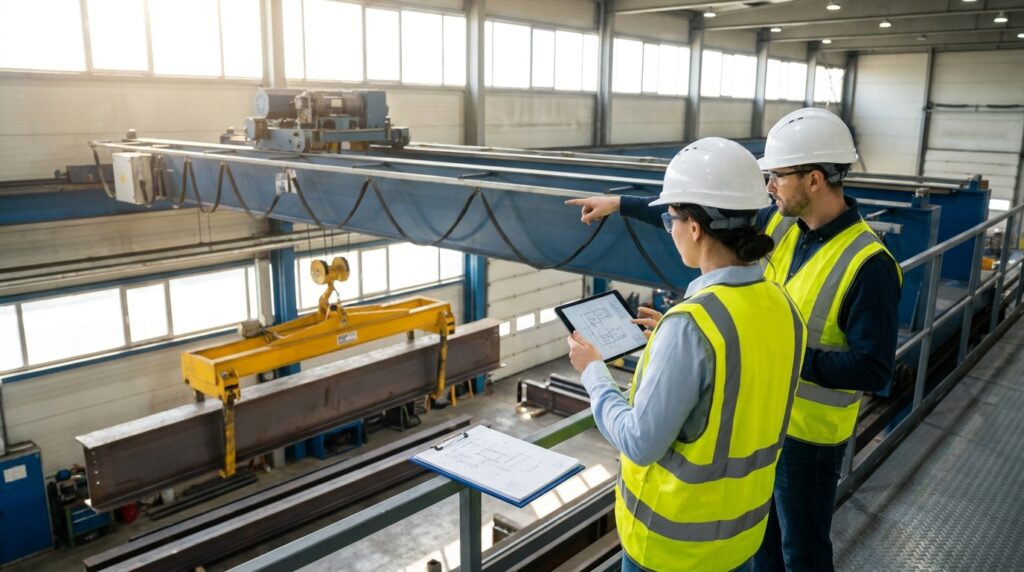
Mastering Material Flow: A Comprehensive Guide to Selecting the Ideal Overhead Crane
SEO Title: Overhead Crane Selection Guide: Maximize Efficiency & Safety for Your Industrial Facility | Fredon Handling
Meta Description: Discover how to choose the right overhead crane for your manufacturing or warehouse operations. Explore types, lifting capacities, applications, safety, and maintenance with Fredon Handling’s expert guide.
URL Slug: choose-overhead-crane-facility-fredon-handling
When it comes to optimizing material handling in manufacturing, warehousing, and heavy industrial settings, the overhead crane stands as a cornerstone of efficiency and safety. Its ability to move substantial loads with precision above the workspace minimizes floor congestion, reduces manual labor, and significantly enhances productivity. However, selecting the right overhead crane is a critical decision that impacts operational flow, safety compliance, and long-term cost-effectiveness. This comprehensive guide, brought to you by Fredon Handling, will equip manufacturing managers, warehouse operators, engineers, maintenance teams, and industrial equipment buyers with the knowledge to make an informed choice.
When selecting the appropriate overhead crane for your facility, it’s essential to consider various factors such as load capacity, span, and operational environment. For a more comprehensive understanding of material handling solutions, you may find it beneficial to read the article on How to Choose the Right Material Handling Equipment for Your Business, which provides valuable insights into different types of equipment and their applications. This resource can help you make informed decisions that align with your operational needs.
Understanding Your Operational Needs: The Foundation of Crane Selection
Before even considering specific crane types, a thorough assessment of your facility’s operational requirements is paramount. This foundational step ensures that the chosen overhead crane directly addresses your unique challenges and contributes positively to your bottom line. Failing to accurately define these needs can lead to an undersized, oversized, or otherwise unsuitable crane, resulting in inefficiencies, safety risks, and unnecessary expenses.
Assessing Load Requirements: Weight, Size, and Frequency
The most fundamental consideration is the nature of the materials you need to lift and move.
- Maximum Load Capacity: Determine the heaviest single item you anticipate lifting. This isn’t just about the heaviest product; consider raw materials, finished goods, and even maintenance components. Always factor in a safety margin – never operate a crane at its absolute maximum rated capacity. OSHA’s General Industry standards (29 CFR 1910.179) mandate safe load handling practices and specify requirements for crane load ratings.
- Load Dimensions and Shape: The physical size and shape of your loads will influence the type of lifting attachment (hook, magnet, grapple, spreader bar) and the required hoist and bridge dimensions. Oddly shaped or bulky items may necessitate specialized rigging or a wider bridge span.
- Lifting Frequency: How often will the crane be used? Is it for intermittent, heavy-duty tasks or frequent, lighter lifts? This impacts the duty cycle rating of the crane, influencing durability and component selection. A higher duty cycle means the crane is designed for more continuous and strenuous use.
Analyzing the Workspace and Infrastructure
The physical environment of your facility plays a crucial role in overhead crane design and installation.
- Building Structure and Clearance: The existing building structure must be capable of supporting the crane’s weight and the imposed loads. Vertical and horizontal clearances are critical. The hook height, the distance from the floor to the lowest point of the crane structure (like the trolley), and the overall span of the bridge must be considered to ensure adequate headroom and prevent collisions with machinery or stored materials.
- Facility Layout and Workflow: How will the crane integrate into your existing workflow? Where will it primarily operate? Consider the travel paths of the bridge and trolley, ensuring they don’t interfere with other operations or create bottlenecks. The crane’s layout should facilitate smooth and efficient movement of materials from receiving to production and then to shipping.
- Power Availability: Overhead cranes require electrical power. Assess the available voltage, phase, and amperage at the installation site to ensure compatibility with the crane’s power requirements.
Defining Operational Patterns and Duty Cycles
Understanding how the crane will be used over time is essential for selecting a durable and appropriate model.
- Intermittent vs. Continuous Use: A crane used for a few lifts per day will have different requirements than one used for continuous material transfer throughout multiple shifts.
- Duty Classifications: Crane manufacturers typically classify cranes based on their duty cycle, often following standards like CMAA (Crane Manufacturers Association of America) classifications (e.g., Class A for infrequent use, Class E for severe duty). Choosing the correct duty class ensures the crane’s components are designed to withstand the expected operational stress.
Exploring Overhead Crane Types: Tailoring Solutions to Your Application
Overhead cranes are not one-size-fits-all. Fredon Handling offers a diverse range of solutions, each designed to meet specific operational demands. Understanding the primary types will help you narrow down the best fit for your facility.
Single Girder Overhead Cranes: Simplicity and Cost-Effectiveness
Single girder cranes are the most common type, featuring a single main beam (girder) that supports the trolley and hoist.
- Design: A single bridge girder connects two end trucks, and a hoist is suspended from a trolley that travels along the bottom flange of the girder.
- Applications: Ideal for lighter to medium-duty applications where lifting capacity is not extremely high and the required hook height is sufficient. They are often used in general manufacturing, assembly lines, and repair shops.
- Advantages: Generally more cost-effective to purchase and install than double girder cranes, offer good lifting heights, and require less headroom.
- Considerations: Limited lifting capacity compared to double girder designs and may not be suitable for very heavy loads or applications requiring extreme precision over long spans.
Double Girder Overhead Cranes: Power and Precision for Heavy Lifting
Double girder cranes utilize two parallel main beams, offering enhanced strength and stability for heavier loads and longer spans.
- Design: Two bridge girders are connected by end trucks. The hoist is mounted on a trolley that travels on the top of the two girders, providing a higher hook lift.
- Applications: Suited for heavy-duty industrial applications such as steel mills, large manufacturing plants, foundries, and shipyards where substantial loads are lifted frequently.
- Advantages: Capable of lifting very heavy loads, offer greater stability for precise positioning, and provide maximum hook height due to the hoist being mounted above the girders.
- Considerations: Higher initial cost, require more structural support in the building, and generally have a higher overall height.
Underslung Cranes: Maximizing Space and Flexibility
Underslung cranes are designed to be suspended from the building’s roof structure or overhead runway beams.
- Design: The bridge structure hangs below the runway, with the hoist and trolley traveling on the bottom flange of the bridge.
- Applications: Excellent for facilities with limited vertical clearance or where floor-based support columns are undesirable. They are common in workshops, smaller manufacturing bays, and areas where existing building structure is being utilized.
- Advantages: Excellent for maximizing hook height in low-ceiling environments, can utilize existing building infrastructure, and minimize floor space obstruction.
- Considerations: Limited by the strength of the building’s roof structure or runway beams, and load capacities may be restricted by the supporting structure.
Jib Cranes: Targeted Lifting and Ergonomic Support
While not technically an overhead bridge crane, jib cranes are a crucial component of material handling solutions, often used in conjunction with larger overhead systems or for specific workstations.
- Design: A horizontal boom (jib) is supported by a vertical mast or wall bracket, with a hoist mounted on the jib. They offer rotational movement (often 180 or 360 degrees).
- Applications: Ideal for repetitive lifting tasks at a specific workstation, loading/unloading machinery, or serving as a supplementary lifting device within a larger bay. They are excellent for improving ergonomics and reducing worker strain.
- Types: Mast-type jib cranes (freestanding) and wall-mounted jib cranes.
- Advantages: Cost-effective for localized lifting, improve workstation efficiency, and enhance worker safety by reducing manual lifting.
- Considerations: Limited working radius and lifting capacity compared to bridge cranes.
Key Components and Selection Criteria
Beyond the basic crane type, several critical components and features must be carefully evaluated to ensure optimal performance and longevity.
Hoists: The Heart of the Lifting Mechanism
The hoist is responsible for the vertical lifting and lowering of loads. Fredon Handling offers various hoist types:
- Electric Wire Rope Hoists: The most common type for industrial use. They offer high lifting capacities, precise control, and durability. Available in various configurations (e.g., standard headroom, low headroom).
- Electric Chain Hoists: Generally used for lighter to medium-duty applications. They are compact, precise, and often more cost-effective for lower capacities.
- Manual Hoists: While less common in fully automated facilities, manual chain or lever hoists can be useful for infrequent, very light lifts or in areas without power.
Selection Criteria for Hoists:
- Lifting Capacity: Must meet or exceed the maximum load requirement.
- Lifting Speed: Consider how quickly loads need to be raised and lowered. Variable frequency drives (VFDs) offer precise speed control.
- Trolley Type: Whether the hoist travels on the top or bottom flange of the girder, and its compatibility with the bridge.
- Duty Classification: Match the hoist’s duty rating to the crane’s expected usage.
Controls and Electrics: Precision and Safety
The control system governs the crane’s movement and is crucial for safe and efficient operation.
- Pendant Controls: Wired controllers operated manually by an overhead technician. Simple and effective for many applications.
- Radio Remote Controls: Offer greater freedom of movement for the operator, enhancing safety and efficiency, especially in larger or more complex areas. Fredon Handling provides robust radio remote systems.
- Variable Frequency Drives (VFDs): Essential for smooth acceleration and deceleration of bridge, trolley, and hoist movements. VFDs reduce mechanical shock, improve positioning accuracy, and can save energy. This is a highly recommended feature for most modern crane installations.
- Safety Features: Emergency stops, limit switches (to prevent over-travel), overload protection, and anti-collision systems are vital.
End Trucks and Bridge Construction: Stability and Durability
The end trucks support the bridge girder and house the wheels that allow the crane to travel along the runway. The bridge construction itself determines the crane’s strength and load-bearing capacity.
- Girder Type: Welded box girders or fabricated I-beams are common. Box girders are generally stronger and more robust for heavy-duty applications.
- Wheel Material and Design: Wheels are typically hardened steel, designed for durability and low rolling resistance. The number and arrangement of wheels are critical for load distribution.
- Runway Interface: Proper alignment and compatibility between the crane’s end trucks and the facility’s runway beams are essential to prevent excessive wear and stress.
When selecting the right overhead crane for your facility, it’s essential to consider various factors such as load capacity, span, and the type of materials being handled. For a deeper understanding of the different types of cranes and their applications, you might find it helpful to read a related article on the topic. This resource can provide valuable insights to ensure you make an informed decision. You can check it out here.
Application-Specific Crane Configurations and Solutions
Fredon Handling understands that standard configurations don’t always fit the bill. We specialize in providing customized solutions.
Articulated Jib Cranes: Navigating Obstacles
These specialized jib cranes feature articulated arms that can pivot and extend, allowing them to reach around obstacles or into tight spaces that a standard jib crane cannot. They are invaluable in complex workshop environments.
Workstation Cranes and Semi-Gantry Cranes: Modular Material Handling
- Workstation Cranes (e.g., Gorbel, Demag): These are often modular systems designed for specific work areas, offering ergonomic lifting and precise positioning. They can be integrated into existing structures or freestanding. Fredon Handling can guide you through the best workstation crane solutions.
- Semi-Gantry Cranes: Combine elements of overhead and gantry cranes. One end of the bridge is supported by the building’s runway, while the other end is supported by a leg that travels on the floor or a separate rail. Ideal for situations where a full gantry is not feasible.
Specialized Lifting Attachments: Beyond the Hook
The “hook” is just one method of attachment. Fredon Handling can equip your crane with:
- Electromagnets: For lifting ferrous materials like steel coils, scrap, or plates.
- Grips and Grabs: For handling diverse materials like rolls, drums, pipes, or concrete blocks.
- Spreader Bars and Lifting Beams: For distributing the load evenly across multiple attachment points, essential for long or irregularly shaped items.
- Vacuum Lifters: For lifting non-porous materials like glass, sheet metal, or stone.
When selecting the right overhead crane for your facility, it’s essential to consider various factors such as load capacity, span, and the specific needs of your operations. To further enhance your understanding of material handling solutions, you may find it beneficial to explore an article on essential equipment that can optimize your manufacturing processes. This resource provides valuable insights into how different tools can work together to improve efficiency. For more information, check out the article on essential material handling equipment.
Safety, Compliance, and Maintenance: Ensuring Longevity and Risk Mitigation
Safety is paramount in any industrial operation, and overhead cranes, with their powerful lifting capabilities, demand rigorous attention to safety protocols and regular maintenance.
OSHA and ASME Standards: The Regulatory Framework
Adherence to safety regulations is non-negotiable. Key standards include:
- OSHA 29 CFR 1910.179 (General Industry): This standard outlines comprehensive requirements for overhead and gantry cranes, including inspection, maintenance, operator training, and safe operating procedures.
- ASME B30.2 (Overhead and Gantry Cranes): This provides consensus standards for the design, construction, installation, inspection, testing, maintenance, and operation of overhead and gantry cranes.
Key Safety Practices:
- Qualified Operators: Only trained and authorized personnel should operate cranes. Operator training should cover crane functions, load capacity, signaling, and emergency procedures.
- Regular Inspections: Daily, monthly, and annual inspections are crucial. Daily checks by the operator, monthly detailed inspections by a designated person, and annual comprehensive inspections by a qualified professional are recommended, as per OSHA guidelines. Fredon Handling offers inspection services to ensure compliance.
- Load Testing: New installations and after significant repairs require load testing to verify capacity and structural integrity.
- Clear Communication: Effective signaling (hand signals or radio communication) between the operator and ground personnel is vital.
- Exclusion Zones: Maintaining safe distances from the crane’s operating area to prevent personnel injury from falling loads or equipment.
Maintenance Programs: Preventing Downtime and Ensuring Reliability
A proactive maintenance strategy is key to minimizing unexpected breakdowns and extending the operational life of your overhead crane.
- Preventive Maintenance (PM): Scheduled inspections and servicing based on usage and manufacturer recommendations. This includes lubrication of moving parts, checking electrical connections, inspecting wire ropes and chains, and testing safety devices.
- Predictive Maintenance: Utilizing monitoring technologies (e.g., vibration analysis, thermal imaging) to detect potential issues before they lead to failure.
- Corrective Maintenance: Addressing identified issues and performing repairs as needed.
Fredon Handling offers comprehensive maintenance and repair services to keep your overhead crane systems operating at peak performance. Our experienced technicians can help you develop a tailored maintenance schedule to fit your operational needs.
Understanding Component Lifespans and Wear
- Wire Rope/Chain: Subject to wear, corrosion, and fatigue. Regular inspection for broken wires, kinks, or stretching is critical. Replacement is necessary when wear exceeds permissible limits.
- Brakes: Essential for safe stopping. They require regular inspection and adjustment to ensure proper function.
- Wheels and Rails: Wear and tear on wheels and runway rails can lead to misalignment and increased stress on the crane structure. Proper lubrication and alignment are crucial.
Making the Purchase: Partnering with Fredon Handling
Selecting and purchasing an overhead crane is a significant investment. Partnering with an experienced and reputable supplier like Fredon Handling ensures you receive not only the right equipment but also the ongoing support you need.
Our Process: From Consultation to Commissioning
- Needs Assessment: Our team works closely with you to understand your facility, operational requirements, and budget.
- Solution Design: We propose the most suitable crane type, capacity, features, and lifting attachments.
- Quotation and Proposal: A detailed proposal outlining equipment specifications, pricing, and delivery timelines.
- Engineering and Manufacturing: Working with leading manufacturers to procure or custom-fabricate your crane.
- Installation and Commissioning: Our certified technicians ensure proper installation, testing, and operational handover.
- Training: Providing operator and maintenance training to your staff.
- After-Sales Support: Offering ongoing spare parts, maintenance, and repair services to ensure your crane’s longevity.
Why Choose Fredon Handling?
- Expertise: Decades of experience in material handling solutions.
- Comprehensive Solutions: From single hoists to complete overhead crane systems.
- Quality Products: Partnering with trusted manufacturers to ensure reliable equipment.
- Commitment to Safety: Prioritizing safety in every aspect of our service.
- Dedicated Support: Providing ongoing service and maintenance to maximize your investment.
We invite you to explore our Solutions pages on fredonhandling.com to see examples of our capabilities. Our Educational Resources also offer further insights into material handling best practices.
Frequently Asked Questions About Overhead Crane Selection
Q1: What is the most important factor when choosing an overhead crane?
The most critical factor is a thorough understanding of your specific operational needs, including the maximum load capacity, dimensions of the loads, frequency of use, and the physical constraints of your facility. This forms the basis for selecting the appropriate crane type, size, and specifications.
Q2: How do I determine the correct lifting capacity for my crane?
You must identify the heaviest single item you anticipate lifting. It’s crucial to add a safety margin (typically 10-20%) to this maximum weight, as specified by safety regulations and best practices, to avoid operating the crane at its absolute limit. Consider not only finished products but also raw materials and maintenance components.
Q3: What is the difference between a single girder and a double girder overhead crane?
A single girder crane uses one main beam, typically suitable for lighter to medium-duty applications and offering greater headroom. A double girder crane uses two parallel beams, providing increased strength and stability for heavier loads, longer spans, and higher lifting capacities, often with a lower overall height profile relative to its capacity.
Q4: How important are Variable Frequency Drives (VFDs) on an overhead crane?
VFDs are highly recommended for modern overhead cranes. They provide smooth acceleration and deceleration for bridge, trolley, and hoist movements, reducing mechanical shock, improving load positioning accuracy, enhancing operator control, and contributing to energy savings. They are essential for applications requiring precise handling.
Q5: What is involved in the installation process of an overhead crane?
Installation typically includes erecting the runway structure (if not existing), assembling the crane bridge, mounting the hoist, connecting the electrical systems, and performing thorough testing, including load testing, to ensure compliance with safety standards and proper functionality. Fredon Handling manages the entire installation and commissioning process with certified technicians.
Conclusion: Elevating Your Operations with the Right Overhead Crane
Choosing the right overhead crane is a strategic decision that impacts efficiency, productivity, and safety across your entire operation. By carefully assessing your load requirements, workspace constraints, and operational patterns, and by understanding the various crane types and their components, you can make an informed choice.
Fredon Handling is your trusted partner in material handling solutions. We combine extensive expertise with a commitment to quality and safety, offering a comprehensive range of overhead cranes and custom-engineered solutions. Our team is ready to guide you through every step, from initial consultation and design to installation, commissioning, and ongoing maintenance.
Don’t let material handling bottlenecks slow down your progress. Contact Fredon Handling today to discuss your facility’s needs and discover the optimal overhead crane solution that will elevate your operations to new heights of efficiency and safety.