
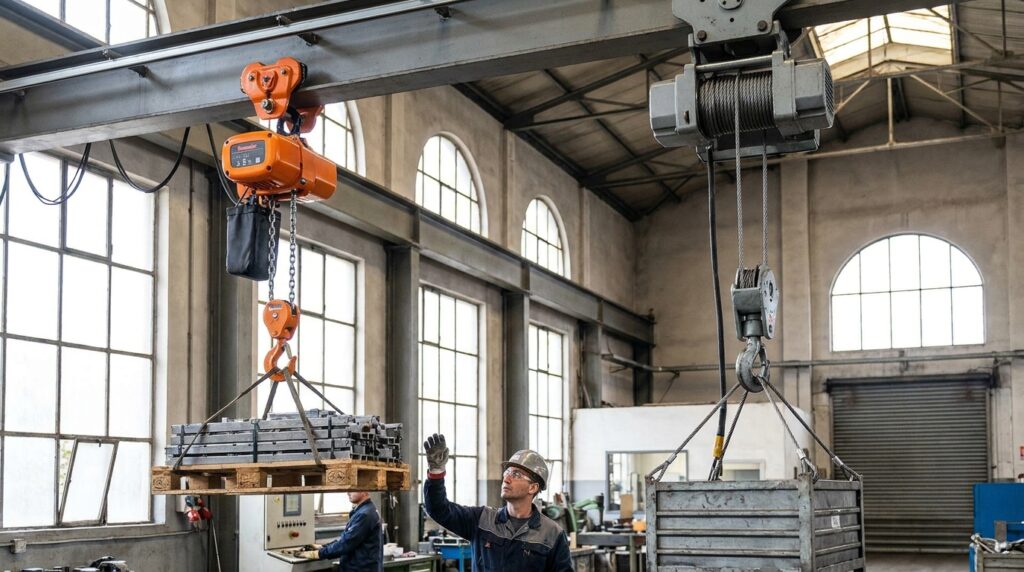
SEO Title: Electric Chain Hoist vs. Wire Rope Hoist: A Comprehensive Guide for Industrial Lifting
Meta Description: Discover the key differences between electric chain hoists and wire rope hoists. Learn which is best suited for your manufacturing, warehousing, or engineering needs with Fredon Handling’s expert comparison.
URL Slug: electric-chain-hoist-vs-wire-rope-hoist-comparison
Electric Chain Hoist vs. Wire Rope Hoist: Navigating Your Industrial Lifting Decision
In the demanding world of manufacturing, warehousing, and heavy industry, the choice of lifting equipment is paramount to operational efficiency, safety, and profitability. Among the most prevalent and crucial pieces of machinery are hoists. When considering electric options, two primary contenders dominate the landscape: electric chain hoists and wire rope hoists. Each offers distinct advantages and is engineered for specific applications. Making the correct selection between an electric chain hoist and a wire rope hoist can significantly impact your workflow, reduce downtime, and enhance overall productivity. This comprehensive guide will delve into the core differences, explore their operational characteristics, and provide the insights necessary for manufacturing managers, warehouse operators, engineers, maintenance teams, and industrial equipment buyers to make an informed decision.
At Fredon Handling, we understand the critical nature of selecting the right lifting solution. Our expertise spans a wide array of industrial equipment, and we are dedicated to helping you find the most effective and reliable hoists for your unique operational requirements. This article will serve as your authoritative resource, cutting through the technical jargon to provide practical, actionable advice.
For those interested in a deeper understanding of lifting equipment, you may find the article on various hoisting solutions particularly insightful. It discusses the advantages and disadvantages of different types of hoists, including electric chain hoists and wire rope hoists, providing a comprehensive overview that can help in making an informed decision. You can read more about it in this related article: Hoisting Solutions Explained.
Understanding the Fundamental Mechanics: How They Differ
The primary distinction between electric chain hoists and wire rope hoists lies in their lifting medium and associated design. This fundamental difference influences their performance characteristics, suitability for various environments, and overall cost of ownership.
The Versatility of the Electric Chain Hoist
Electric chain hoists utilize a robust, heat-treated alloy steel chain as their lifting medium. This chain is fed through a planetary gear system driven by an electric motor. The chain is typically stored in a chain container when not in use. This design offers several inherent benefits.
- Compact Design: Chain hoists are generally more compact than their wire rope counterparts for a given lifting capacity. This makes them ideal for applications with limited headroom, such as in lower-ceilinged workshops or congested assembly lines.
- Precise Control: The engagement of individual chain links allows for very fine load positioning. This granular control is invaluable in tasks requiring delicate placement, like intricate assembly operations or precise tool handling.
- Durability and Reliability: Alloy steel chains are incredibly strong and resistant to wear, especially in environments where abrasive dust or minor chemical exposure might be present. Regular inspection and lubrication are key to their longevity.
- Ease of Maintenance: Chain hoists often feature modular designs, making component replacement and routine maintenance relatively straightforward for trained technicians.
The Power and Reach of the Wire Rope Hoist
Wire rope hoists employ a steel wire rope, wound onto a drum, as their lifting medium. The motor drives a gearbox that rotates the drum, thereby raising or lowering the load attached to the rope via a hook.
- Higher Lifting Capacities: Wire rope hoists are typically engineered for much higher lifting capacities, ranging from a few tons to hundreds of tons. This makes them the go-to choice for heavy manufacturing, large-scale construction, and port operations.
- Extended Lifting Heights: The design of the drum allows for a significant amount of wire rope to be stored, enabling much greater lifting heights compared to chain hoists. This is crucial for operations in tall facilities, such as shipbuilding or large warehousing with high racking.
- Smooth Operation: The wire rope, when properly maintained, offers a smooth and consistent lifting action. This can be advantageous for operations where jarring or sudden movements are undesirable.
- Cost-Effectiveness for Heavy Lifts: For very heavy loads and extreme lifting heights, wire rope hoists can often be more cost-effective in terms of initial investment and ongoing operational costs than a comparably rated chain hoist, due to the inherent properties of the materials and design at scale.
Key Differentiating Factors for Selection
Beyond the fundamental mechanics, several critical factors dictate which type of hoist is best suited for a particular application. Understanding these nuances will prevent costly mistakes and ensure optimal performance.
Load Capacity and Duty Cycle Considerations
The intended load and the frequency of operation are paramount.
- Electric Chain Hoists: Excel in medium-duty applications with capacities typically ranging from 0.5 tons to 5 tons, though heavy-duty models can reach higher. They are well-suited for frequent, but not continuous, lifting operations found in assembly lines, machine shops, and general warehousing. Their duty cycle rating reflects the percentage of time they can operate under load within a given period without overheating or excessive wear.
- Wire Rope Hoists: Are the undisputed champions for heavy-duty and extreme-duty cycles. Their capacities can easily exceed 100 tons, and they are designed for continuous or near-continuous operation in demanding environments. Think of steel mills, automotive plants, and shipyards where loads are massive and lifting is a constant necessity.
Headroom and Space Constraints
Available vertical space is a significant determinant.
- Chain Hoists: Their compact nature and the way the chain is managed make them ideal for facilities with restricted vertical clearance. Many models offer a “low headroom” design, further optimizing the use of available space.
- Wire Rope Hoists: Require more vertical space due to the drum and the length of wire rope needed. The overall hoist unit itself can be bulkier, especially at higher capacities. However, some specialized wire rope hoists are designed to maximize headroom where possible.
Environmental Factors and Durability
The operating environment plays a crucial role in hoist selection and longevity.
- Chain Hoists: Are generally more resilient to dusty, dirty, or mildly corrosive environments. The chain is less susceptible to damage from impact compared to wire rope, which can be nicked or frayed. For highly corrosive or explosive environments, specialized explosion-proof chain hoists are available, complying with standards like ATEX or IECEx.
- Wire Rope Hoists: While robust, wire rope can be more vulnerable to abrasion, sharp bends, and chemical attack. In harsh environments, continuous inspection and protective measures for the rope are critical. For extremely corrosive environments, specialized coatings or alternative lifting media might be considered, though this is less common than with chain hoists.
Precision and Speed of Operation
The nature of the lift dictates the required control.
- Chain Hoists: Offer exceptional precision for delicate maneuvering. The stepped engagement of chain links allows for very fine adjustments, crucial for tasks like precise assembly or positioning of sensitive components. Variable speed controls are common, allowing for both rapid lifting and slow, controlled movements.
- Wire Rope Hoists: Are often capable of faster lifting speeds, particularly for lighter loads. While modern wire rope hoists offer sophisticated controls for smooth operation, achieving the same level of micro-precision as a chain hoist can sometimes be more challenging, depending on the hoist’s control system and load.
Cost of Ownership: Initial Investment vs. Long-Term Value
A balanced view of costs is essential.
- Electric Chain Hoists: Generally have a lower initial purchase price for lower to medium capacities. Their maintenance can be more straightforward and less costly for standard models. However, for very high-duty cycles or specialized environmental requirements, costs can escalate.
- Wire Rope Hoists: Typically have a higher upfront cost, especially for higher capacity models. However, for extremely heavy lifting applications and very long service lives, they can offer better long-term value due to their robust construction and ability to handle such demands. Wire rope replacement can be a significant maintenance expense.
Applications and Practical Examples
Understanding how these hoists perform in real-world scenarios provides invaluable insight for decision-making.
Where Electric Chain Hoists Shine
- Manufacturing Assembly Lines: The precise control and compact nature of chain hoists make them perfect for lifting and positioning components during assembly, enabling efficient and ergonomic workflows.
- Machine Shops and Tool Rooms: Ideal for moving machine parts, tools, and fixtures. Their ability to handle loads with fine accuracy is crucial for delicate machining and maintenance tasks.
- General Warehousing: Efficient for loading and unloading goods, repositioning pallets, and managing inventory, especially in facilities with standard ceiling heights.
- Maintenance and Repair Shops: Used for lifting engines, heavy equipment, and other machinery for inspection and repair.
- Automotive Manufacturing: Commonly used for lifting car bodies, engines, and other heavy components on assembly lines.
Where Wire Rope Hoists Excel
- Heavy Fabrication and Steel Mills: Essential for moving large steel beams, pre-fabricated structures, and heavy machinery. Their high capacity and durability are indispensable.
- Shipbuilding and Repair: Crucial for lifting massive ship sections, engines, and other heavy equipment in a demanding marine environment.
- Large-Scale Warehousing and Distribution Centers: Used for lifting extremely heavy pallets, large machinery, or for operations with exceptionally high racking systems requiring significant vertical lift.
- Power Generation and Petrochemical Plants: Employed for lifting heavy turbines, generators, and large piping sections during construction and maintenance.
- Construction Sites (Large Scale): Used for lifting substantial building materials and equipment in projects requiring high vertical reach.
When considering the best lifting equipment for your needs, it’s essential to explore various options and their applications. For instance, if you’re trying to determine whether an electric chain hoist or a wire rope hoist is more suitable for your operations, you might find it helpful to read about the essential material handling equipment that can enhance manufacturing processes. This related article provides valuable insights into different types of hoists and their roles in improving efficiency. You can check it out here: essential material handling equipment.
Safety First: Ensuring Compliance and Risk Mitigation
Regardless of the hoist type chosen, safety must be the absolute priority. Adherence to regulatory standards and best practices is non-negotiable.
OSHA and ASME Standards
In the United States, the Occupational Safety and Health Administration (OSHA) and the American Society of Mechanical Engineers (ASME) provide critical guidelines for the safe operation and maintenance of lifting equipment.
- OSHA 29 CFR 1910.179 (Overhead and Gantry Cranes): While this standard primarily addresses cranes, many of its principles regarding load limits, inspections, and operator training are applicable to hoists, especially when integrated into crane systems.
- ASME B30.7 (Safety Standard for Material Hoists): This standard provides comprehensive requirements for the design, construction, operation, inspection, testing, and maintenance of material hoists, including electric chain and wire rope hoists. Key aspects include:
- Load Ratings: Hoists must be clearly marked with their rated load capacity.
- Inspections: Regular inspections (daily, monthly, annual) are mandated to identify wear, damage, or defects. This includes checking chains/ropes, hooks, brakes, limit switches, and electrical components.
- Operator Training: Personnel operating hoists must be properly trained and demonstrate proficiency.
- Maintenance: A preventive maintenance program is essential to ensure the continued safe operation of the equipment.
Best Practices for Safe Operation
- Never Exceed Rated Capacity: Overloading is a leading cause of hoist failure and accidents. Always consult the hoist’s nameplate or manual for its safe working load (SWL).
- Proper Rigging: Use appropriate rigging equipment (slings, shackles, etc.) that is rated for the load and in good condition. Ensure the load is balanced and securely attached.
- Clear Communication: Establish clear communication signals between the operator and any ground personnel.
- Keep the Area Clear: Ensure the lifting path is clear of obstructions and personnel.
- Regular Inspections: Implement a rigorous inspection schedule as per OSHA and ASME guidelines. This is a shared responsibility between operators and maintenance teams.
- Use of Limit Switches: Ensure upper and lower limit switches are functional to prevent over-travel and potential damage.
- Brake System Checks: Regularly verify the effectiveness of the hoist’s braking system.
- Environmental Awareness: Be mindful of weather conditions (wind, rain) if operating outdoors and ensure the hoist is suitable for the environment.
- Lockout/Tagout Procedures: Always follow LOTO procedures during maintenance or repair to prevent accidental startup.
When considering the advantages and disadvantages of different lifting equipment, it’s essential to explore various resources that provide insights into their functionalities. For instance, an informative article on the differences between electric chain hoists and wire rope hoists can help you make an informed decision. You might also find valuable information about the company behind these products in their about section, which can be accessed through this link. Understanding the nuances of each type of hoist will ultimately guide you in selecting the best option for your specific needs.
Maintenance and Longevity: Maximizing Your Investment
Proactive maintenance is crucial for extending the life of any hoist and ensuring its reliable performance.
Routine Maintenance for Electric Chain Hoists
- Lubrication: The chain and gearbox require regular lubrication as per the manufacturer’s recommendations. Use the specified type and grade of lubricant.
- Chain Inspection: Visually inspect the chain for any signs of stretching, wear, cracks, or pitting. Measure chain length over a specified number of links to detect elongation.
- Hook Inspection: Check the hook for deformation, cracks, and wear on the latch.
- Brake System: Periodically check the brake for proper engagement and release. Adjustments may be necessary.
- Electrical Components: Inspect wiring, controls, and limit switches for damage or wear.
- Chain Container: Ensure the chain container is not damaged and is properly attached to prevent the chain from tangling or falling out.
Routine Maintenance for Wire Rope Hoists
- Wire Rope Inspection: This is critical. Inspect the entire length of the rope for broken wires, kinks, corrosion, abrasion, and proper lay. The frequency of inspection depends on the duty cycle and environment.
- Drum Inspection: Check the drum for wear, especially in the rope grooves.
- Hook Block and Hook Inspection: Similar to chain hoists, inspect the hook block and hook for damage.
- Brake System: Ensure the brake is functioning correctly and holds the load securely.
- Gearbox and Bearings: Lubricate as per the manufacturer’s schedule. Listen for any unusual noises from the gearbox or bearings.
- Limit Switches: Verify the proper functioning of limit switches to prevent over-travel.
Preventive Maintenance Programs
Implementing a structured preventive maintenance program is the most effective way to ensure hoist longevity. This involves scheduling regular inspections, lubrication, adjustments, and replacements of worn parts before they lead to failure. Fredon Handling offers expert advice and can assist in developing tailored maintenance plans for your specific equipment.
Making the Informed Purchase Decision
Selecting the right hoist is an investment in your operational capabilities. Consider these factors when making your purchase.
Key Selection Criteria Recap
- Application Requirements: What is the primary use? What types of loads will be lifted?
- Load Capacity: What is the maximum weight to be lifted?
- Lifting Height: What is the required vertical travel?
- Headroom Availability: How much vertical space is available?
- Duty Cycle: How frequently and for how long will the hoist be used?
- Environmental Conditions: What are the ambient temperature, dust, moisture, and chemical exposure levels?
- Budget: Balance initial cost with long-term operational and maintenance expenses.
- Control System Preferences: Do you require simple push-button control, variable speed, or remote operation?
- Safety and Compliance: Ensure the hoist meets all relevant OSHA and ASME standards.
Fredon Handling: Your Partner in Lifting Solutions
At Fredon Handling, we specialize in providing robust and reliable industrial lifting equipment. Whether you’re leaning towards the precision and compact design of an electric chain hoist for your assembly line or the heavy-duty power of a wire rope hoist for your fabrication shop, we have the expertise and product range to meet your needs.
Our team of specialists can assist you in:
- Needs Assessment: Understanding your specific operational challenges and requirements.
- Product Recommendation: Guiding you through our extensive catalog of electric chain hoists, wire rope hoists, and other lifting solutions, including brands like Columbus McKinnon, Harrington Hoists, and Konecranes (mentioning these brands if Fredon Handling represents them or their products is key to product pages).
- Customization: Offering solutions tailored to unique applications, including specialized features or configurations.
- Technical Support and Training: Providing resources to ensure safe and efficient operation and maintenance.
- After-Sales Service: Offering maintenance, repair, and spare parts to keep your equipment running optimally.
We invite you to explore our range of electric chain hoists and wire rope hoists on our website. For personalized consultation, detailed product specifications, or to discuss your project requirements, please contact Fredon Handling today. Our commitment is to provide you with the most effective, safe, and cost-efficient lifting solutions available.
Frequently Asked Questions About Electric Hoists
Q1: What is the primary difference in maintenance between electric chain hoists and wire rope hoists?
The primary difference lies in the wear components. Electric chain hoists require regular inspection and lubrication of the alloy steel chain, while wire rope hoists demand rigorous inspection of the wire rope for broken strands, kinks, and corrosion, along with drum and rope guide maintenance. Both require consistent checks of brakes, electrical components, and limit switches.
Q2: Can I use a chain hoist for very heavy loads?
Electric chain hoists are typically rated for capacities up to 5 tons, with some heavy-duty models reaching higher. For loads significantly exceeding this, especially in the tens or hundreds of tons, a wire rope hoist is the appropriate choice.
Q3: What does “headroom” mean in the context of hoists?
Headroom refers to the vertical distance available between the lowest point of the supporting structure (e.g., I-beam) and the hook at its lowest possible position. Low headroom hoists are designed to minimize this requirement, making them ideal for spaces with limited vertical clearance.
Q4: How often should I inspect my hoist?
Inspection frequency depends on usage and environment. OSHA and ASME standards mandate daily visual inspections by the operator before use, and more thorough periodic inspections (monthly, annually) conducted by qualified personnel. For high-duty cycle or critical applications, more frequent inspections are recommended.
Q5: Are explosion-proof hoists necessary for all industrial environments?
Explosion-proof hoists are only necessary in environments classified as hazardous, meaning they contain flammable gases, vapors, dust, or fibers that could ignite. Standard hoists are not designed for such conditions and pose a significant safety risk. Consulting with safety professionals and relevant standards (e.g., NEC Class/Division/Group ratings) is crucial for determining the need for explosion-proof equipment.