
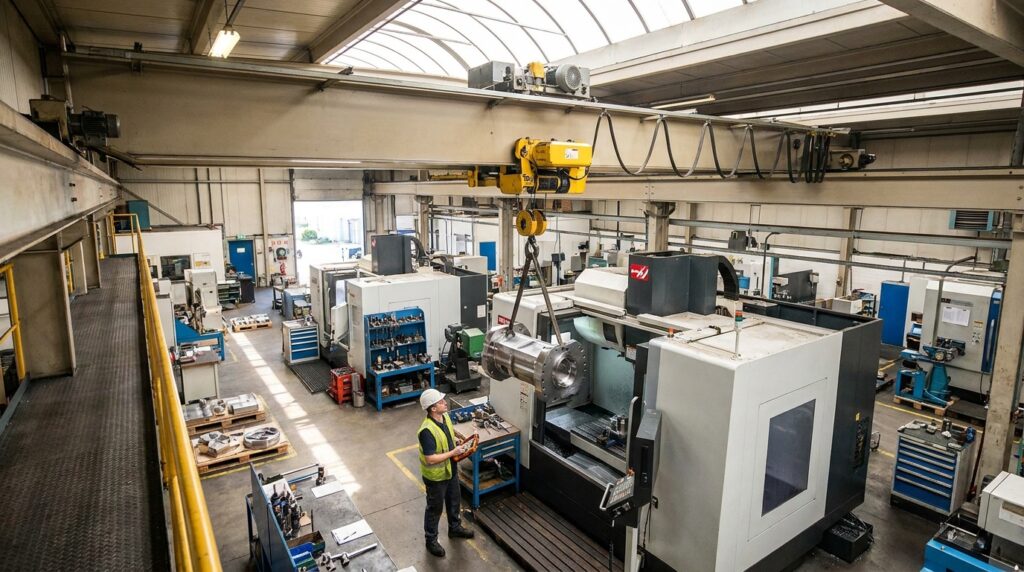
Enhancing Manufacturing Efficiency: A Comprehensive Guide to Overhead Cranes for Machine Loading
Overhead cranes are indispensable assets in modern manufacturing facilities, playing a critical role in material handling, particularly for machine loading and unloading. Their ability to lift and move heavy loads safely and efficiently directly impacts productivity, reduces the risk of worker injury, and optimizes floor space. This guide delves into the world of overhead cranes, offering insights for manufacturing managers, warehouse operators, engineers, maintenance teams, and industrial equipment buyers on selection, application, and best practices for maximizing their benefits.
Overhead cranes play a crucial role in manufacturing and machine loading, providing efficient solutions for lifting and transporting heavy materials. For further insights into essential material handling equipment that enhances manufacturing processes, you can explore a related article that delves into various tools and technologies designed to optimize efficiency. To read more, visit Essential Material Handling Equipment for Efficient Manufacturing Processes.
Understanding the Role of Overhead Cranes in Machine Loading
Machine loading and unloading, whether for raw materials, work-in-progress, or finished goods, presents significant ergonomic and safety challenges. Manual handling of heavy components can lead to strains, sprains, and long-term musculoskeletal disorders. Moreover, slow or inefficient loading processes create bottlenecks, delaying production cycles and increasing operational costs. Overhead cranes address these issues by providing a controlled, powerful, and precise method for material movement. They eliminate the need for forklusters or manual labor in many instances, freeing up valuable floor space and improving workflow.
The Economic Imperative for Efficient Material Handling
In a competitive manufacturing landscape, every aspect of operation comes under scrutiny for cost optimization. Material handling represents a substantial portion of manufacturing overhead. Inefficient methods lead to increased labor costs, potential product damage, and slower throughput. Investing in appropriate overhead crane solutions can yield significant returns by:
- Reducing Labor Costs: Automating heavy lifting tasks reduces the need for dedicated manual labor.
- Minimizing Product Damage: Precise control over load positioning significantly reduces the risk of accidental drops or collisions, protecting valuable inventory.
- Increasing Throughput: Faster and more reliable material movement means machines spend less time waiting for loads, leading to higher production output.
- Optimizing Facility Layout: By lifting loads over existing machinery and workspaces, overhead cranes can improve the utilization of available floor space.
Safety First: Mitigating Risks with Overhead Cranes
The Occupational Safety and Health Administration (OSHA) mandates safe working environments, and material handling is a key area of focus. Overhead cranes, when properly selected, installed, operated, and maintained, are far safer than manual or forklift-based alternatives for heavy lifting. They offer controlled movement, reduce the likelihood of dropped loads, and minimize the risk of collisions with personnel or equipment. Adherence to OSHA standards and ASME B30.2 (Overhead and Gantry Cranes) is paramount for ensuring the safety of your workforce and compliance with regulations.
Key Types of Overhead Cranes for Manufacturing Applications
The term “overhead crane” encompasses a range of designs, each suited to specific applications. Understanding these types is crucial for selecting the most appropriate system for your machine loading needs.
Single Girder Cranes: Simplicity and Cost-Effectiveness
Single girder overhead cranes are characterized by a single bridge beam that supports the hoist. They are a popular choice for lighter to medium-duty applications due to their simpler design, lower cost, and ease of installation.
- Construction: A single main beam (girder) spans between two end trucks. The hoist travels along the bottom flange of this girder.
- Capacities: Typically range from 1 ton to 20 tons, making them suitable for many machine loading tasks involving components, dies, or finished parts.
- Advantages: Lower initial investment, less headroom requirement compared to double girder cranes, and easier to install and maintain.
- Applications: Ideal for loading smaller CNC machines, assembly stations, or general material handling where extreme lifting capacities are not required.
Double Girder Cranes: Strength and Extended Reach
Double girder overhead cranes feature two parallel bridge beams, with the hoist typically operating on a trolley that runs on the top of the girders. This design offers increased rigidity and higher lifting capacities.
- Construction: Two main girders are supported by end trucks. The hoist and trolley system moves between and often above these girders.
- Capacities: Can handle significantly heavier loads, often exceeding 20 tons and reaching into the hundreds of tons.
- Advantages: Higher lifting capacities, greater rigidity for precise load placement, and can offer increased hook height due to the hoist being mounted between the girders.
- Applications: Essential for loading large, heavy components onto very large CNC machines, forging presses, or for handling heavy molds and dies in die-casting or plastic injection molding operations.
Jib Cranes: Localized Lifting Power
While not strictly overhead cranes in the same sense as bridge cranes, jib cranes are a vital component of many manufacturing facilities for localized lifting tasks, often in conjunction with larger overhead systems. They provide a designated lifting area.
- Types: Wall-mounted, freestanding, and mast-type jib cranes.
- Capacities: Generally range from 0.5 to 5 tons.
- Advantages: Cost-effective for repetitive tasks within a specific work cell, simple operation, and can be installed in existing facilities without major structural changes.
- Applications: Perfect for loading/unloading individual machines, serving assembly stations, or providing localized lifting support within a larger production line where a full overhead crane might be overkill or impractical.
Gantry Cranes: Versatility and Portability
Gantry cranes are freestanding structures that carry a bridge and hoist. They are an excellent option when overhead runway structures are not feasible or desirable, such as in outdoor yards, rail loading areas, or when existing building structures cannot support runway beams.
- Types: Full gantry, semi-gantry, portable gantry.
- Capacities: Varies widely, from small portable units to heavy-duty industrial gantries.
- Advantages: No need for building modifications, mobility (especially portable versions), and can be a more economical solution for certain layouts.
- Applications: Loading large workpieces onto machinery in open areas, serving multiple machines in a line, or for temporary loading/unloading operations.
Selecting the Right Overhead Crane for Your Machine Loading Needs
The process of selecting an overhead crane requires a thorough assessment of your specific operational demands, the characteristics of the loads being handled, and the environment in which the crane will operate.
Capacity and Span: The Foundation of Selection
- Lifting Capacity: Determine the maximum weight of the loads you intend to lift. This includes the workpiece itself, plus any lifting attachments (e.g., slings, spreader bars). It is always advisable to select a crane with a capacity rating that exceeds your heaviest expected load by a safe margin. For machine loading, consider not just the raw weight but also the weight distribution, which can affect stability.
- Span: The span is the horizontal distance between the crane’s runway supports. For bridge cranes, this typically corresponds to the width of the building bay or the distance the crane needs to travel over your machinery. Accurate measurement is critical. An undersized span will limit coverage, while an oversized span might be unnecessarily costly.
Headroom and Clearance: Maximizing Vertical Reach
- Headroom: This refers to the vertical distance between the floor and the lowest point of the crane structure when it’s at its highest possible position. For machine loading, maximizing hook height is often crucial to clear machinery and place loads precisely.
- Clearances: Consider obstructions in the facility, such as lighting, sprinkler systems, ductwork, and the height of the machinery itself. The crane’s design, including the hoist type (e.g., low-headroom hoist), can be optimized to minimize headroom requirements.
Duty Cycle and Frequency of Use: Matching Performance to Demand
- Duty Cycle: This refers to how often and for how long the crane is expected to operate. OSHA defines different duty classifications (e.g., Class A to Class E). Machine loading applications might range from infrequent (Class A) to heavy-duty continuous use (Class D or E). Selecting a crane with an appropriate duty classification ensures durability and longevity.
- Frequency of Use: How many lifts per hour, shift, or day are anticipated? High-frequency operations demand more robust components and potentially more advanced control systems.
Lifting Attachments: Precision and Safety in Handling
The choice of lifting attachment is as critical as the crane itself for safe and efficient machine loading.
- Electromagnets: Ideal for ferrous materials like steel plates, coils, or scrap. They offer quick engagement and release but are unsuitable for non-ferrous materials.
- Below-the-Hook Lifting Devices (BTHLs): This broad category includes:
- Shackles and Slings: Wire rope, chain, or synthetic slings are fundamental. Proper sling angle calculations are crucial to avoid overloading.
- Spreader Bars: Used to distribute the load evenly and prevent damage to delicate workpieces or to increase stability for long or awkward loads.
- Coil Lifters: Designed specifically for handling steel coils safely and efficiently.
- Vacuum Lifters: Excellent for handling flat, smooth surfaces such as glass, sheet metal, or stone. They provide a secure grip without marking the material.
- Custom-Designed Grabs and Manipulators: For unique shapes or specialized handling requirements, custom-engineered solutions can be developed.
Example: Loading a large, heavy casting onto a milling machine. A double girder overhead crane with a robust hoist would be necessary. The lifting attachment might be a specialized lifting bail or a custom-designed grapple that securely engages the casting’s contours. The precise control of the crane’s VFD (Variable Frequency Drive) powered trolley and hoist would allow for gentle placement directly into the machine’s tooling.
Control Systems: Enhancing Operator Precision and Safety
- Pendant Controls: The most common type, featuring push-button controls for hoist up/down, trolley travel, and bridge travel.
- Radio Remote Controls: Offer the operator greater freedom of movement, improving visibility and allowing them to stand in a safer, more advantageous position. This is highly recommended for machine loading to maintain a clear line of sight with the load and the machine.
- Proportional Controls/VFDs: Variable Frequency Drives allow for smooth, variable speed control of the hoist, trolley, and bridge. This is crucial for precise load positioning, especially when setting delicate components into machine tooling or avoiding collisions.
In the realm of manufacturing and machine loading, understanding the intricacies of overhead cranes is essential for optimizing efficiency and safety. For those looking to explore real-world applications and case studies, a related article can be found at Fredon Handling Projects, which showcases various successful implementations of overhead cranes in diverse industrial settings. This resource provides valuable insights into how these systems enhance productivity and streamline operations in manufacturing environments.
Application Spotlight: Overhead Cranes in Action for Machine Loading
The versatility of overhead cranes makes them applicable across a vast spectrum of manufacturing sectors.
Automotive Manufacturing
In automotive plants, overhead cranes are used for:
- Loading heavy engine blocks or transmissions onto assembly lines or machining centers.
- Handling large body stampings or chassis components.
- Transferring dies and molds within stamping and injection molding facilities.
Aerospace and Defense
The stringent safety requirements and the handling of high-value, complex components necessitate precise material handling solutions.
- Loading large aircraft sub-assemblies onto assembly jigs.
- Machining of large turbine blades or engine components.
- Transfer of sensitive electronics or delicate structures.
Heavy Machinery and Equipment
Manufacturers of large industrial equipment rely heavily on overhead cranes for:
- Loading massive castings, forgings, or fabricated parts onto large CNC boring mills or lathes.
- Assembling multi-ton components of construction equipment or mining machinery.
- Handling steel beams and plates for fabrication.
Fredon Handling’s Solution: For a scenario involving loading large, irregular metal castings onto a CNC machining center, Fredon Handling would likely recommend a robust double girder overhead crane. This would be paired with a specialized lifting attachment, such as a magnetic lifter for ferrous materials or a custom-engineered grapple for non-ferrous, irregular shapes. The crane’s radio remote control with proportional speed adjustments would allow the operator to maneuver the casting with extreme precision, minimizing the risk of damage to both the casting and the machine tool.
Safety Considerations and Regulatory Compliance
Operating overhead cranes safely is paramount. Adherence to regulatory guidelines is not only a legal requirement but also a moral imperative.
OSHA and ASME Standards
- OSHA 1910.179: This standard outlines the requirements for overhead and gantry cranes, covering design, installation, inspection, testing, maintenance, and operation. Key areas include:
- Load Testing: Cranes must undergo proof load testing before initial use.
- Inspections: Regular inspections (frequent, periodic, and year-end) are mandated to identify potential hazards.
- Operator Training: Crane operators must be trained and qualified to operate the equipment safely.
- Warning Devices: Cranes must be equipped with audible and visual warning devices.
- ASME B30.2: This is the consensus standard for overhead and gantry cranes, providing detailed technical specifications and safety requirements that are often referenced or incorporated into OSHA regulations.
Pre-Shift Inspections and Daily Checks
A critical safety practice is the pre-shift inspection conducted by the operator. This typically includes:
- Checking the hoist rope for damage or kinks.
- Verifying the condition of hooks, latches, and sheaves.
- Testing the operation of all controls, limit switches, and brakes.
- Ensuring warning devices are functional.
- Checking for any visible structural damage or loose components.
Operator Training and Qualification
Only qualified personnel should operate overhead cranes. Training should cover:
- Crane operation procedures and controls.
- Understanding load charts and capacity ratings.
- Recognizing and responding to potential hazards.
- Emergency procedures.
- Proper communication signals.
Rigging Best Practices
The individuals responsible for attaching loads to the crane (riggers) must be equally trained and knowledgeable.
- Load Weight Estimation: Accurately determining the weight of the load is fundamental.
- Sling Selection and Inspection: Using the correct type, capacity, and number of slings.
- Sling Angles: Understanding how sling angles affect the tension on the slings and the working load limit (WLL). A shallower angle increases tension, reducing the effective WLL.
- Center of Gravity: Ensuring the load is balanced and the lifting device is attached at the center of gravity to prevent tipping.
- Protecting Loads and Slings: Using edge protectors to prevent damage to slings from sharp edges.
Maintenance and Longevity: Ensuring Reliable Performance
A proactive maintenance program is essential for maximizing the lifespan and reliability of your overhead crane investment.
Preventive Maintenance Schedules
- Regular Inspections: Beyond daily checks, periodic inspections by qualified maintenance personnel are crucial. These inspections should follow manufacturer recommendations and ASME/OSHA guidelines.
- Lubrication: Proper lubrication of all moving parts (hoist, trolley, bridge mechanisms, end trucks) reduces wear and tear.
- Wear Component Replacement: Identifying and replacing worn parts, such as hoist ropes, brake linings, or trolley wheels, before they fail.
- Electrical System Checks: Regular inspection of wiring, connections, and control systems for signs of wear or damage.
Predictive Maintenance Techniques
Leveraging technology can further enhance maintenance efforts:
- Vibration Analysis: Monitoring vibrations in motors and gearboxes can detect early signs of bearing failure or misalignment.
- Thermal Imaging: Identifying hot spots in electrical components or motors that may indicate an impending failure.
- Oil Analysis: For larger gearboxes, analyzing lubricant can reveal internal wear patterns.
Record Keeping
Maintaining detailed records of all inspections, maintenance activities, repairs, and modifications is vital. These records provide a history of the crane’s condition and can inform future maintenance decisions and troubleshooting. They are also critical for demonstrating compliance with safety regulations.
Purchasing Advice and Partnering with Fredon Handling
Investing in an overhead crane is a significant decision that impacts your entire operation. Fredon Handling is your trusted partner in navigating this process.
Our Comprehensive Approach
At Fredon Handling, we don’t just sell cranes; we provide solutions. Our process involves:
- Needs Assessment: We begin by thoroughly understanding your specific machine loading requirements, facility constraints, and operational goals.
- Expert Consultation: Our experienced engineers and sales professionals will guide you through the options, explaining the pros and cons of different crane types, capacities, and control systems.
- Customized Solutions: Where standard configurations don’t fully meet your needs, we offer custom-engineered crane solutions tailored to your unique challenges.
- Installation and Commissioning: Our certified technicians ensure safe and compliant installation, followed by thorough testing and commissioning to guarantee optimal performance.
- Ongoing Support and Service: We provide comprehensive after-sales support, including preventative maintenance programs, repair services, and parts availability, to keep your crane operating efficiently and safely.
Why Choose Fredon Handling?
- Industry Expertise: Decades of experience in material handling equip us with the knowledge to solve complex challenges.
- Quality Products: We partner with leading manufacturers to offer reliable, high-performance overhead crane systems.
- Safety Focus: Safety is ingrained in our design, installation, and service philosophy.
- Customer-Centric Approach: Your operational success is our priority. We are committed to building long-term partnerships.
Example of Fredon Handling’s Value: A manufacturing plant was experiencing frequent breakdowns and delays due to an aging overhead crane used for loading heavy stamping dies. Fredon Handling conducted a site survey, analyzed their production schedule, and identified that the existing crane’s duty cycle was insufficient. We recommended and supplied a new, heavy-duty double girder overhead crane with a VFD-controlled hoist and trolley for precise inching control, along with a robust radio remote system. We also implemented a tailored preventative maintenance plan. The result was a significant reduction in downtime, improved safety, and faster die changeovers, directly boosting their production output.
Frequently Asked Questions (FAQs)
Q1: What is the typical lifespan of an overhead crane?
A1: The lifespan of an overhead crane can vary significantly depending on its design, the duty cycle it operates under, the quality of maintenance it receives, and the operating environment. However, with proper preventive maintenance and adherence to safety guidelines, a well-maintained overhead crane can last anywhere from 20 to 50 years or even longer.
Q2: Can overhead cranes be used in outdoor environments?
A2: Yes, overhead cranes can be designed for outdoor use. However, they require specific considerations, such as weatherproofing for electrical components, robust paint finishes to prevent corrosion, and potentially specialized controls to handle wind loads and other environmental factors. Gantry cranes are often a good choice for outdoor applications where building structures are not present.
Q3: What is the difference between a hoist and a crane?
A3: A crane is the entire structure that moves loads, including the bridge, trolleys, and end trucks. A hoist is the component that actually lifts and lowers the load. The hoist is typically mounted on a trolley that travels along the crane’s bridge girder(s).
Q4: How often should overhead cranes be inspected?
A4: OSHA 1910.179 requires frequent (daily or monthly, depending on usage), periodic (monthly to annually), and year-end inspections by a qualified person. The exact frequency depends on the crane’s usage, environment, and manufacturer recommendations. For machine loading applications with high usage, more frequent inspections are advisable.
Q5: Can Fredon Handling assist with upgrading an existing overhead crane system?
A5: Absolutely. Fredon Handling specializes in assessing existing crane systems and recommending upgrades to improve performance, safety, and efficiency. This can include updating control systems, replacing worn components, or even retrofitting new features like VFDs or radio controls.
Conclusion: Elevating Your Manufacturing Operations
Overhead cranes are more than just lifting equipment; they are strategic assets that drive efficiency, enhance safety, and optimize production in manufacturing environments. For machine loading and a myriad of other material handling tasks, selecting the right crane, ensuring its proper operation, and maintaining it diligently are critical.
Fredon Handling is dedicated to providing superior overhead crane solutions and expert support. We understand the complexities of industrial operations and are committed to helping you achieve your productivity and safety goals.
Ready to enhance your manufacturing efficiency with a reliable and safe overhead crane solution? Contact Fredon Handling today for a consultation. Let us help you lift your operations to new heights.
SEO Title: Overhead Cranes for Manufacturing & Machine Loading | Fredon Handling
Meta Description: Discover how overhead cranes enhance manufacturing efficiency for machine loading. Learn about types, selection, safety, maintenance, and solutions from Fredon Handling.
Suggested URL Slug: /overhead-cranes-manufacturing-machine-loading