
Optimizing Your Workflow: The Indispensable Role of Lift Tables in Pallet Loading and Unloading
In the dynamic and often demanding environment of industrial operations, efficiency, safety, and ergonomics are paramount. For businesses that handle goods in palletized form, the processes of loading and unloading these pallets represent a critical juncture where bottlenecks can form, injuries can occur, and productivity can suffer. This is where the humble yet incredibly powerful lift table emerges as an indispensable tool, transforming arduous manual labor into streamlined, controlled operations. At Fredon Handling, we understand the intricate needs of industrial equipment buyers, engineers, and facility managers. This comprehensive guide delves into the world of lift tables specifically designed for pallet loading and unloading, exploring their design, applications, benefits, selection criteria, and best practices for integration into your facility.
For those interested in optimizing warehouse operations, a related article on the benefits of using lift tables for pallet loading and unloading can be found at Fredon Handling Projects. This resource provides insights into how lift tables can enhance efficiency and safety in material handling processes, making them an essential tool for modern logistics.
Understanding the Mechanics and Advantages of Lift Tables for Pallet Handling
Lift tables, at their core, are mechanical devices designed to raise or lower heavy loads through a scissor mechanism or a hydraulic ram system. When applied to pallet handling, their purpose is to bring pallets to an ergonomically optimal working height, thereby eliminating the need for excessive bending, stretching, and straining by operators. This seemingly simple function has profound implications for workplace safety, operational efficiency, and the longevity of your workforce.
How Lift Tables Facilitate Pallet Loading and Unloading
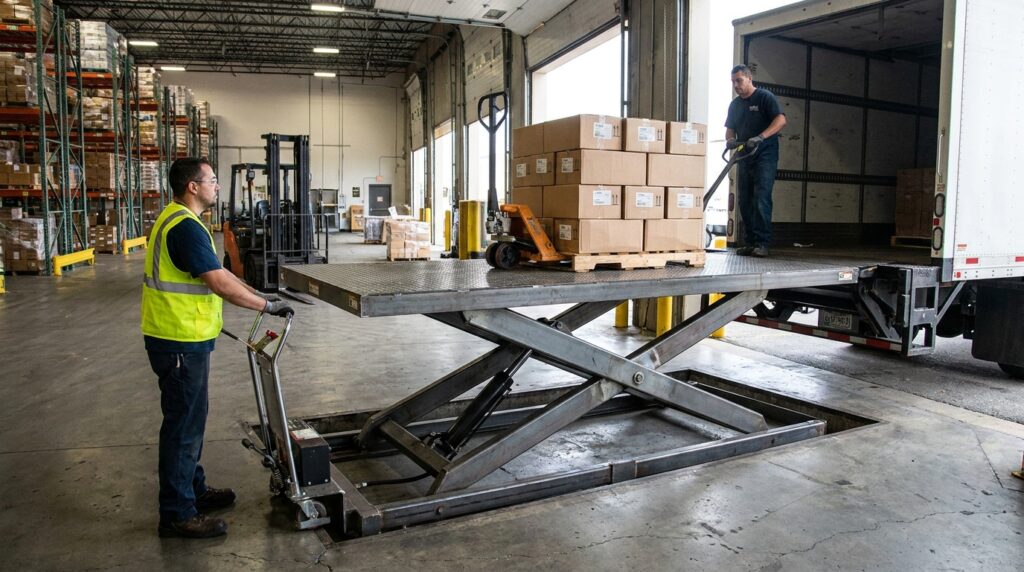
The primary function of a lift table in this context is to bridge the vertical gap between different levels. Consider the common scenario of unloading a pallet from a truck. Without a lift table, operators might have to stoop down to access the bottom layers of the pallet, or conversely, they might need to reach precariously high to grab items from the top. A lift table can be positioned at the dock level and then raised or lowered to match the height of the truck bed, allowing for smooth, level transfers of goods. Similarly, when loading a pallet onto a conveyor system or into storage, a lift table can elevate the pallet to the required height, preventing awkward lifting from floor level.
Key Benefits for Industrial Operations
The adoption of lift tables for pallet handling yields a cascade of tangible benefits:
- Enhanced Worker Safety: This is arguably the most significant advantage. By reducing the need for manual lifting and bending, lift tables dramatically decrease the risk of musculoskeletal injuries, such as back strains, sprains, and hernias. OSHA and other regulatory bodies emphasize ergonomic best practices, and lift tables are a cornerstone of achieving these standards. This leads to fewer worker’s compensation claims, reduced downtime due to injuries, and a more positive work environment.
- Increased Productivity and Throughput: When operators can work at an optimal height, the speed and efficiency of their tasks naturally increase. Less time is spent struggling with awkward positions, and more time is dedicated to the actual process of moving goods. This can lead to faster loading and unloading times, enabling higher throughputs and a smoother flow of materials through your facility.
- Improved Ergonomics and Reduced Fatigue: Beyond injury prevention, lift tables contribute to overall worker well-being. By minimizing physical exertion, operators experience less fatigue at the end of their shifts. This can translate into better concentration, fewer errors, and a more engaged workforce.
- Greater Versatility and Adaptability: Lift tables are not one-size-fits-all solutions. They come in various configurations and capacities, allowing them to be tailored to specific operational needs. This versatility makes them suitable for a wide range of industries and applications.
- Reduced Product Damage: When goods are handled manually at incorrect heights, there’s an increased risk of dropping items or causing damage. Lift tables provide a stable and controlled platform, minimizing the chances of accidental drops and subsequent product loss.
- Optimized Space Utilization: In some configurations, lift tables can be used to consolidate pallets or present them in a more manageable format for further processing, indirectly contributing to better space utilization.
Diverse Applications of Lift Tables in Pallet Operations
The versatility of lift tables makes them suitable for a broad spectrum of industrial applications involving palletized goods. From raw material receiving to finished product shipping, these tables play a crucial role in optimizing various stages of the supply chain.
Receiving and Inspection Zones
Upon arrival, pallets often need to be moved from delivery vehicles to receiving docks. Lift tables can be positioned at dock height to facilitate seamless transfer. Once on the floor, they can raise the pallet to a comfortable height for inspection, allowing quality control personnel to thoroughly examine the contents without straining. This is particularly important for industries with stringent quality control requirements.
Production Line Integration
In manufacturing settings, lift tables are frequently integrated into production lines. They can be used to:
- Feed Materials: Present incoming raw material pallets at the correct height for feeding into machinery.
- Receive Finished Goods: Elevate pallets of finished products from the end of a production line to a transfer point or staging area.
- Work-in-Progress (WIP) Handling: Support partially completed assemblies on pallets that need to be moved between workstations at various heights.
Consider a scenario where a machine produces components that are stacked onto a pallet. A lift table placed next to the machine can continuously raise the pallet as it fills, keeping the stacking area at an ergonomic height for the operator.
Order Picking and Packing Stations
While often associated with carton picking, lift tables are also highly effective in pallet-based order picking and packing operations.
- Pallet Disassembly/Assembly: For operations that break down or build up pallets for specific orders, lift tables provide the necessary height adjustment. An operator can lower a pallet to comfortably pick items for an order, or conversely, raise a pallet to easily stack picked items.
- Loading onto Conveyors: Lift tables can efficiently raise pallets to the height of a conveyor system, allowing for the smooth transfer of goods to the next stage of the shipping process. This eliminates the need for manual lifting and pushing onto the conveyor, which can be hazardous.
Shipping and Loading Docks
The shipping dock is a prime area for lift table deployment.
- Loading Trucks: Lift tables can bring pallets to the exact height of a truck bed, allowing for easy and safe loading. This is particularly useful when dealing with varying truck heights or when precise pallet placement is required. For a detailed look at solutions for loading docks, explore Fredon Handling’s range of dock equipment.
- Staging and Consolidation: Lift tables can be used to consolidate smaller loads onto a single pallet or to stage outgoing orders at a convenient working height before they are loaded.
Specialised Industrial Environments
- Pharmaceutical and Food Processing: In these highly regulated industries, cleanliness and precise material handling are critical. Stainless steel lift tables are often employed for their hygienic properties and ability to withstand wash-down procedures. They ensure product integrity and compliance with stringent regulations.
- Automotive Manufacturing: Heavy components are often handled on pallets in automotive plants. Robust, high-capacity lift tables are essential for safely moving these parts throughout the assembly process.
- Warehousing and Distribution Centers: These facilities rely heavily on efficient material flow. Lift tables are used in various zones, from receiving to order fulfillment and shipping, to optimize these processes.
Selecting the Right Lift Table for Your Pallet Handling Needs
Choosing the appropriate lift table is crucial for maximizing its effectiveness and ensuring a safe, efficient operation. A careful consideration of several factors will guide you to the optimal solution.
Key Selection Criteria
- Capacity: This is the most fundamental consideration. The lift table must be able to safely handle the maximum weight of the pallets you will be processing. It’s always advisable to choose a table with a capacity slightly exceeding your typical load to accommodate occasional heavier items and ensure a margin of safety.
- Lift Height and Stroke: Determine the minimum and maximum working heights required for your application. Consider the height of incoming vehicles, conveyor systems, and desired ergonomic working levels. The “stroke” refers to the total vertical travel distance of the table.
- Platform Size: The platform should be large enough to accommodate the standard dimensions of your pallets, with a little extra room for stability. Standard pallet sizes (e.g., 40″ x 48″) are common, but custom dimensions may require specialized platforms.
- Power Source: Most lift tables are electrically powered (hydraulic systems are common). Ensure you have access to the appropriate power supply at the intended installation location. Some mobile lift tables may offer battery power options.
- Mobility Requirements: Will the lift table remain stationary, or does it need to be moved between different workstations? Stationary models are typically more robust and suited for dedicated areas, while mobile tables offer flexibility. Fredon Handling offers a variety of stationary and mobile lift table options.
- Environmental Conditions: Consider the operating environment. Will the table be exposed to moisture, dust, extreme temperatures, or corrosive substances? This may necessitate specific material choices (e.g., stainless steel) or protective features.
- Safety Features: Look for built-in safety mechanisms such as overload protection, safety skirts to prevent entrapment, emergency stop buttons, and robust guardrails.
- Control Options: Consider how the lift table will be operated. Common options include push-button controls, foot pedals, or even automated control systems for integration into larger workflows.
- Budget: While cost is always a factor, it’s essential to balance initial investment with the long-term benefits of increased safety, productivity, and reduced operational costs.
Types of Lift Tables Relevant to Pallet Handling
While the underlying scissor mechanism is common, there are variations that cater to specific needs:
- Standard Scissor Lift Tables: These are the most common type, offering a wide range of capacities and platform sizes. They are ideal for general pallet loading and unloading tasks.
- Low-Profile Lift Tables: Designed to minimize the initial loading height, these are excellent for applications where the load can be easily placed onto the platform from floor level, reducing the need for forklifts or other lifting devices to initially position the pallet.
- Dock Levelers: While not strictly “lift tables” in the same sense, dock levelers are specialized ramps that bridge the gap between a loading dock and a truck. They often incorporate lifting mechanisms and are designed for high-volume, heavy-duty dock operations. Fredon Handling provides a comprehensive selection of dock levelers for efficient truck loading.
- Pallet Inverters: These machines are designed to rotate entire pallets, often used for replacing damaged pallets or orienting loads. While not for lifting in the traditional sense, they are sometimes used in conjunction with or as an alternative to certain lift table applications for load manipulation.
Practical Examples and Configurations
- Example 1: Truck Unloading: A facility receives daily shipments on standard 40″ x 48″ pallets. They require a lift table with a capacity of 4,000 lbs and a lift height of 50 inches. The table is placed at dock level, and as the truck is unloaded, the lift table raises to match the truck bed height, allowing operators to easily remove goods from the pallet.
- Example 2: Production Line Feeding: A manufacturing plant needs to feed pallets of raw materials into a processing machine. A stationary scissor lift table with a capacity of 6,000 lbs and a platform size of 48″ x 60″ is positioned next to the machine. It raises the pallet to a consistent height for the feeding mechanism, ensuring a smooth and uninterrupted supply of materials.
- Example 3: Order Picking Station: A distribution center uses a low-profile lift table for order picking. The table can be lowered to a height of just 4 inches, allowing pickers to easily place picked items onto the pallet from ground level. As the pallet fills, the table can be raised to a comfortable working height for subsequent palletizing or transfer to a conveyor.
When considering the efficiency of your warehouse operations, lift tables for pallet loading and unloading can significantly enhance productivity. These versatile tools not only improve ergonomics but also streamline the process of moving heavy loads. For more insights on optimizing your material handling processes, you might find this article on choosing the right equipment particularly helpful. Understanding the various options available can lead to better decision-making and ultimately a more efficient workflow.
Ensuring Safety and Maximizing Longevity: Operation and Maintenance
The effective and safe use of lift tables relies on proper operation and a consistent maintenance schedule. Adhering to these guidelines will not only protect your personnel but also extend the lifespan of your equipment.
Safe Operating Procedures
- Training: All personnel operating lift tables must receive comprehensive training on their specific model, including safe operating procedures, emergency stop protocols, and hazard awareness.
- Pre-Operation Checks: Before each use, visually inspect the lift table for any signs of damage, leaks, or loose components. Ensure the area around the table is clear of obstructions.
- Load Distribution: Always ensure the load is centered on the platform and within the table’s rated capacity. Unevenly distributed loads can cause instability and premature wear.
- No Riders: Never allow personnel to ride on the lift table.
- Guardrails and Skirts: Ensure all safety guardrails and skirts are in place and functioning correctly.
- Controlled Movements: Operate the lift table smoothly. Avoid jerky movements or sudden stops.
- Emergency Stops: Familiarize yourself with the location and operation of emergency stop buttons.
- Clearance: Maintain adequate clearance around the lift table during operation to prevent entrapment of personnel or equipment.
- Lock-Out/Tag-Out: For maintenance or repairs, always implement proper lock-out/tag-out procedures to prevent accidental activation.
Essential Maintenance Guidelines
Regular maintenance is critical to preventing breakdowns and ensuring optimal performance.
- Daily Visual Inspection: Conduct a quick visual check for any obvious issues such as leaks, damaged hoses, or loose fittings.
- Weekly Checks:
- Lubrication: Lubricate all pivot points, bearings, and moving parts according to the manufacturer’s recommendations. This is crucial for smooth operation and preventing wear.
- Hydraulic Fluid Level: Check the hydraulic fluid level and top up if necessary with the correct type of fluid specified by the manufacturer.
- Hoses and Fittings: Inspect hydraulic hoses for signs of wear, cracks, or leaks. Tighten any loose fittings.
- Scissor Mechanism: Ensure the scissor mechanism is clean and free from debris. Check for any signs of bending or damage.
- Monthly Inspections:
- Electrical Connections: Inspect all electrical connections for corrosion or damage.
- Safety Features: Test all safety features, including limit switches, overload protection, and emergency stops.
- Platform Stability: Check for any play or instability in the platform.
- Annual Servicing: It is highly recommended to have a qualified technician perform an annual comprehensive service. This typically includes:
- Full hydraulic system check and fluid change.
- Inspection and replacement of worn seals or components.
- Calibration of controls.
- Thorough cleaning and lubrication.
Always refer to the specific manufacturer’s operation and maintenance manual for your lift table model. This document will contain detailed instructions and schedules tailored to your equipment. Fredon Handling provides comprehensive support and resources for maintaining your industrial equipment.
Frequently Asked Questions About Lift Tables for Pallet Handling
Q1: What is the typical lifespan of a industrial lift table?
A1: With proper maintenance and operation, a well-built industrial lift table can last anywhere from 10 to 20 years or even longer. Factors such as operating environment, usage intensity, and adherence to maintenance schedules significantly influence its lifespan.
Q2: Can lift tables be used in outdoor environments?
A2: Some lift tables are designed for outdoor use, but they require specific features such as weather-resistant coatings, sealed components, and appropriate power sources. It’s essential to select a model specifically rated for outdoor operation and to consider environmental factors like rain, snow, and extreme temperatures.
Q3: What is the difference between a scissor lift table and a hydraulic ram lift table for pallet handling?
A3: Scissor lift tables utilize a series of linked, folding supports that extend or collapse in a crisscross pattern to achieve lift. Hydraulic ram lift tables typically use one or more hydraulic cylinders to directly push the platform upwards. Scissor lifts generally offer greater stability at higher lift heights and can often achieve higher lift capacities for their size.
Q4: How do I ensure the lift table is correctly positioned for safe loading/unloading?
A4: Proper positioning involves aligning the lift table’s platform with the height of the vehicle or destination point. Many tables have visual indicators or can be precisely controlled to match these heights. For truck loading, ensuring the table is flush with the trailer floor is key. For conveyor integration, precise height matching is critical to prevent product jams or damage.
Q5: What are the safety implications of overloading a lift table?
A5: Overloading a lift table is extremely dangerous. It can lead to structural failure of the table, sudden collapse, severe damage to the load and surrounding equipment, and serious injury or death to personnel. Always adhere strictly to the rated capacity and avoid exceeding it.
Q6: Can lift tables be customized to fit specific operational needs?
A6: Absolutely. Many manufacturers, including Fredon Handling, offer customization options for lift tables. This can include variations in platform size and shape, specific lifting heights, custom paint finishes, specialized controls, and integration with other material handling systems.
Elevate Your Operations with Fredon Handling’s Expert Solutions
The integration of lift tables into your pallet loading and unloading processes is not merely an operational upgrade; it’s a strategic investment in safety, efficiency, and overall productivity. By understanding the capabilities, benefits, and selection criteria, you can empower your workforce and streamline your material flow.
At Fredon Handling, we are dedicated to providing industrial facilities with the highest quality material handling equipment. Our extensive range of lift tables, coupled with our expert advice and support, ensures you find the perfect solution for your unique operational challenges. We understand the critical importance of reliable equipment that meets stringent safety standards and drives efficiency.
Don’t let manual lifting limitations hinder your progress. Contact Fredon Handling today to discuss your specific pallet handling requirements and discover how our advanced lift table solutions can revolutionize your operations. Visit fredonhandling.com or call us to speak with one of our material handling specialists. Let us help you lift your productivity and safety to new heights.