
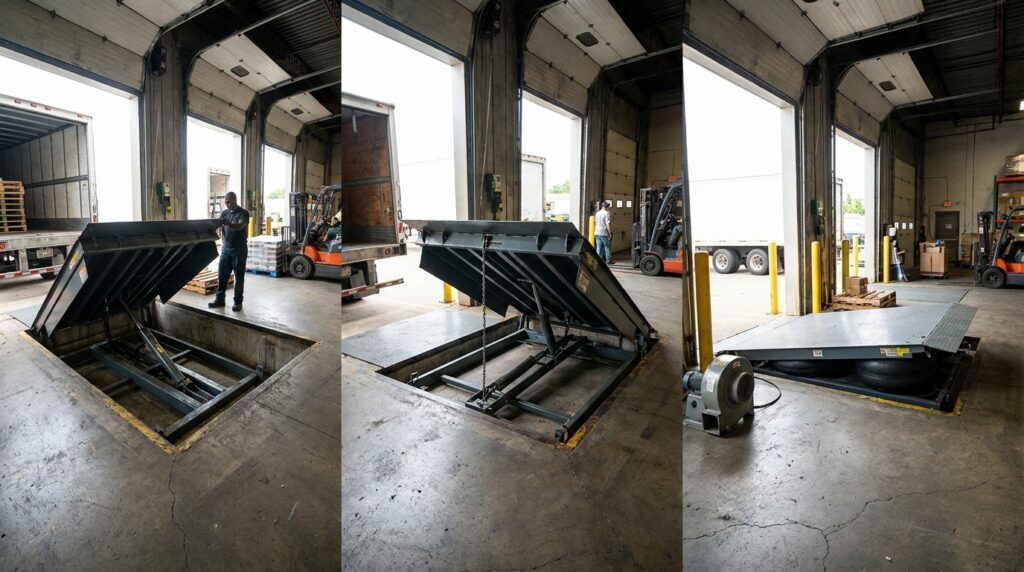
Optimizing Your Loading Dock: A Deep Dive into Dock Leveler Types
In the intricate ballet of a modern warehouse, the loading dock serves as a crucial intersection, a gateway where goods transition from transit to storage. The efficiency, safety, and speed of this operation directly impact your bottom line. At the heart of this critical interface lies the dock leveler, a piece of equipment designed to bridge the gap between the trailer bed and the warehouse floor. But not all dock levelers are created equal. Understanding the distinct advantages and applications of different types – hydraulic, mechanical, and air-powered – is paramount for warehouse managers, facility managers, safety professionals, and purchasing departments aiming to optimize their material handling operations. This comprehensive guide, brought to you by Fredon Handling, will equip you with the knowledge to make an informed decision that enhances productivity, minimizes risks, and ultimately, supports your business objectives.
In exploring the various types of dock levelers, including hydraulic, mechanical, and air-powered options, it is beneficial to understand the broader context of material handling systems. For a comprehensive overview of material handling and its significance in optimizing warehouse operations, you can refer to this informative article on the subject. It provides valuable insights that complement the discussion on dock levelers and their respective advantages. To read more, visit this article on material handling.
Understanding the Dock Leveler’s Role in Material Handling
The primary function of a dock leveler is to create a smooth, continuous surface for forklifts, pallet jacks, and personnel to traverse between the loading dock and the trailer or container. Without a dock leveler, a significant height difference and gap can exist, presenting substantial challenges. This gap can lead to:
- Product Damage: Rough transitions can cause goods to shift, tip, or become damaged during loading and unloading.
- Equipment Strain: Forklifts and other material handling equipment can experience undue stress and wear when repeatedly navigating uneven surfaces.
- Worker Injury: Tripping hazards, unstable footing, and the physical strain of maneuvering heavy loads over gaps increase the risk of accidents and injuries.
- Reduced Throughput: Inefficient transitions slow down the entire loading and unloading process, impacting your warehouse’s overall throughput and potentially leading to costly delays.
The right dock leveler, therefore, is not just a piece of equipment; it’s an investment in operational efficiency, worker safety, and the longevity of your material handling fleet. Fredon Handling understands these critical needs and offers a wide array of solutions, including a comprehensive selection of loading dock equipment.
Hydraulic Dock Levelers: Power, Precision, and Reliability
Hydraulic dock levelers are the workhorses of many industrial facilities, renowned for their robust construction, powerful lifting capabilities, and straightforward operation. They utilize a hydraulic cylinder and pump system to raise and lower the leveler platform, with a lip that extends to securely bridge the gap.
How Hydraulic Dock Levelers Work
At its core, a hydraulic dock leveler operates on the principle of fluid power. When activated, an electric motor drives a hydraulic pump, which pressurizes hydraulic fluid. This fluid is then directed to a hydraulic cylinder, pushing a piston that raises the leveler’s deck. Once the deck reaches the desired height, a mechanism allows the lip to swing outward and rest on the trailer bed. Lowering is typically achieved by releasing hydraulic pressure in a controlled manner.
Key Components of a Hydraulic System
- Hydraulic Cylinder: This is the primary actuator, containing the piston that generates the lifting force.
- Hydraulic Pump and Motor: The motor powers the pump, which circulates hydraulic fluid to move the cylinder.
- Reservoir: Stores the hydraulic fluid.
- Control Valve: Regulates the flow of hydraulic fluid to the cylinder, controlling the speed and direction of movement.
- Hoses and Fittings: Connect the various components and carry the hydraulic fluid.
- Lip: The extending section that bridges the gap.
Advantages of Hydraulic Dock Levelers
- Superior Lifting Capacity: Hydraulic systems are well-suited for handling heavy loads and can provide significant lifting force, making them ideal for demanding applications.
- Smooth and Controlled Operation: The hydraulic system allows for precise control over the deck’s movement, ensuring a smooth transition for forklifts and reducing the risk of jarring.
- Durability and Longevity: Constructed with heavy-duty materials, hydraulic levelers are built to withstand continuous use and harsh industrial environments, contributing to a longer operational lifespan.
- Relatively Low Maintenance: While they require periodic checks, hydraulic systems are generally robust and less prone to frequent breakdowns compared to some other technologies.
- Ease of Use: Most hydraulic dock levelers feature simple push-button controls, making them intuitive for operators.
Considerations for Hydraulic Dock Levelers
- Power Dependency: Hydraulic levelers require an electrical power source to operate. Power outages can render them inoperable unless a backup system is in place.
- Potential for Leaks: Like any hydraulic system, there’s a possibility of hydraulic fluid leaks, which can create slip hazards and require prompt cleanup. Regular inspection and maintenance are crucial to prevent this.
- Higher Initial Cost: Generally, hydraulic dock levelers have a higher upfront purchase price compared to basic mechanical models.
When considering the various options for dock levelers, it’s essential to understand the differences between hydraulic, mechanical, and air-powered models. Each type offers unique advantages that can enhance efficiency and safety in loading and unloading operations. For a deeper dive into the features and benefits of these dock levelers, you can explore a related article that provides comprehensive insights. To learn more about these products and their applications, visit this page for detailed information.
Applications of Hydraulic Dock Levelers
Hydraulic dock levelers are a versatile choice and are commonly found in:
- High-volume distribution centers: Where consistent and reliable operation is critical.
- Facilities with heavy-duty trucks and trailers: Their lifting power accommodates a wider range of vehicle bed heights.
- Cold storage facilities: Where robust performance and minimal downtime are essential.
- General warehousing operations: They offer a balance of performance, reliability, and ease of use for a broad spectrum of needs.
Fredon Handling offers a range of hydraulic dock levelers designed to meet diverse operational demands.
Mechanical Dock Levelers: Simplicity, Affordability, and Dependability
Mechanical dock levelers represent a classic and cost-effective solution for bridging the dock-to-trailer gap. They rely on a system of springs and counterweights to assist the operator in raising and positioning the leveler.
How Mechanical Dock Levelers Work
The operation of a mechanical dock leveler is initiated by the operator pulling a release chain. This action disengages a locking mechanism and releases the stored energy in a heavy-duty spring. The spring’s force, combined with the counterbalancing effect of the leveler’s deck, helps the operator lift the deck to its highest point. As the deck is lifted, the lip automatically extends. The operator then guides the leveler down, and once the lip rests on the trailer bed, the spring mechanism is re-engaged to hold the leveler securely in place.
Key Components of a Mechanical System
- Heavy-Duty Spring Assembly: This is the primary source of lifting assistance, storing energy through torsion or extension.
- Counterweight System: Often integrated with the deck and spring assembly, it helps balance the weight of the leveler.
- **Lip