
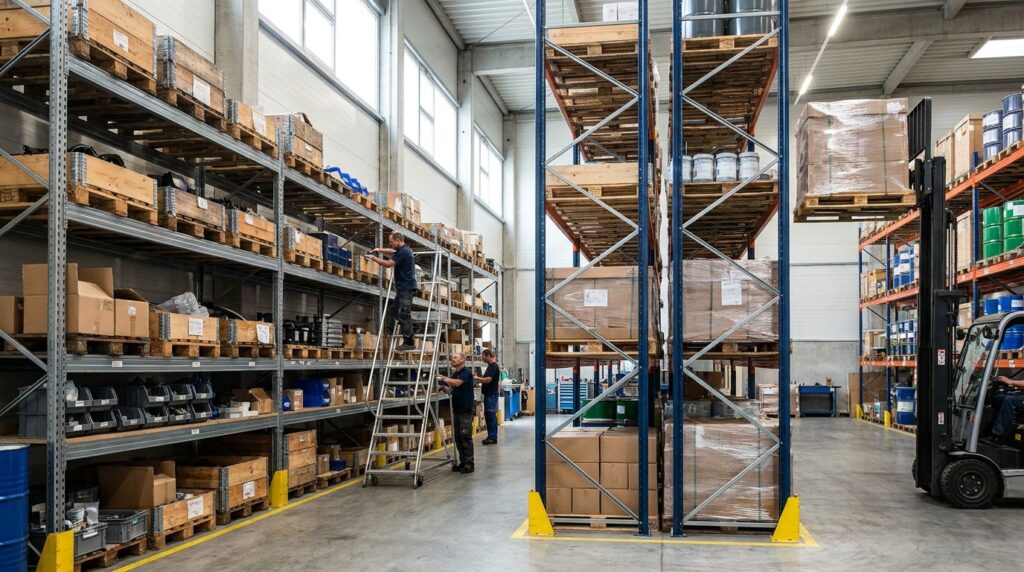
When it comes to optimizing operations in warehouses and manufacturing facilities, effective industrial shelving vs. pallet racking strategies are paramount. Fredon Handling (fredonhandling.com) understands that choosing the right storage solution is not a one-size-fits-all decision. It requires a deep understanding of your inventory, workflow, and the physical space you have available. This comprehensive guide will delve into the key differences between industrial shelving and pallet racking, explore their diverse applications, and provide the insights you need to make an informed choice that enhances efficiency, safety, and profitability. Whether you are a warehouse manager seeking to maximize throughput, a manufacturer looking for robust storage, a maintenance team aiming for better organization, or a purchasing professional focused on cost-effectiveness, this article is designed to equip you with the knowledge to navigate these critical storage decisions.
Understanding the Core Differences: Industrial Shelving vs. Pallet Racking
At their most fundamental level, industrial shelving and pallet racking serve the purpose of organizing and storing goods. However, their design, capacity, and intended use diverge significantly. The choice between them often hinges on the form of the items being stored and the way they are accessed.
The Nuances of Industrial Shelving
Industrial shelving units are typically designed for smaller, individual items or cases that are handled manually or with light equipment. They are characterized by a series of horizontal shelves supported by vertical uprights. The depth and height of shelves can vary, allowing for a highly customizable storage configuration.
- Construction and Design: Shelving systems are often made from steel, but can also incorporate materials like wood or plastic for specific applications. They come in various configurations, including:
- Closed Shelving: Features side and back panels, offering containment and dust protection. Ideal for sensitive items.
- Open Shelving: Lacks side and back panels, providing easy access from multiple sides. Commonly used for frequently accessed items.
- Wall-Mounted Shelving: Utilizes wall space to free up floor area, suitable for lighter loads and tools.
- Mobile Shelving: Mounted on tracks, allowing units to be moved aside to create aisles, significantly increasing storage density.
- Load Capacity: Shelving units are designed for lighter loads, typically ranging from a few hundred to a couple of thousand pounds per shelf, depending on the material, construction, and reinforcement.
- Accessibility: Items stored on shelving are generally accessed by hand or with small manual equipment like step stools or pallet jacks. This makes it ideal for picking individual units or cases.
- Applications: Commonly found in retail backrooms, stockrooms, manufacturing assembly lines for parts, laboratories for chemicals and equipment, and general warehouses for sorted goods.
The Strength of Pallet Racking
Pallet racking, on the other hand, is engineered to store goods that are loaded onto pallets. These systems are built to handle heavier loads and facilitate efficient handling by forklifts and other heavy-duty material handling equipment. The primary goal of pallet racking is to utilize vertical space effectively and enable quick, direct access to each pallet.
- Construction and Design: Pallet racking systems are robust, typically constructed from heavy-gauge steel. The core components include:
- Uprights (Frames): Vertical supports that bear the load. They are often perforated to allow for adjustable beam heights.
- Beams (Levels): Horizontal supports that connect the uprights and hold the pallets. They come in various lengths and weight capacities.
- Decking: While some systems store pallets directly on beams, many utilize decking for added support, safety, and to accommodate items that may not perfectly fit standard pallet dimensions. Common decking types include:
- Wire Mesh Decking: Offers good visibility, fire safety, and allows dust to pass through.
- Solid Decking (Wood or Metal): Provides a continuous surface, useful for smaller items or when pallet overhang is a concern.
- Pallet Support Bars: Simple metal bars that rest on beams to provide support for a pallet.
- Load Capacity: Pallet racks are designed for substantial weight, often supporting thousands of pounds per beam level, and the total load per bay can be tens of thousands of pounds.
- Accessibility: Pallets are accessed directly by forklifts or other specialized lifting equipment, allowing for “first-in, first-out” (FIFO) or “last-in, first-out” (LIFO) inventory management depending on the racking configuration.
- Types of Pallet Racking: The diversity of pallet racking systems caters to different operational needs:
- Selective Pallet Racking: The most common type, offering direct access to every pallet.
- Drive-In/Drive-Thru Racking: High-density storage where forklifts drive into the rack lanes.
- Push-Back Racking: Pallets are stored on carts that move backward on inclined rails.
- Pallet Flow Racking (Gravity Flow): Uses inclined roller tracks for automatic product movement.
- Cantilever Racking: Designed for long, bulky items like lumber or pipes, with horizontal arms extending from vertical columns.
For those looking to delve deeper into the nuances of storage solutions, a related article that provides valuable insights is available at Fredon Handling. This article discusses the various applications and benefits of different storage systems, including industrial shelving and pallet racking. Understanding these key differences can help businesses optimize their warehouse space and improve efficiency. To learn more, visit Fredon Handling.
Key Applications for Industrial Shelving
The versatility of industrial shelving makes it indispensable in a wide array of environments. Its suitability lies in its ability to organize and provide access to a vast range of smaller, individually managed items.
Organizing Stockrooms and Backrooms
Retail and wholesale operations rely heavily on efficient stockroom management. Industrial shelving systems provide organized spaces for storing incoming goods, preparing orders, and maintaining inventory levels. Different shelf depths and heights can accommodate varied product sizes, from small electronics to larger apparel boxes.
- Example: A clothing retailer might use various shelf heights to store folded garments, shoeboxes, and accessories. Dividers can be added to further segment sections for specific SKUs.
Parts Storage in Manufacturing and Maintenance
For manufacturers, keeping track of raw materials, work-in-progress components, and spare parts is crucial. Industrial shelving offers a systematic way to store these items, ensuring that the right part is readily available when needed on the assembly line or for maintenance tasks. This minimizes downtime and streamlines production.
- Example: A factory’s maintenance department might use heavy-duty shelving to store a diverse inventory of lubricants, filters, electrical components, and tools, clearly labeled for quick retrieval.
Laboratories and Cleanroom Environments
In scientific research and high-tech manufacturing, specialized shelving is required. Shelving in laboratories often needs to be resistant to chemicals and easy to clean, while cleanroom shelving must meet stringent particle control requirements. Fredon Handling offers solutions designed for these demanding environments.
- Example: A pharmaceutical lab might use stainless steel shelving to store chemicals, reagents, and sensitive testing equipment, ensuring compliance with strict hygiene and safety regulations.
Order Picking and Fulfillment Centers
In e-commerce fulfillment, the ability to quickly and accurately pick individual items is vital. Industrial shelving systems are configured to facilitate efficient order picking processes. Shelving can be organized by product category, SKU, or picking zone, allowing pickers to navigate aisles with ease and retrieve items without the need for heavy machinery.
- Example: An online retailer’s fulfillment center uses wide-span shelving for larger individual items and smaller bin shelving for micro-fulfillment of small parts, optimizing picking routes.
Dominant Applications of Pallet Racking
Pallet racking systems are the backbone of most distribution centers, manufacturing plants, and large-scale warehousing operations. Their primary advantage lies in their capacity to handle bulk goods stored on pallets, maximizing the use of vertical warehouse space.
Bulk Storage in Warehouses and Distribution Centers
The most common application for pallet racking is the storage of high volumes of palletized goods. This includes everything from consumer products and food items to raw materials and finished goods. Selective pallet racking is particularly prevalent due to its direct access capabilities, allowing for efficient replenishment and order fulfillment.
- Example: A food distributor uses selective pallet racking to store thousands of pallets of canned goods, frozen foods, and dry ingredients, ensuring a steady supply chain.
High-Density Storage Solutions
For facilities with limited floor space but a need to store a large volume of inventory, specialized pallet racking systems are employed. Drive-in racking and push-back racking offer significantly higher storage density compared to selective racking, by reducing or eliminating aisle space.
- Example: A cold storage facility uses drive-in racking to store a large quantity of identical frozen products, maximizing cube utilization and minimizing the need for complex racking aisles.
Handling Long or Bulky Items
Cantilever racking is specifically designed for storing items that are too long or irregularly shaped to be safely stored on traditional pallet racking. This includes materials like pipes, metal bars, lumber, and even large appliances.
- Example: A lumber yard utilizes heavy-duty cantilever racks to store various lengths and types of wood, allowing forklifts to easily access any piece without disturbing others.
Manufacturing Throughput and Raw Material Storage
Manufacturing facilities often use pallet racking to store incoming raw materials and finished goods awaiting shipment. This ensures that production lines are continuously supplied and that finished products are stored safely and efficiently.
- Example: An automotive parts manufacturer stores incoming steel coils and finished engine components on heavy-duty pallet racks, integrated with their production flow.
Selecting the Right Storage System: Key Considerations
Choosing between industrial shelving and pallet racking, or even deciding on a specific type within each category, requires a thorough assessment of several critical factors. Fredon Handling partners with clients to analyze these elements and recommend the optimal solution.
Inventory Characteristics and Handling
The nature of your goods is the primary driver for selection.
- Item Size and Weight: Are you storing individual items, cases, or full pallets? What is the typical weight of each unit or pallet?
- Shelving: Best for small to medium-sized individual items, cases, or totes.
- Racking: Essential for palletized goods, heavy loads, and bulk items.
- Handling Equipment: What equipment is available for moving goods?
- Manual/Light Equipment: Pallet jacks, carts, hand trucks, and personnel often indicate a need for shelving.
- Forklifts/Heavy Machinery: The presence of forklifts strongly suggests the necessity of pallet racking.
- Product Value and Fragility: Highly valuable or fragile items might benefit from more contained shelving solutions, while durable goods can be stored on racking.
Space Utilization and Warehouse Layout
Maximizing storage density is often a key objective.
- Vertical Space: Pallet racking excels at leveraging vertical height, especially with multi-level systems.
- Floor Space: Mobile shelving can dramatically increase floor space utilization for smaller items. Drive-in and push-back racking are high-density options for palletized goods.
- Aisle Width: Consider the turning radius of your handling equipment and the required aisle width for efficient operation. Shelving generally requires narrower aisles than standard selective pallet racking.
Operational Efficiency and Workflow
How goods move through your facility impacts the storage system choice.
- Picking Requirements:
- Case Picking/Full Pallet Picking: Pallet racking is ideal.
- Piece Picking/Split Case Picking: Shelving or specialized order picking systems on racking are more suitable.
- Inventory Management System (IMS) and SKU Velocity: High-velocity items may require more accessible storage locations, which can be achieved with both shelving and selective racking. Slow-moving items might be better suited for higher-density racking or deeper shelving.
- Throughput Needs: The volume of goods entering and exiting the facility.
Budget and Return on Investment (ROI)
Both initial cost and long-term operational benefits should be considered.
- Initial Investment: Pallet racking systems, especially complex ones, can have a higher upfront cost due to the robust construction and engineering required.
- Long-Term Costs: Factor in maintenance, potential damage, and the cost of lost productivity due to inefficient storage. A well-designed system, whether shelving or racking, will yield significant ROI through improved efficiency and reduced errors.
- Scalability: Can the system be expanded or reconfigured as your business grows or changes?
When considering the best storage solutions for your warehouse, understanding the differences between industrial shelving and pallet racking is crucial. For those looking to delve deeper into the broader context of material handling, a related article can provide valuable insights into its importance and various methods. You can explore this topic further by visiting this informative resource, which highlights how effective material handling can enhance operational efficiency in any storage system.
Safety and Maintenance in Industrial Storage
Implementing safe and well-maintained storage systems is non-negotiable. Both industrial shelving and pallet racking require ongoing attention to prevent accidents and ensure longevity.
Safety Protocols for Shelving
- Load Limits: Always adhere to the manufacturer’s specified load limits for each shelf and the entire unit. Overloading can lead to structural failure.
- Proper Loading: Distribute weight evenly across shelves. Place heavier items on lower shelves to improve stability.
- Anchoring: Ensure shelving units are securely anchored to the floor and/or wall, especially in earthquake-prone areas or where heavy loads are stored.
- Clear Aisles: Keep aisles around shelving clear of obstructions to prevent trips and falls.
- Regular Inspections: Visually inspect shelves for signs of bending, rust, damage, or loose components.
Safety and Maintenance for Pallet Racking
- Rack Protection: Install rack end protectors and column guards to prevent damage from forklifts. Even minor damage can compromise the structural integrity of the entire system.
- Load Capacity Compliance: Never exceed the load capacity of beams, uprights, or the entire bay. Load plates or labels indicating capacity should be clearly visible.
- Pallet Condition: Ensure pallets are in good condition, free from broken boards or protruding nails, and that loads are stable and properly distributed.
- Professional Inspections: Conduct regular inspections, ideally by a qualified professional, to identify any signs of damage, wear, or stress. Look for bent beams, deformed uprights, or loose connections.
- Immediate Repair: Any damaged components must be repaired or replaced immediately by qualified personnel. Never use damaged racking components.
- Clearance: Maintain adequate clearance between stored loads and sprinkler systems or overhead lighting.
Fredon Handling’s Commitment to Safety
At Fredon Handling, safety is integrated into every solution we provide. We offer robust shelving and racking systems designed to meet stringent safety standards. Our experts can also guide you on best practices for installation, usage, and maintenance to ensure a secure working environment.
Enhancing Storage Efficiency and Space Optimization
Beyond basic storage, the goal is to create a highly efficient and well-organized operational space. Both industrial shelving and pallet racking can be optimized to achieve this.
Maximizing Cube Utilization
- Industrial Shelving:
- Adjustable Shelves: Allows customization of shelf heights to minimize wasted vertical space between items.
- Bin and Drawer Systems: Integrate small bins or drawers into shelving units for granular organization of small parts, maximizing density.
- Mobile Shelving: Eliminates static aisles, converting them into usable storage space.
- Pallet Racking:
- High-Bay Racking: Utilizes the full height of the warehouse, often exceeding 30 feet.
- Narrow Aisle (NA) and Very Narrow Aisle (VNA) Racking: Reduces aisle width to increase storage capacity, often requiring specialized forklifts.
- Multi-Level Racking Systems: Incorporates walkways and stairs above the primary racking levels to create additional storage or picking areas.
Streamlining Workflow and Order Picking
- Dedicated Zones: Designate specific areas for inbound, put-away, picking, and outbound activities.
- Slotting Optimization: Strategically place items based on their velocity, size, and picking frequency. Fast-moving items should be placed in easily accessible locations.
- Integration with Technology: Implement warehouse management systems (WMS) that can guide pickers, optimize routes, and provide real-time inventory visibility for both shelving and racking.
- Ergonomics: Design picking and storage areas to be ergonomically sound, reducing strain on personnel and improving efficiency.
Fredon Handling’s Integrated Solutions
Fredon Handling offers a comprehensive suite of products and expertise to optimize your storage. From durable industrial shelving for piece picking to high-density pallet racking for bulk storage, we design solutions that integrate seamlessly with your operations. Explore our industrial shelving solutions and pallet racking systems to find the perfect fit for your facility.
Frequently Asked Questions About Industrial Storage
This section addresses common queries from warehouse managers, manufacturers, maintenance teams, and purchasing professionals regarding industrial shelving and pallet racking.
What is the primary difference in load capacity between industrial shelving and pallet racking?
Industrial shelving is designed for lighter loads, typically ranging from a few hundred to a couple of thousand pounds per shelf. Pallet racking, built for heavy-duty use, can support thousands of pounds per beam level, with entire bay capacities reaching tens of thousands of pounds. The distinction is driven by whether the items are stored individually or on pallets.
How do I determine if I need shelving or racking?
Consider the form of your inventory and how it’s handled. If you store smaller, individual items, cases, or totes that are accessed manually or with light equipment, industrial shelving is likely appropriate. If you store bulk goods on pallets and utilize forklifts for movement, pallet racking is the standard solution. Your throughput volume and space constraints are also key factors.
Can I combine shelving and racking in the same warehouse?
Absolutely. Many modern warehouses utilize a hybrid approach, using pallet racking for bulk storage of palletized goods and integrating industrial shelving for slower-moving items, e-commerce picking, or storage of smaller parts. This allows for optimized use of both vertical and horizontal space for different inventory types.
What are the most important safety considerations for pallet racking?
Key safety aspects include preventing forklift damage through rack protectors, never exceeding load capacities, ensuring pallets are in good condition, conducting regular professional inspections, and promptly repairing or replacing any damaged components. Adhering to these practices is vital to prevent catastrophic failures.
How can I improve space utilization in my warehouse?
Space optimization can be achieved by:
- Leveraging Vertical Space: Using high-bay racking or multi-level shelving systems.
- Reducing Aisle Widths: Employing narrow aisle or VNA racking where feasible.
- Mobile Storage: Utilizing mobile shelving to convert static aisles into storage.
- Optimizing Slotting: Placing items strategically based on velocity and size.
- Customizing Shelf Heights: Ensuring minimal wasted space between items on shelving.
Conclusion and Next Steps for Optimized Storage
Navigating the landscape of industrial shelving vs. pallet racking is a critical decision for any operation seeking to enhance efficiency, safety, and profitability. Understanding the distinct capabilities of each system—from the granular organization offered by industrial shelving to the heavy-duty, high-volume capacity of pallet racking—empowers you to make the most informed choice for your specific needs. At Fredon Handling, we are dedicated to providing intelligent, robust, and cost-effective material handling and storage solutions tailored to your unique operational challenges. Whether you’re a warehouse manager, manufacturer, maintenance professional, or purchasing expert, investing in the right storage infrastructure is an investment in your company’s future.
Don’t let outdated or inadequate storage solutions hinder your progress. Fredon Handling offers a comprehensive range of industrial shelving and pallet racking systems, alongside expert consultation to help you optimize your warehouse layout and workflow.
Ready to transform your storage operations? Request a personalized consultation or a no-obligation quote today. Our team of specialists is eager to assess your requirements and design a solution that drives efficiency and maximizes your return on investment. Visit fredonhandling.com or contact us to begin your journey towards superior material handling.