
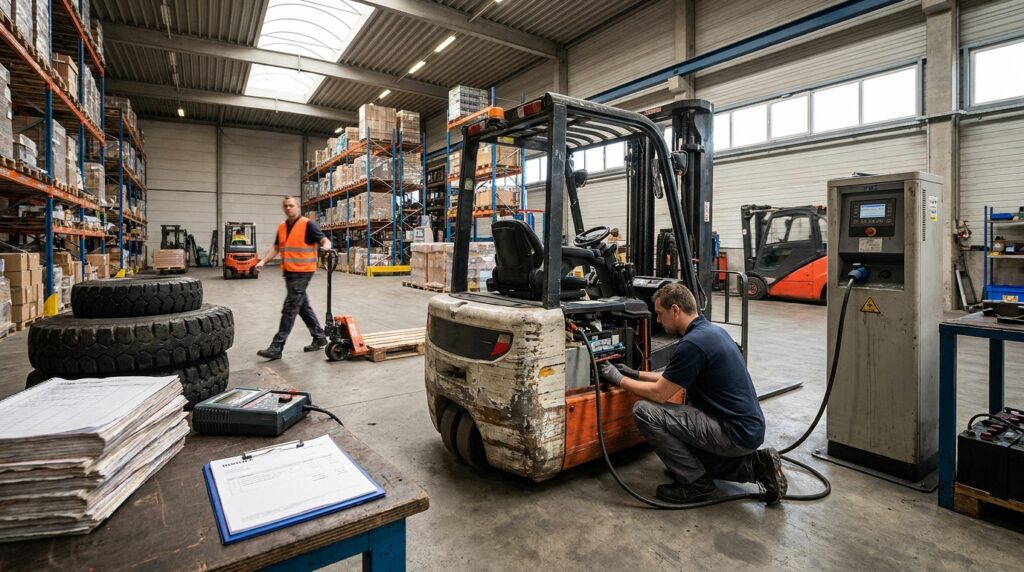
Understanding the true cost of material handling equipment goes far beyond the initial purchase price. For warehouse managers, facility directors, and operations leaders, calculating the total cost of ownership (TCO) provides a comprehensive view of what equipment actually costs throughout its entire lifecycle. This strategic approach to equipment investment helps organizations make smarter purchasing decisions, optimize budgets, and maximize operational efficiency.
Material handling equipment total cost of ownership encompasses every expense associated with acquiring, operating, maintaining, and eventually disposing of equipment such as forklifts, conveyors, pallet jacks, and automated systems. When decision-makers understand and apply TCO principles, they often discover that the lowest-priced option upfront can become the most expensive choice over time.
What Is Total Cost of Ownership for Material Handling Equipment
Total cost of ownership represents the complete financial impact of owning and operating material handling equipment from acquisition through end-of-life disposition. Unlike simple purchase price comparisons, TCO analysis captures hidden costs that accumulate over years of operation.
The TCO framework typically spans five to fifteen years depending on the equipment type. Forklifts, for instance, might have a useful life of seven to ten years with proper maintenance, while conveyor systems and automated storage solutions can operate effectively for fifteen years or longer.
Direct and Indirect Cost Components
Direct costs include obvious expenses like purchase price, financing charges, and routine maintenance. Indirect costs prove more challenging to quantify but often represent the majority of total ownership expenses. These include operator training, facility modifications, energy consumption, insurance premiums, and productivity losses during equipment downtime.
Consider a standard sit-down counterbalance forklift. The purchase price represents only a portion of what that equipment will cost over its lifetime. Fuel or electricity, tires, maintenance labor, replacement parts, operator certification training, and eventual resale or disposal all factor into the complete financial picture.
Why Purchase Price Alone Misleads Decision-Makers
Equipment with a lower acquisition cost frequently carries higher operating expenses. A budget-priced forklift might consume more fuel, require more frequent repairs, experience longer downtime periods, and have lower resale value compared to a premium alternative. Over a seven-year ownership period, these ongoing costs can dwarf the initial price difference.
Sophisticated procurement teams recognize that evaluating material handling equipment total cost of ownership reveals the true value proposition of each option under consideration.
Understanding the Total Cost of Ownership (TCO) of Material Handling Equipment is crucial for businesses looking to optimize their operational expenses. For a deeper insight into this topic, you can refer to a related article that explores various factors influencing TCO and offers practical strategies for cost management. To read more, visit this article.
Breaking Down the Major TCO Cost Categories
Understanding the components that contribute to total cost of ownership helps organizations build accurate equipment budgets and make informed comparisons between alternatives.
Acquisition Costs
Acquisition costs extend beyond the equipment sticker price. This category includes:
- Base equipment purchase price or lease payments
- Attachments and accessories (clamps, rotators, side shifters)
- Delivery and installation charges
- Initial setup and configuration
- Facility modifications required for equipment operation
- Initial operator and maintenance technician training
- Financing interest if purchasing on credit
Organizations should request detailed quotes that itemize all acquisition-related expenses rather than relying on headline prices alone.
Operating Costs
Operating costs recur throughout the equipment lifecycle and typically represent the largest portion of total cost of ownership:
- Energy consumption (fuel, electricity, propane)
- Operator labor hours
- Consumables and wear items (tires, filters, fluids)
- Insurance premiums
- Licensing and registration fees where applicable
- Technology and software subscriptions for fleet management
Energy costs deserve particular attention. Electric equipment generally offers lower energy costs per operating hour compared to internal combustion alternatives, though the margin varies based on local electricity and fuel prices.
Maintenance and Repair Costs
Planned maintenance and unplanned repairs contribute significantly to lifetime equipment costs:
- Scheduled preventive maintenance labor and parts
- Unscheduled repairs and emergency service calls
- Replacement components (batteries, motors, hydraulic systems)
- Extended warranty or service contract premiums
- In-house maintenance staff time and training
Equipment reliability directly impacts this category. More reliable equipment requires less maintenance spending and generates fewer productivity-disrupting breakdowns.
Downtime and Productivity Costs
When equipment fails or sits idle during maintenance, operations suffer. Downtime costs include:
- Lost productivity while equipment is unavailable
- Expedited shipping to compensate for delays
- Overtime labor to catch up on production
- Rental equipment costs during extended repairs
- Customer satisfaction impacts from delivery delays
These costs often go unmeasured but can exceed direct maintenance expenses. Facilities with limited equipment redundancy face amplified downtime impacts.
End-of-Life Costs
The ownership cycle concludes with disposition costs or residual value:
- Resale or trade-in value (offsets other costs)
- Decommissioning and removal expenses
- Environmental disposal fees for batteries or fluids
- Transition costs when introducing replacement equipment
Higher-quality equipment from reputable manufacturers typically retains better resale value, reducing net ownership costs.
How to Calculate Material Handling Equipment Total Cost of Ownership
Calculating TCO requires gathering data, making reasonable assumptions about future costs, and applying consistent methodology across equipment alternatives.
Step-by-Step Calculation Process
Begin by defining the analysis period based on expected useful life. Gather historical data from existing equipment to inform estimates for similar new acquisitions. For new equipment categories, request operating cost projections from manufacturers and validate with industry benchmarks.
Build a spreadsheet model that captures all cost categories by year. Account for cost escalation over time—fuel prices, labor rates, and parts costs generally increase annually. Include financing costs if applicable, calculated at your organization’s cost of capital.
Sum all costs across the analysis period and divide by expected operating hours or units of production to generate comparable cost-per-hour or cost-per-unit metrics.
Key Metrics for Comparison
Several metrics help compare TCO across equipment alternatives:
- Total cost per operating hour divides lifetime costs by expected operating hours
- Cost per unit moved relates expenses to production output
- Payback period for premium equipment measures how quickly higher upfront costs are recovered through operational savings
- Net present value discounts future costs to present-day dollars for more accurate long-term comparisons
These metrics enable apples-to-apples comparisons between equipment with different purchase prices, expected lifespans, and operating characteristics.
Data Sources and Assumptions
Reliable TCO analysis depends on quality inputs. Gather data from:
- Historical maintenance and operating records for similar equipment
- Manufacturer specifications and cost projections
- Industry publications and benchmarking studies
- Equipment dealers who can share typical ownership cost experiences
- Peer facilities operating comparable equipment
Document all assumptions clearly. When comparing alternatives, apply consistent assumptions to avoid biasing results. Sensitivity analysis—testing how results change when key assumptions vary—helps identify which factors most influence the outcome.
Factors That Influence Material Handling Equipment Total Cost of Ownership
Numerous variables affect lifetime equipment costs. Understanding these factors helps organizations optimize TCO through informed decisions.
Equipment Type and Power Source
Different equipment categories carry distinct cost profiles. Electric forklifts typically offer lower energy and maintenance costs but require battery charging infrastructure. Internal combustion equipment provides flexibility but consumes more expensive fuel and requires additional maintenance.
Automated systems demand higher initial investment but can dramatically reduce labor costs and improve throughput consistency. Manual equipment costs less upfront but depends entirely on human productivity.
Operating Environment and Intensity
Harsh environments accelerate equipment wear. Cold storage facilities, outdoor operations, and dusty manufacturing settings impose additional stress on components. High-utilization applications—multiple shifts, aggressive duty cycles—concentrate wear into shorter timeframes.
Match equipment specifications to actual operating conditions. Over-specified equipment wastes capital, while under-specified equipment fails prematurely and generates excessive maintenance costs.
Maintenance Strategy and Execution
Preventive maintenance programs extend equipment life and reduce emergency repairs. Organizations with disciplined maintenance practices realize lower TCO than those practicing reactive “run to failure” approaches.
Maintenance quality matters as much as frequency. Trained technicians using proper parts and procedures achieve better outcomes than cut-rate alternatives. Working with qualified service providers like Fredon Handling ensures maintenance supports rather than undermines equipment longevity.
Operator Training and Behavior
Well-trained operators extend equipment life and reduce damage incidents. Proper operation minimizes unnecessary wear on tires, forks, masts, and drive components. Safety incidents involving poorly trained operators generate repair costs, liability exposure, and productivity losses.
Ongoing training reinforces proper techniques and introduces operators to equipment features that improve efficiency. Many organizations underinvest in training relative to its impact on total cost of ownership.
Technology and Fleet Management
Modern fleet management systems provide visibility into equipment utilization, operator behavior, and maintenance needs. Impact sensors identify abuse events. Telematics track operating hours and schedule maintenance automatically.
These technologies require investment but generate TCO savings through improved utilization, reduced damage, and optimized maintenance timing.
Understanding the Total Cost of Ownership (TCO) for Material Handling Equipment is crucial for businesses looking to optimize their operations and budget. A related article that delves deeper into this topic is available on Fredon Handling’s website, which provides valuable insights into the factors that contribute to TCO and how companies can effectively manage these costs. For more information, you can read the article here. This resource can help organizations make informed decisions when investing in material handling solutions.
Strategies to Reduce Total Cost of Ownership
Organizations can take deliberate actions to minimize lifetime equipment costs without sacrificing operational capability.
Right-Sizing Equipment Selection
Match equipment capacity and features to actual requirements. Purchasing equipment with capabilities beyond operational needs wastes capital and increases operating costs. Conversely, undersized equipment struggles to meet demands and wears out prematurely.
Conduct thorough needs assessments before equipment acquisition. Consider current requirements and realistic growth projections rather than speculative future needs.
Implementing Preventive Maintenance Programs
Structured preventive maintenance reduces unplanned downtime and extends equipment life. Follow manufacturer-recommended service intervals. Track maintenance activities and costs to identify equipment requiring excessive attention.
Consider service agreements with qualified dealers who specialize in your equipment types. These arrangements provide predictable maintenance costs and access to trained technicians and genuine parts.
Investing in Operator Development
Comprehensive operator training programs reduce damage incidents and improve productivity. Certification programs establish baseline competency. Ongoing coaching addresses poor habits before they cause expensive problems.
Operator incentive programs can align individual behavior with organizational TCO goals. Recognizing operators who demonstrate proper equipment care reinforces positive practices.
Optimizing Fleet Utilization
Underutilized equipment inflates cost-per-hour metrics. Fleet management analysis identifies opportunities to consolidate equipment, adjust shift schedules, or reallocate assets between facilities.
Rental equipment can supplement owned fleets during peak periods more cost-effectively than maintaining excess capacity year-round.
Frequently Asked Questions About Material Handling Equipment Total Cost of Ownership
How much of total cost of ownership comes from the initial purchase price?
The purchase price typically represents only a fraction of total lifetime costs. For forklifts, acquisition costs might account for a modest portion of TCO, with operating and maintenance expenses comprising the majority. The exact ratio varies by equipment type, utilization intensity, and ownership duration.
Should I buy or lease material handling equipment?
Leasing offers lower initial outlay, predictable payments, and easier equipment refresh cycles. Purchasing builds equity and may cost less over extended ownership periods. TCO analysis should compare both options using your organization’s financial parameters and operational requirements.
How does electric equipment TCO compare to internal combustion alternatives?
Electric equipment generally delivers lower energy and maintenance costs but requires battery infrastructure investment. The comparison depends on local energy prices, operating intensity, and indoor air quality requirements. Organizations should verify current requirements from OSHA and other regulatory bodies regarding indoor equipment emissions.
What role does equipment quality play in total cost of ownership?
Higher-quality equipment from established manufacturers typically offers better reliability, longer useful life, lower maintenance costs, and stronger resale value. These advantages often outweigh higher acquisition costs, though organizations should validate assumptions through TCO analysis rather than accepting this generalization uncritically.
How can I get help with material handling equipment TCO analysis?
Experienced equipment dealers provide valuable consultation on TCO factors specific to your industry and application. Fredon Handling works with customers to evaluate equipment alternatives comprehensively, considering lifetime costs alongside operational requirements. Reaching out to knowledgeable partners helps ensure purchasing decisions serve long-term organizational interests rather than short-term budget pressures alone.
Understanding material handling equipment total cost of ownership transforms procurement from a purchasing exercise into a strategic investment decision. Organizations that master TCO analysis consistently make better equipment choices, optimize operational budgets, and gain competitive advantages through superior facility efficiency.