
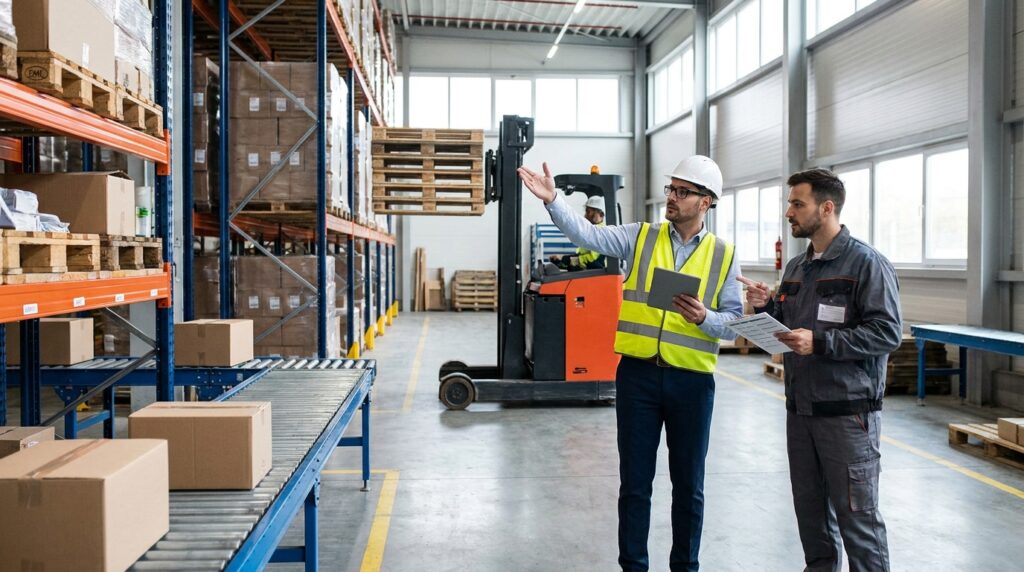
A material handling audit is a systematic evaluation of how goods, products, and materials move through your facility—from receiving to storage to shipping. This comprehensive assessment examines equipment, workflows, safety practices, and operational efficiency to identify improvement opportunities and reduce costs.
For warehouse managers, facility directors, and operations leaders, conducting regular material handling audits isn’t just good practice—it’s essential for maintaining competitive advantage, ensuring worker safety, and optimizing capital investments in equipment and infrastructure.
This guide walks you through the complete process of performing a thorough material handling audit, from initial planning through implementation of findings.
Why Every Facility Needs Regular Material Handling Audits
Material handling operations represent a significant portion of operational costs in warehouses, distribution centers, and manufacturing facilities. Yet many organizations overlook systematic evaluation of these processes until problems become impossible to ignore.
The Hidden Costs of Inefficient Material Handling
Inefficiencies in material handling often manifest in subtle ways that accumulate over time. Excessive travel distances between pick locations, outdated equipment that slows throughput, and suboptimal storage configurations all contribute to higher labor costs and reduced productivity.
Consider that material handling can account for a substantial percentage of a product’s total production cost. Even modest improvements identified through a structured audit can yield meaningful savings when multiplied across thousands of daily operations.
Safety and Compliance Considerations
Beyond efficiency, material handling audits serve a critical safety function. Improper equipment use, inadequate training, and deteriorating infrastructure create hazardous conditions that put workers at risk and expose organizations to liability.
Regular audits help identify compliance gaps with workplace safety regulations before they result in incidents or citations. Note that OSHA, ANSI, and other regulatory bodies update requirements periodically—always verify current standards when assessing compliance areas.
When to Conduct an Audit
Most facilities benefit from comprehensive material handling audits annually, with more focused assessments quarterly. Additionally, consider conducting an audit when:
- Throughput requirements change significantly
- New product lines or packaging types are introduced
- Facility layout modifications are planned
- Equipment reaches end-of-life or requires major investment
- Accident rates or near-misses increase
- Energy costs spike unexpectedly
- Customer complaints about order accuracy or delivery times rise
For those looking to enhance their understanding of material handling processes, a related article that provides valuable insights is available at this link: Material Handling Solutions. This resource offers a comprehensive overview of various products and systems designed to improve efficiency and safety in material handling operations, making it an excellent complement to the guidelines on how to conduct a material handling audit.
Preparing for Your Material Handling Audit
Successful audits require careful preparation. Rushing into an assessment without proper groundwork often produces incomplete findings and missed opportunities.
Assembling Your Audit Team
Effective audit teams combine internal knowledge with fresh perspectives. Include representatives from:
- Operations and warehouse management
- Safety and compliance personnel
- Maintenance and facilities teams
- Front-line supervisors who understand daily challenges
- Finance representatives who can evaluate cost implications
For complex facilities or specialized operations, consider engaging external experts who bring experience from multiple industries and can benchmark against best practices. Companies like Fredon Handling offer consultation services that complement internal expertise.
Gathering Baseline Documentation
Before walking the floor, compile existing documentation that provides context for your observations:
- Current facility layout drawings and traffic flow patterns
- Equipment inventories including age, condition, and maintenance records
- Standard operating procedures for material handling tasks
- Training records and certification documentation
- Historical safety incident reports
- Throughput data and productivity metrics
- Energy consumption records
- Previous audit findings and implementation status
Defining Audit Scope and Objectives
Clearly articulate what you’re trying to achieve. A material handling audit can encompass everything from dock operations to internal transport to storage systems. Define whether you’re conducting:
- A comprehensive facility-wide assessment
- A focused evaluation of specific problem areas
- An equipment-specific review (conveyors, lift trucks, racking, etc.)
- A safety-centered compliance audit
- A pre-expansion planning assessment
Specific, measurable objectives keep the audit focused and make it easier to evaluate success afterward.
Conducting the Physical Assessment
The floor walk represents the heart of your material handling audit. This hands-on evaluation reveals realities that spreadsheets and reports cannot capture.
Evaluating Material Flow and Traffic Patterns
Begin by tracing how materials actually move through your facility. Map the journey from receiving dock through storage, picking, packing, and shipping. Look for:
- Unnecessary backtracking or cross-traffic
- Congestion points where multiple flows converge
- Excessive travel distances for high-velocity items
- Bottlenecks that create downstream delays
- Opportunities for consolidation or zone optimization
Document actual paths taken by workers and equipment, not just planned routes. Real-world behavior often deviates from designed workflows.
Assessing Equipment Condition and Suitability
Examine all material handling equipment with a critical eye toward both current condition and appropriateness for the task:
Lift Trucks and Powered Equipment
- Physical condition including tires, forks, masts, and safety features
- Age relative to expected service life
- Match between equipment capacity and actual loads handled
- Power source efficiency (battery condition, fuel consumption)
- Operator visibility and ergonomic considerations
Conveyor Systems
- Belt or roller condition and alignment
- Drive system performance
- Guard and safety device functionality
- Integration points with other systems
- Accumulation and release reliability
Storage Systems
- Structural integrity of racking and shelving
- Load capacity signage and compliance
- Appropriate use of storage media for product characteristics
- Accessibility for picking operations
- Space utilization within and between storage positions
Manual Handling Equipment
- Cart and dolly condition
- Pallet jack functionality
- Ergonomic aids and lifting devices
- Workstation design for repetitive tasks
Reviewing Safety Practices and Compliance
Safety assessment should be woven throughout your material handling audit, not treated as a separate exercise:
- Observe whether workers consistently follow established procedures
- Check that required personal protective equipment is available and used
- Verify emergency stop devices and safety interlocks function properly
- Assess pedestrian and vehicle separation measures
- Review lockout/tagout compliance for maintenance activities
- Examine housekeeping standards including aisle clearance and spill management
- Confirm proper load securing for transport and storage
Document any observed deviations from safety requirements. Remember to consult current OSHA, ANSI, and manufacturer specifications when evaluating compliance—regulations and standards evolve over time.
Interviewing Operators and Supervisors
Front-line workers possess invaluable insights that observation alone cannot reveal. Conduct brief interviews to understand:
- Recurring frustrations with equipment or processes
- Informal workarounds that have developed
- Near-miss incidents that weren’t formally reported
- Ideas for improvement that haven’t been implemented
- Training gaps or skill development needs
Create a comfortable environment for honest feedback. Workers may hesitate to share concerns if they fear negative consequences.
Analyzing Findings and Prioritizing Improvements
Raw observations become actionable only through systematic analysis and prioritization.
Categorizing Audit Findings
Organize discoveries into logical categories that facilitate action planning:
Safety and Compliance Issues
Items requiring immediate attention to protect workers and meet regulatory requirements.
Equipment Concerns
Findings related to condition, capacity, reliability, or suitability of material handling equipment.
Process and Workflow Inefficiencies
Opportunities to streamline operations, reduce waste, and improve throughput.
Space Utilization
Observations about storage density, aisle configurations, and facility layout optimization.
Training and Documentation Gaps
Areas where enhanced training or updated procedures would improve performance.
Applying Prioritization Criteria
Not all findings carry equal weight. Develop a consistent framework for prioritizing improvements based on:
- Safety impact: Issues creating immediate hazard receive highest priority
- Regulatory compliance: Items required to meet legal obligations
- Financial benefit: Estimated cost savings or productivity gains
- Implementation complexity: Resources, time, and disruption required
- Strategic alignment: Connection to broader organizational objectives
A simple matrix plotting impact against effort helps visualize priorities and build consensus among stakeholders.
Calculating Return on Investment
For significant equipment or infrastructure investments, develop realistic ROI projections. Consider:
- Direct labor savings from improved efficiency
- Reduced equipment maintenance and replacement costs
- Energy savings from modernized systems
- Decreased product damage rates
- Improved order accuracy and customer satisfaction
- Risk reduction from enhanced safety measures
Be conservative in estimates and transparent about assumptions. Avoid overstating benefits—credibility matters when seeking budget approval.
When considering the best practices for optimizing your warehouse operations, it’s essential to understand the importance of a thorough material handling audit. This process can help identify inefficiencies and improve overall productivity. For further insights into enhancing your material handling strategies, you might find it beneficial to read a related article that discusses various aspects of material handling systems. Check out this informative piece on material handling to gain a deeper understanding of how to streamline your operations effectively.
Implementing Audit Recommendations
Findings without follow-through waste the effort invested in conducting the audit. A structured implementation approach ensures improvements actually materialize.
Developing Your Action Plan
Transform prioritized findings into specific, assignable actions:
- Define clear deliverables for each improvement initiative
- Assign accountability to specific individuals
- Establish realistic timelines with milestone checkpoints
- Identify resource requirements including budget, personnel, and equipment
- Anticipate potential obstacles and mitigation strategies
Quick wins—improvements that are low-cost and easy to implement—should be executed promptly to build momentum and demonstrate audit value.
Equipment Upgrade Considerations
When audit findings indicate need for new or replacement equipment, approach procurement thoughtfully:
- Develop detailed specifications based on operational requirements
- Consider total cost of ownership, not just purchase price
- Evaluate maintenance and support availability
- Assess integration with existing systems and workflows
- Plan for operator training and transition periods
Working with experienced material handling equipment providers helps ensure appropriate solutions. Fredon Handling and similar specialists can provide guidance on equipment selection, layout optimization, and implementation planning tailored to your specific operational requirements.
Measuring Implementation Success
Establish metrics that demonstrate whether implemented changes achieve intended results:
- Throughput rates before and after process modifications
- Labor hours per unit handled
- Equipment utilization and availability percentages
- Safety incident frequency rates
- Energy consumption per unit of activity
- Customer-facing metrics like order accuracy and on-time delivery
Track these indicators consistently over time to verify sustained improvement and identify any degradation requiring attention.
Conducting a material handling audit is essential for optimizing warehouse efficiency and ensuring safety standards are met. To further enhance your understanding of effective material handling practices, you may find it helpful to explore a related article that discusses the top material handling equipment for efficient warehouse operations. This resource provides valuable insights into the tools that can complement your audit findings and improve overall productivity. For more information, you can read the article here.
Frequently Asked Questions About Material Handling Audits
How long does a comprehensive material handling audit take?
Duration varies based on facility size and complexity. Small operations might complete a thorough assessment in one to two days, while large distribution centers or manufacturing facilities may require several weeks for comprehensive evaluation. Focused audits addressing specific areas take proportionally less time.
Should we conduct audits internally or hire external consultants?
Both approaches offer advantages. Internal teams possess deep operational knowledge and can conduct more frequent assessments. External consultants bring fresh perspectives, benchmarking experience, and specialized expertise. Many organizations combine approaches—conducting regular internal reviews supplemented by periodic external assessments.
What qualifications should material handling auditors have?
Auditors should understand material handling equipment, warehouse operations, and relevant safety requirements. Certifications from organizations like MHI or safety credentials demonstrate foundational knowledge. Equally important is practical experience with similar operations and strong analytical skills.
How often should equipment be evaluated as part of the audit?
Equipment should be assessed during every comprehensive audit—typically annually. High-utilization or safety-critical equipment may warrant more frequent inspection as part of ongoing maintenance programs separate from the formal audit process.
What’s the relationship between material handling audits and lean initiatives?
Material handling audits support lean manufacturing and continuous improvement efforts by identifying waste in the form of unnecessary movement, waiting, overprocessing, and defects. Audit findings often provide valuable input for kaizen events and process improvement projects.
Building a Culture of Continuous Improvement
A material handling audit shouldn’t be viewed as a one-time event but rather as part of ongoing operational excellence. The most successful facilities establish regular assessment rhythms, track performance metrics consistently, and empower workers to identify and report improvement opportunities between formal audits.
By systematically evaluating how materials move through your operation, you position your organization to reduce costs, enhance safety, improve customer service, and maintain competitive advantage in demanding markets. The investment in thorough assessment and thoughtful implementation pays dividends through more efficient, safer, and more profitable operations.
For facilities seeking expert guidance on material handling systems, equipment selection, or operational optimization, reaching out to experienced partners like Fredon Handling can provide valuable perspective and support throughout the audit and improvement process.