
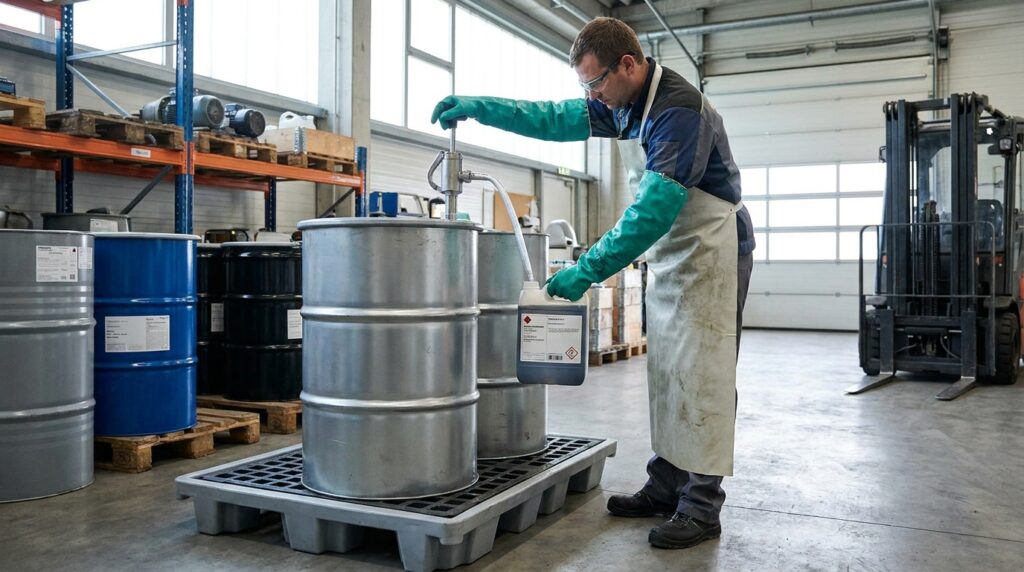
SEO Title: Safely Dispense Liquids from Industrial Drums | Expert Guide | Fredon Handling
Meta Description: Discover best practices for safely dispensing liquids from industrial drums. Explore equipment, material considerations, safety protocols, and maintenance for warehouse, plant, and safety managers.
Understanding the Challenges of Industrial Drum Dispensing
Industrial drums are the workhorses of chemical, manufacturing, and processing industries, storing and transporting a vast array of liquids, from solvents and oils to specialty chemicals and food-grade products. However, safely and efficiently dispensing these liquids presents a unique set of challenges. Improper handling can lead to spills, chemical exposure, fires, explosions, and costly downtime. This article provides a comprehensive guide for warehouse managers, plant engineers, safety managers, and industrial equipment buyers on how to safely dispense liquids from industrial drums, ensuring operational efficiency and, most importantly, the safety of personnel and the environment.
The inherent risks associated with industrial drum dispensing stem from several factors: the weight and size of the drums, the hazardous nature of many liquids they contain, the potential for static electricity buildup, and the need for precise, controlled pouring or transfer. Understanding these challenges is the first step in developing robust dispensing protocols and selecting the appropriate equipment.
For those interested in understanding the broader context of safe liquid dispensing, you may find it beneficial to read the article on material handling, which discusses its importance and various methods. This knowledge can enhance your understanding of best practices in industrial environments. You can access the article here: What is Material Handling: Understanding Its Importance and Methods.
Key Equipment for Safe Liquid Dispensing from Drums
Choosing the right equipment is paramount to achieving safe and efficient liquid dispensing from industrial drums. A variety of specialized tools and systems are available, each designed to address specific dispensing needs and hazards. Investing in the correct equipment not only enhances safety but also improves productivity and minimizes product loss.
Drum Pumps: The Foundation of Controlled Dispensing
Drum pumps are perhaps the most fundamental piece of equipment for dispensing liquids from drums. They come in various types, each suited for different applications and liquid properties.
Manual Drum Pumps
Manual drum pumps are a cost-effective solution for smaller volumes or less viscous liquids. They require manual effort to operate but offer simplicity and portability.
- Diaphragm Pumps: These use a flexible diaphragm to create suction and pressure. They are often suitable for a wide range of chemicals, including corrosive ones, and can handle solids if present.
- Rotary Vane Pumps: These use rotating vanes to draw liquid from the drum and discharge it. They are generally good for low to medium viscosity liquids.
- Piston Pumps: Similar to bicycle pumps, these use a reciprocating piston. They are often used for higher viscosity liquids but can be more labor-intensive.
Material Considerations for Drum Pumps: The material of the pump components (tubing, seals, impeller, housing) is critical, especially when handling corrosive or aggressive chemicals. Common materials include:
- Polypropylene (PP): Excellent chemical resistance, suitable for many acids and alkalis.
- Stainless Steel (SS): Durable and good for a wide range of chemicals, including many solvents and oils. Often preferred for food-grade applications.
- PVC: Good for certain acids and caustics, but less resistant to solvents.
- PTFE (Teflon): Offers superior chemical resistance for highly aggressive substances.
Size and Weight: While drum pumps themselves are relatively light, their effectiveness is measured by their flow rate and lift height, which must be sufficient for the drum size and dispensing height.
Capacity: The capacity of a pump is typically measured in gallons per stroke or liters per minute. This needs to match the dispensing volume and speed required.
Electric and Air-Operated Drum Pumps
For higher volumes, thicker liquids, or when reduced manual effort is desired, electric or air-operated drum pumps are the preferred choice.
- Centrifugal Pumps: These use a rotating impeller to impart kinetic energy to the liquid, creating flow. They are efficient for low to medium viscosity liquids and offer high flow rates.
- Progressive Cavity Pumps: These are excellent for highly viscous liquids and shear-sensitive fluids. They consist of a rotor within a stator, creating cavities that move the fluid.
Equipment Compatibility: Electric pumps require a suitable power source, while air-operated pumps (pneumatic) need a compressed air supply. Compatibility with the drum’s bung opening (typically 2-inch or 3/4-inch NPT) is also essential.
Practical Example: A plant engineer needs to transfer 55-gallon drums of lubricating oil to a small processing machine. An electric stainless steel centrifugal drum pump would be ideal due to the oil’s viscosity and the need for consistent flow without manual effort.
Drum Faucets and Valves: Simple Dispensing Solutions
For gravity-fed dispensing or for controlling flow from a tilted drum, faucets and valves are essential.
- Ball Valves: These offer quick on/off control and good sealing. They are available in various materials for chemical compatibility.
- Spigots/Faucets: Simple to operate, these are often used for lower-pressure or gravity-fed applications.
Material Considerations: Similar to pumps, faucet and valve materials must be chosen based on the chemical being dispensed. Brass, stainless steel, and various plastics are common.
Drum Compatibility: These typically thread directly into the drum’s bung opening.
Practical Example: A laboratory uses 5-gallon drums of a common solvent. A polypropylene ball valve installed in the drum’s bung allows for controlled dispensing into smaller beakers, minimizing evaporation and spill risk.
Drum Cans & Funnels: Preventing Spills During Transfer
While not dispensing equipment in themselves, appropriate containers and funnels are crucial for safe transfers.
- Safety Cans: These specialized containers are designed to safely store and dispense flammable liquids. They often feature self-closing lids, flame arrestors, and durable construction.
- Funnels: Wide-mouth funnels made of compatible materials help direct liquid into receiving containers, reducing splashes and spills.
Material Considerations: For flammable liquids, conductive materials are often preferred to prevent static discharge. For chemical compatibility, plastics like polypropylene or polyethylene are common.
Practical Example: When transferring small quantities of a flammable degreaser from a drum, a dedicated flame-arrestor safety can with a wide funnel attachment ensures safe and contained dispensing.
Specialty Dispensing Equipment
Beyond basic pumps and valves, specialized equipment exists for more demanding applications.
- Drum Mixers/Agitators: If the liquid requires agitation before or during dispensing, integrated mixers can be crucial.
- Automated Dispensing Systems: For high-volume, repetitive tasks, automated systems offer precision, speed, and enhanced safety, often integrated with weighing scales.
Material, Size, Weight, and Capacity Considerations
When selecting dispensing equipment, understanding the characteristics of the drums and the liquids they contain is fundamental.
Drum Material
Industrial drums are typically made from:
- Steel: Offers high strength and durability. Can be lined with coatings for chemical resistance. Steel drums are common for oils, solvents, and many chemicals. However, they can be susceptible to rust if not properly treated or stored.
- Plastic (HDPE – High-Density Polyethylene): Lightweight, corrosion-resistant, and often translucent, allowing for visual inspection of contents. HDPE drums are excellent for corrosive liquids, food-grade products, and many acids and alkalis. They are less prone to denting than steel but can be more susceptible to damage from sharp impacts.
- Fiber: Made from compressed paper or cardboard, often with a plastic liner. They are lightweight and typically used for solids or non-hazardous liquids. They are not suitable for aggressive chemicals or significant liquid volumes.
The drum material influences how you might need to handle it (e.g., grounding for steel drums) and its compatibility with certain dispensing equipment seals and materials.
Drum Size
The most common industrial drum size is the 55-gallon (205-liter) drum. However, other sizes exist, including:
- 30-gallon (115-liter)
- 16-gallon (60-liter)
- 5-gallon (19-liter)
- Smaller pails and containers
The size of the drum dictates the length of the pump tube required and the overall volume to be dispensed. Ensure your chosen pump or dispensing attachment is long enough to reach the bottom of the drum.
Drum Weight and Capacity
A standard 55-gallon steel drum filled with water weighs approximately 500 pounds (227 kg). Filled with denser liquids, this weight can increase significantly. This weight highlights the need for proper lifting and tilting equipment, such as drum lifters, tilters, or dollies.
The capacity refers to the volume the drum can hold, typically its stated size (e.g., 55 gallons). Dispensing equipment must be capable of handling these volumes efficiently.
Practical Example: A warehouse manager receives 30-gallon steel drums of a corrosive cleaning agent. They must select a pump with a chemical-resistant body (e.g., polypropylene) and wand, and ensure the pump is long enough to reach the bottom of the 30-gallon drum. They also need a drum dolly capable of safely maneuvering these heavy containers.
Best Practices for Safe Liquid Dispensing
Implementing a comprehensive set of best practices is crucial for minimizing risks associated with how to safely dispense liquids from industrial drums. These practices cover everything from pre-dispensing checks to post-dispensing cleanup.
Pre-Dispensing Safety Checks
Before any liquid is dispensed, a thorough safety check should be performed:
- Identify the Liquid: Always confirm the identity of the liquid being dispensed. Check the drum label for chemical name, hazard symbols (flammable, corrosive, toxic), and any special handling instructions. If the label is damaged or unreadable, do not proceed without proper identification.
- Assess Drum Condition: Inspect the drum for any signs of damage, leaks, corrosion, or bulging. If a drum appears compromised, do not attempt to dispense from it. Report it immediately to your supervisor for proper assessment and handling.
- Verify Dispensing Area: Ensure the dispensing area is well-ventilated, clear of obstructions, and free from ignition sources if dispensing flammable liquids. Have spill containment materials (absorbent pads, socks) readily available.
- Personal Protective Equipment (PPE): Select and wear appropriate PPE based on the liquid’s hazards. This may include:
- Gloves: Chemical-resistant gloves (e.g., nitrile, neoprene, butyl rubber)
- Eye Protection: Safety glasses, goggles, or a face shield
- Protective Clothing: Apron, chemical-resistant suit
- Respiratory Protection: If vapors are present, use an appropriate respirator.
- Grounding and Bonding: For flammable or combustible liquids, it is critical to ground the drum and bond it to the receiving container. This dissipates static electricity, preventing sparks that could ignite vapors. Ensure you have proper grounding straps and clamps.
- Check Dispensing Equipment: Inspect your chosen dispensing equipment (pump, valve, hose) for wear and tear. Ensure all connections are secure and materials are compatible with the liquid.
Safe Dispensing Techniques
Once the pre-dispensing checks are complete, follow these techniques during dispensing:
- Controlled Flow: Dispense liquids at a controlled rate. Avoid fast pouring, which can create splashing and static electricity. Use pumps with adjustable flow rates or partially open valves.
- Minimize Splashing: Direct the dispensing stream towards the bottom of the receiving container to minimize splashing and vapor generation.
- Avoid Overfilling: Do not overfill receiving containers. Leave adequate headspace for expansion or to prevent spills during transport.
- Continuous Supervision: Never leave a drum unattended while dispensing.
- Contain Spills Immediately: If a spill occurs, immediately contain it using spill kits. Follow your facility’s spill response procedures.
Practical Example: Transferring 55-gallon drums of isopropyl alcohol requires strict adherence to grounding and bonding protocols due to its flammability. A safety manager ensures that all personnel involved are wearing nitrile gloves and chemical splash goggles and that the dispensing area is free of any open flames or sparks. They use a conductive dispensing hose connected to a properly grounded electric pump.
Post-Dispensing Procedures
After dispensing, proper cleanup and storage are essential:
- Secure the Drum: Tightly re-seal the drum. Ensure the bung is properly tightened to prevent leaks and evaporation.
- Clean Dispensing Equipment: Thoroughly clean all dispensing equipment according to manufacturer instructions and chemical compatibility guidelines. This prevents cross-contamination and extends equipment life.
- Dispose of Waste: Properly dispose of any used absorbent materials or contaminated rags according to hazardous waste regulations.
- Return Drums to Storage: Return drums to their designated, safe storage areas. Ensure they are upright and stable.
- Record Keeping: Maintain records of dispensed materials, including quantity, date, and responsible personnel, as required by your facility’s procedures or regulatory compliance.
When considering the safe dispensing of liquids from industrial drums, it’s also important to understand the essential material handling equipment that can enhance efficiency in manufacturing processes. For more insights on this topic, you can explore the article on essential material handling equipment, which discusses various tools and techniques that can complement safe liquid handling practices. This knowledge can help ensure that your operations run smoothly while minimizing risks associated with liquid dispensing.
Safety Considerations and Hazard Mitigation
Understanding the specific hazards associated with industrial liquids and implementing robust safety measures is non-negotiable when dispensing from drums.
Flammability and Explosion Hazards
Many industrial liquids are flammable or combustible. Dispensing these requires stringent precautions:
- Static Electricity: As mentioned, grounding and bonding are critical. Ensure all metal parts of the dispensing system (drum, pump, receiving container, hoses) are electrically connected to the ground. Use non-sparking tools in potentially explosive atmospheres.
- Ventilation: Adequate ventilation is essential to prevent the buildup of flammable vapors. If natural ventilation is insufficient, use explosion-proof ventilation fans.
- Ignition Source Control: Eliminate all potential ignition sources, including open flames, sparks from electrical equipment, hot surfaces, and static discharge.
- Explosion-Proof Equipment: In areas where flammable vapors are a significant risk, use explosion-proof rated pumps, motors, and electrical components.
Chemical Exposure and Health Hazards
Many liquids are corrosive, toxic, or irritants. Protecting personnel from exposure is paramount:
- Material Compatibility: Ensure all dispensing equipment materials are compatible with the chemical. Incompatible materials can degrade, leak, and release harmful substances.
- Containment: Utilize drip pans, secondary containment systems, and spill kits to manage potential leaks.
- Ventilation: As with flammability, good ventilation is key to reducing inhalation exposure to hazardous vapors.
- PPE: Always use appropriate PPE as determined by the Safety Data Sheet (SDS) for the chemical.
Spill Prevention and Containment
Spills can lead to environmental damage, safety hazards, and costly cleanup.
- Robust Equipment: Invest in high-quality, durable dispensing equipment.
- Training: Ensure all personnel are trained on proper dispensing procedures and spill response.
- Spill Kits: Maintain readily accessible and well-stocked spill kits appropriate for the types of liquids handled.
- Secondary Containment: Employ secondary containment measures such as bunds, spill pallets, or containment berms for drum storage and dispensing areas.
Practical Example: A chemical plant dispenses drums of concentrated sulfuric acid. Safety managers implement a strict protocol: use a chemically resistant PTFE-lined diaphragm pump, ensure all personnel wear acid-resistant gloves, chemical splash goggles, and a face shield. The dispensing area is equipped with an emergency eyewash station and a spill kit specifically designed for acids. Grounding and bonding are not typically required for non-flammable acids, but spill containment is critical.
For those looking to enhance their knowledge on safe handling practices, a related article can be found in the education center, which offers valuable insights into various aspects of industrial safety. You can explore more about effective techniques and equipment by visiting this resource. Understanding the proper methods for dispensing liquids from industrial drums is crucial for maintaining a safe working environment and preventing accidents.
Maintenance and Troubleshooting of Drum Dispensing Equipment
Proper maintenance ensures the longevity and safe operation of your drum dispensing equipment.
Routine Maintenance Schedule
- Daily Checks: Visually inspect pumps, hoses, and valves for leaks, cracks, or wear. Check that all connections are secure.
- Weekly/Monthly Inspections: For pumps, check diaphragms, seals, and impellers for signs of wear. Clean filters if present. Lubricate moving parts if recommended by the manufacturer.
- After Each Use: Thoroughly clean pumps and hoses, especially when switching between different chemicals, to prevent contamination and corrosion.
Troubleshooting Common Issues
- Low Flow Rate:
- Check for blockages in the suction or discharge lines.
- Ensure the pump is fully submerged in the liquid.
- Inspect the pump’s impeller or diaphragm for damage.
- For air-operated pumps, check the air supply pressure and filter.
- Leaks:
- Inspect seals and O-rings for wear or damage.
- Ensure all connections are properly tightened.
- Check the pump casing for cracks.
- Pump Not Priming:
- Ensure the suction line is fully submerged and free of air leaks.
- Check the foot valve or strainer for obstructions.
- For some pump types, manual priming might be necessary.
Equipment Compatibility and Maintenance Example: A plant uses a stainless steel rotary vane pump for dispensing hydraulic fluid. Regular maintenance includes inspecting the vanes for wear, cleaning the intake strainer, and ensuring the shaft seal is not leaking. If the fluid viscosity changes or is contaminated, the pump’s performance will degrade, requiring troubleshooting and potentially a flush or repair.
Selecting the Right Dispensing Solution for Your Application
Choosing the optimal how to safely dispense liquids from industrial drums solution involves a systematic approach.
- Identify Liquid Properties: Determine the chemical composition, viscosity, flammability, corrosivity, and temperature of the liquid.
- Volume and Frequency: How much liquid needs to be dispensed, and how often? This will dictate the required flow rate and pump type.
- Drum Type and Size: What type of drums are you using (steel, plastic), and what are their sizes?
- Dispensing Location and Environment: Consider ventilation, power availability, and any special safety requirements (e.g., explosion-proof zones).
- Budget and Total Cost of Ownership: While initial cost is a factor, consider the long-term benefits of durability, efficiency, and safety.
Fredon Handling offers a comprehensive range of industrial drum handling and dispensing equipment designed to meet diverse needs. From robust drum pumps and valves to specialized accessories that enhance safety and efficiency, our solutions are built for demanding industrial environments.
Consider exploring our Drum Handling Equipment section: https://fredonhandling.com/drum-handling-equipment/
Frequently Asked Questions About Safe Drum Dispensing
Q1: What is the most important safety precaution when dispensing flammable liquids from drums?
A1: The most critical safety precaution is preventing ignition by controlling static electricity. This is achieved through proper grounding and bonding of the drum and receiving container, as well as ensuring the dispensing area is free from all other ignition sources.
Q2: How do I determine the correct pump material for a corrosive chemical?
A2: Consult the Safety Data Sheet (SDS) for the chemical. The SDS will provide information on compatible materials. Generally, for strong acids and alkalis, materials like polypropylene, PTFE, or specialized stainless steel alloys are recommended. Always verify compatibility with the pump manufacturer.
Q3: Can I use a standard plastic drum faucet for dispensing flammable solvents?
A3: No, standard plastic drum faucets are generally not recommended for flammable solvents. They may not be compatible with all solvents, can generate static electricity, and may lack the necessary safety features like flame arrestors. Dedicated flame-arrestor safety cans and appropriate conductive dispensing equipment should be used for flammable liquids.
Q4: What happens if I don’t ground and bond a drum of flammable liquid?
A4: Failing to ground and bond a drum of flammable liquid can lead to the buildup of static electricity. When the dispensing stream or even a slight movement creates a spark, it can ignite the flammable vapors in the air, resulting in a fire or explosion.
Q5: How often should I inspect my drum dispensing equipment?
A5: Daily visual inspections for obvious damage or leaks are recommended. More in-depth functional checks and wear assessments should be performed weekly or monthly, depending on the usage frequency and the nature of the liquids being handled. Always follow the manufacturer’s specific maintenance recommendations.
Conclusion: Prioritizing Safety and Efficiency in Liquid Dispensing
Safely dispensing liquids from industrial drums is a critical operational process that demands careful planning, the right equipment, and unwavering adherence to safety protocols. By understanding the inherent risks, selecting appropriate equipment based on material, size, and capacity, and implementing rigorous best practices, you can significantly mitigate hazards.
At Fredon Handling, we are committed to providing solutions that enhance safety, efficiency, and reliability in your industrial operations. Our expertise in industrial equipment ensures you have access to the best tools for the job, including a wide array of drum handling and dispensing equipment.
Ready to optimize your drum dispensing operations and enhance safety? Contact Fredon Handling today for a personalized consultation. Our team of experts is here to help you find the perfect solutions for your specific needs.