
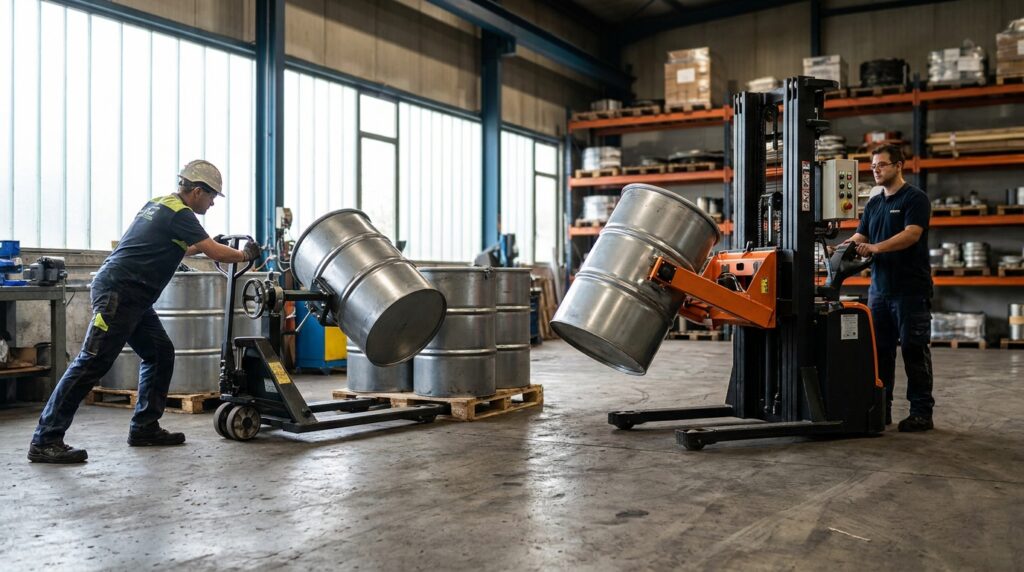
SEO Title: Manual vs. Powered Drum Rotators: A Comprehensive Guide for Industrial Buyers
Meta Description: Discover the key differences between manual and powered drum rotators. Our expert guide helps warehouse managers, plant engineers, and safety officers choose the right equipment for their needs, focusing on efficiency, safety, and cost.
Understanding the Need for Drum Rotation in Industrial Settings
In the demanding world of industrial operations, efficient and safe material handling is paramount. Drums, whether they contain liquids, powders, or viscous materials, are common sight in warehouses, manufacturing plants, and processing facilities. The process of emptying, mixing, or transferring these drums often requires them to be tipped, tilted, or fully rotated. This is where drum rotators come into play, offering specialized solutions to manage these often challenging tasks. For businesses grappling with the best way to handle their drums, a fundamental question arises: should you opt for manual drum rotators or powered drum rotators? The answer hinges on a careful evaluation of your specific operational needs, budget, workforce capabilities, and safety protocols. Understanding the benefits and drawbacks of each type of equipment is the first step towards making an informed decision that optimizes workflow, enhances safety, and reduces the risk of product loss or workplace injuries.
If you’re considering the best options for drum handling, you might find it helpful to read the article on drum handling equipment, which provides an overview of various tools and solutions available in the market. This resource complements the discussion on Manual vs. Powered Drum Rotators: Which Should You Choose? by offering insights into other equipment that can enhance your drum handling processes, ensuring you make an informed decision based on your specific needs.
Manual Drum Rotators: Simplicity, Affordability, and Control
Manual drum rotators offer a straightforward and cost-effective solution for drum handling tasks that do not demand high throughput or significant ergonomic strain. They rely on human power to initiate and control the rotation of the drum. This makes them an excellent choice for operations with lower volume requirements, intermittent use, or where budget constraints are a primary concern. The inherent simplicity of manual equipment also translates to easier operation and maintenance, often requiring minimal training for personnel.
How Manual Drum Rotators Work and Their Core Advantages
Manual drum rotators typically function through a system of levers, gears, or counterweights that allow an operator to physically tilt and rotate a drum. For instance, a drum cradle might have a long handle that an operator uses to apply leverage, gradually tipping the drum. Other designs might employ a crank mechanism that, through a series of gears, turns the drum on its axis. The primary advantage of this approach is its accessibility. They require no external power source, making them operational in any location, including areas without electricity. This independence from power grids also means lower operating costs and no risk of electrical malfunctions. Furthermore, the direct manual control allows for precise handling of the drum contents, which can be crucial for delicate materials or when very specific pouring angles are needed. The pace of work is naturally dictated by the operator, which can be beneficial in situations where speed is less critical than careful execution.
Applications Suited for Manual Drum Rotators
Manual drum rotators are ideally suited for a range of applications where the volume of drum handling is moderate. Consider a small chemical blending facility that receives raw materials in 55-gallon drums. If they only need to empty a few drums per day for mixing, a manual rotator can be an efficient and economical solution. Similarly, in a laboratory setting or a pilot plant, where precise dispensing and small batch processing are common, the fine control offered by manual rotators is invaluable. They are also a good fit for maintenance departments that might need to empty drums of waste oil or lubricants for disposal or recycling. In scenarios where the drums are relatively lightweight or the viscosity of their contents is low, manual effort is less of a strain and therefore more feasible. The initial investment for manual drum handling equipment is significantly lower than for powered alternatives, making them an attractive option for startups or businesses on a tight capital expenditure budget. For a comprehensive overview of various drum handling solutions, explore Fredon Handling’s extensive range at https://fredonhandling.com/drum-handling-equipment/.
Drum Material, Size, and Weight Considerations for Manual Units
When selecting a manual drum rotator, it’s crucial to consider the specifications of the drums it will be handling. Most manual rotators are designed to accommodate standard steel or plastic drums. The drum material itself is less of a concern for the rotator’s mechanism, but it does influence the overall weight and rigidity. Drum size is a critical factor; units are typically specified for either 55-gallon (200-liter) drums or smaller sizes like 30-gallon drums. Ensure the rotator’s clamping or securing mechanism is compatible with the diameter and height of your drums. Drum weight is perhaps the most significant consideration for manual rotators. The maximum weight capacity of the rotator dictates the heaviest drums you can safely and effectively manipulate. Operators must be able to apply sufficient force to tilt and rotate the drum without undue strain. Exceeding the weight limit not only makes the operation difficult but also poses a serious safety risk. For example, a manual rotator rated for 400 lbs will struggle with and could be damaged by a full 55-gallon steel drum of dense liquid, which can weigh upwards of 600 lbs. Always refer to the manufacturer’s specifications for the maximum load capacity.
Pros and Cons of Manual Drum Rotators
Pros:
- Cost-Effective: Lower initial purchase price compared to powered units.
- No Power Source Required: Operates anywhere, reducing infrastructure needs.
- Simple Operation: Generally intuitive and requires minimal training.
- Precise Control: Allows for fine adjustments and controlled pouring.
- Lower Maintenance: Fewer mechanical and electrical components to fail.
- Portable: Many models are lightweight and easy to move between workstations.
Cons:
- Ergonomic Strain: Can be physically demanding for operators, especially with heavy drums or frequent use.
- Slower Throughput: Operation speed is limited by human capability, impacting productivity in high-volume environments.
- Limited by Drum Weight: Not suitable for extremely heavy drums.
- Repetitive Stress Risk: Continuous manual operation can lead to cumulative trauma injuries.
- Potential for Inconsistent Operation: Performance can vary depending on operator strength and fatigue.
Powered Drum Rotators: Efficiency, Ergonomics, and High Throughput
Powered drum rotators represent a significant leap in efficiency and ergonomics, leveraging electric, pneumatic, or hydraulic power to automate the drum rotation process. These machines are designed for industrial environments where high volume, heavy payloads, and worker well-being are critical considerations. By eliminating manual effort, powered rotators drastically reduce the risk of musculoskeletal injuries and increase the speed and consistency of drum handling operations.
The Mechanics and Advantages of Powered Drum Rotation
Powered drum rotators utilize motors and hydraulic or pneumatic systems to lift, tilt, and rotate drums. Electric-powered units are common, often featuring a drive motor for rotation and a lifting mechanism (like a hoist or fork attachment) that can be integrated. Pneumatic models use compressed air, ideal for environments where sparks are a concern (e.g., hazardous areas). Hydraulic systems offer robust power for the heaviest lifting and tilting requirements. The primary advantage of powered systems is their ability to handle heavy drums with ease, significantly reducing the physical burden on operators. This translates directly to increased productivity, as tasks can be completed faster and with less operator fatigue. The automated nature of these machines also ensures consistent and repeatable results, whether it’s precise pouring or thorough mixing. For many industrial applications, the investment in powered equipment is quickly recouped through improved efficiency, reduced injury claims, and minimized product waste due to spills or improper handling.
Applications Demanding Powered Drum Rotators
Powered drum rotators are indispensable in environments that demand high throughput and consistent handling of heavy or viscous materials. Manufacturing plants that process large quantities of chemicals, food products, or pharmaceuticals often rely on these machines to efficiently empty drums into mixing vats or filling lines. In the oil and gas industry, handling drums of lubricants, additives, or even drilling mud necessitates the power and control offered by powered rotators. Pharmaceutical companies might use them for precise dispensing of ingredients or for thorough mixing of sensitive compounds, where the controlled rotation ensures homogeneity. Facilities dealing with hazardous materials also benefit immensely, as powered units can minimize direct human contact with potentially dangerous substances. Think of a large beverage bottling plant that needs to empty hundreds of syrup drums daily; a powered drum rotator integrated with a conveyor system would be essential to meet production demands. Explore the diverse range of solutions for handling various drum types at https://fredonhandling.com/drum-handling-equipment/.
Drum Material, Size, Weight, and Capacity for Powered Systems
Powered drum rotators are engineered to handle a broader spectrum of drum types and weights than their manual counterparts. They are typically designed to accommodate standard steel drums and many plastic drums, with adjustable clamping mechanisms ensuring a secure grip. Drum size compatibility is usually specified, with models designed for 55-gallon drums being most common, though specialized units can handle larger or smaller containers. The key differentiator for powered rotators is their weight capacity. These machines can often handle drums weighing 800 lbs, 1000 lbs, or even more, making them suitable for nearly any standard industrial drum. The drum material itself (e.g., steel, plastic) is generally accommodated, but the rotator’s capacity is always the limiting factor. Capacity in powered systems also extends to the duty cycle and the speed at which rotation can be performed. For instance, a powered rotator might be rated for continuous operation or for a specific number of cycles per hour. When considering viscous materials, the effective weight can increase due to the material’s resistance to movement, so it’s always prudent to select a powered rotator with a capacity significantly exceeding the nominal drum weight.
Pros and Cons of Powered Drum Rotators
Pros:
- Superior Ergonomics: Eliminates physical strain, reducing injury risk and fatigue.
- High Throughput: Significantly faster operation speeds increase productivity.
- Handles Heavy Loads: Capable of lifting and rotating the heaviest drums.
- Consistent Performance: Automated operation ensures repeatable results.
- Enhanced Safety: Minimizes operator proximity to hazardous materials and reduces spill potential.
- Versatile Applications: Suitable for mixing, dispensing, and controlled pouring.
Cons:
- Higher Initial Cost: Significant upfront investment compared to manual units.
- Requires Power Source: Needs electricity, compressed air, or hydraulic power.
- More Complex Maintenance: Involves motors, hydraulics, or pneumatics, requiring specialized servicing.
- Larger Footprint: Generally takes up more space in a facility.
- Potential for Downtime: Mechanical or electrical failures can halt operations.
Key Factors to Consider When Choosing Between Manual and Powered Drum Rotators
The decision between a manual and a powered drum rotator is not one-size-fits-all. It requires a thorough assessment of your operational landscape. By carefully evaluating several key factors, you can ensure the equipment you choose aligns perfectly with your needs, maximizing efficiency, safety, and return on investment.
Operational Volume and Frequency of Use
The sheer volume of drums you need to handle and how often you perform these tasks are primary drivers. If you process only a handful of drums per week, and these tasks are spread out, a manual rotator might suffice. However, if your operation involves emptying dozens or hundreds of drums daily, the physical strain and slower pace of manual handling will quickly become bottlenecks. For high-frequency, high-volume operations, the productivity gains and ergonomic benefits of powered drum rotators are undeniable. Consider a pharmaceutical manufacturer that needs to dispense ingredients from multiple drums into a large reactor multiple times a day. The speed and reduced effort offered by a powered rotator would be crucial for meeting production schedules and maintaining worker health. Conversely, a small workshop that occasionally needs to dispose of waste oil from a single drum might find a simple manual drum mover adequate and much more budget-friendly.
Drum Characteristics: Weight, Size, and Material
The physical attributes of the drums themselves play a crucial role. As discussed earlier, the drum weight is a critical factor. If your drums regularly exceed 400-500 lbs when full, a manual rotator is likely not a viable or safe option. Powered units excel here, capable of handling drums weighing up to 1000 lbs or more. Drum size also matters; ensure the chosen rotator accommodates your standard drum diameters and heights. Most industrial rotators are designed for 55-gallon drums, but variations exist. The drum material (steel, plastic) is usually manageable for most rotators with adjustable clamps, but always verify compatibility. For instance, a facility handling volatile solvents in steel drums might prioritize a powered rotator with spark-resistant features and robust containment.
Ergonomics and Worker Safety
Worker safety and well-being should always be at the forefront of any equipment decision. Manual drum rotators, while simpler, can expose operators to significant ergonomic risks, including back strain, shoulder injuries, and repetitive stress disorders, especially when handling heavy drums or performing tasks frequently. Powered drum rotators dramatically reduce these risks by automating the strenuous aspects of drum handling. This not only protects your workforce but also leads to fewer lost workdays and lower insurance premiums. A plant engineer assessing equipment needs would look at the potential for injury. If manual handling is a known risk factor in their facility, investing in powered equipment is a proactive safety measure. Safety managers will often advocate for powered solutions to create a safer working environment, especially when dealing with potentially hazardous contents.
Budget and Return on Investment (ROI)
The initial capital expenditure is a significant consideration. Manual drum rotators are considerably less expensive upfront. However, it’s crucial to look beyond the purchase price and consider the total cost of ownership and the potential return on investment. For high-volume operations, the productivity increases, reduced injury claims, and minimized product loss associated with powered drum rotators can lead to a substantial ROI, often justifying the higher initial cost. A warehouse manager might conduct an ROI analysis, comparing the cost of a manual rotator plus potential worker compensation claims against the upfront cost of a powered rotator and its operational expenses. This analysis will reveal which option offers the best long-term economic benefit. Explore various cost-effective solutions on Fredon Handling’s dedicated page: https://fredonhandling.com/drum-handling-equipment/.
Environmental and Hazardous Area Considerations
The nature of the materials being handled can influence your choice. If you are working with flammable liquids, volatile chemicals, or in environments where static electricity is a concern (e.g., petrochemical plants, solvent storage), the power source becomes a critical factor. Pneumatically powered drum rotators are often preferred in these hazardous locations as they do not generate sparks. Electrically powered units must be rated for hazardous environments (e.g., explosion-proof). Manual rotators, by their nature, pose no ignition risk from their operation, but the risk of spills due to operator error remains. A safety manager in a paint manufacturing facility, for example, would carefully consider the spark potential of any equipment used around solvent-based paints.
When considering the best options for drum handling, it’s essential to weigh the benefits of manual versus powered drum rotators. For a deeper understanding of the broader context of material handling, you might find this article on material handling particularly insightful. It explores various techniques and equipment that can enhance efficiency and safety in your operations, helping you make a more informed decision about which drum rotator suits your needs best.
Equipment Comparisons and Fredon Handling Solutions
When evaluating drum rotators, understanding the nuances between different types and how Fredon Handling can meet your needs is essential. Fredon Handling offers a comprehensive range of drum handling equipment designed to cater to diverse industrial requirements, from simple manual solutions to robust powered systems.
Comparing Manual Drum Rotators: Cradles vs. Grasping Mechanisms
Manual drum rotators generally fall into two main categories: drum cradles and those with grasping mechanisms. Drum cradles typically involve placing a drum into a U-shaped frame or a rotating cage. The operator then uses a lever or handle to tilt and rotate the drum within this frame. These are excellent for simple emptying and pouring. Grasping mechanisms, while still manual, might involve a wheel and handle system that grips the drum rim or body and allows for rotation. Fredon Handling offers a variety of manual drum lifters and positioners that fall into these categories, providing straightforward solutions for basic drum manipulation. These are ideal for lighter drums and less frequent use, offering immediate operational benefit with minimal investment.
Comparing Powered Drum Rotators: Electric, Pneumatic, and Hydraulic
Powered drum rotators vary significantly based on their power source and mechanism:
- Electric Powered Drum Rotators: These are the most common type, offering a balance of power, control, and availability of electrical infrastructure. They often feature adjustable speed controls and robust motors. Fredon Handling provides electric drum rotators that integrate seamlessly into existing workflows, offering efficient and safe drum emptying and mixing capabilities.
- Pneumatic Drum Rotators: Powered by compressed air, these are ideal for hazardous environments where sparks are a risk. They are often found in the chemical, pharmaceutical, and food processing industries. Their design is inherently safe in explosive atmospheres.
- Hydraulic Drum Rotators: These systems utilize hydraulic power for maximum lifting and tilting force, making them suitable for the heaviest drums and applications requiring immense torque. They are often integrated into larger material handling systems.
Fredon Handling can assist in selecting the right powered option based on your specific power availability, hazardous area classifications, and the weight of the drums you need to handle.
Fredon Handling’s Range of Drum Handling Equipment
Fredon Handling is a trusted supplier of industrial material handling equipment, including a wide selection of drum handling solutions. Whether you require a simple manual drum truck for basic transport, a robust manual drum rotator for occasional emptying, or a high-capacity electric drum rotator for continuous production, Fredon Handling has options to suit your needs. Their expertise extends to providing equipment that enhances safety, boosts productivity, and minimizes the physical strain on your workforce. You can explore their comprehensive offerings, including drum lifters, dollies, rotators, and tippers, at https://fredonhandling.com/drum-handling-equipment/.
Safety Considerations and Maintenance Best Practices
Regardless of whether you choose manual or powered drum rotators, safety and proper maintenance are non-negotiable. Implementing strict protocols and adhering to best practices will ensure the longevity of your equipment and, more importantly, the safety of your personnel.
Safety Protocols for Operating Drum Rotators
- Training: Ensure all operators receive thorough training on the specific equipment they will be using, including safe operating procedures, emergency stops, and hazard identification.
- Personal Protective Equipment (PPE): Operators should always wear appropriate PPE, including safety glasses, gloves, steel-toed boots, and any other specialized gear required for the materials being handled.
- Pre-Operation Checks: Before each use, conduct a visual inspection of the equipment for any signs of damage, wear, or malfunction. For powered units, check fluid levels and electrical connections.
- Clear Work Area: Ensure the area around the drum rotator is clear of obstructions, personnel, and potential slip or trip hazards.
- Secure Drum: Always ensure the drum is securely clamped or cradled within the rotator before initiating any movement.
- Controlled Movement: Operate the equipment smoothly and deliberately, avoiding sudden starts, stops, or jerky movements.
- Weight Limits: Never exceed the manufacturer’s stated weight capacity of the drum rotator.
- Awareness of Surroundings: Operators must be constantly aware of their surroundings, including other workers, moving equipment, and overhead obstacles.
- Emergency Procedures: All personnel should be familiar with emergency shutdown procedures and spill response protocols.
Routine Maintenance for Longevity and Reliability
Regular maintenance is crucial for keeping your drum rotators in optimal working condition and preventing unexpected failures.
- Manual Rotators:
- Lubrication: Periodically lubricate pivot points, gears, and bearings to ensure smooth operation.
- Inspection: Check for worn or damaged components, such as handles, chains, or clamps, and replace them as needed.
- Cleaning: Keep the equipment clean and free from debris that could impede movement.
- Powered Rotators:
- Scheduled Inspections: Follow the manufacturer’s recommended maintenance schedule for detailed inspections of electrical, hydraulic, or pneumatic systems.
- Fluid Checks: For hydraulic units, regularly check fluid levels and quality, and change filters as recommended.
- Electrical Checks: Inspect wiring, connections, and control panels for any signs of damage or wear.
- Lubrication: Ensure all moving parts, motors, and gearboxes are properly lubricated according to specifications.
- Hose and Seal Integrity: For hydraulic and pneumatic systems, inspect hoses and seals for leaks or wear, and replace them proactively.
- Calibration: Periodically check and calibrate any load cells or control systems to ensure accuracy.
Adhering to these maintenance schedules will significantly extend the lifespan of your equipment and minimize the risk of costly breakdowns and safety incidents.
Frequently Asked Questions About Drum Rotators
Q1: What is the primary difference between manual and powered drum rotators?
The primary difference lies in the power source. Manual rotators rely on human effort to move and rotate drums, while powered rotators use electric, pneumatic, or hydraulic systems to automate these tasks. This difference significantly impacts factors like operational speed, ergonomics, and the weight of drums that can be handled.
Q2: How do I determine the correct weight capacity for a drum rotator?
You must know the maximum weight of the drums you will be handling. Always select a rotator with a capacity that comfortably exceeds the weight of your heaviest full drum, including the weight of the drum itself and its contents. It’s advisable to have a safety margin.
Q3: Can drum rotators handle plastic drums as well as steel drums?
Most industrial drum rotators are designed with adjustable clamping mechanisms that can accommodate both standard steel and plastic drums. However, it’s essential to verify the specific drum diameter and height compatibility with the rotator model you are considering.
Q4: Are powered drum rotators safe for use in hazardous areas?
For hazardous areas where flammable materials or explosive atmospheres are present, it is crucial to use appropriately rated equipment. Pneumatically powered drum rotators are often the safest choice as they do not generate sparks. Electrically powered units must be specifically designed and certified for hazardous environments (e.g., explosion-proof). Always consult the equipment specifications and relevant safety standards.
Q5: What kind of maintenance do manual drum rotators require?
Manual drum rotators generally require less maintenance than powered units. Key maintenance tasks include periodic lubrication of moving parts, visual inspections for wear and tear on components like handles or clamps, and regular cleaning to remove debris. Prompt replacement of any worn or damaged parts is essential.
Choosing the right drum rotator is a critical decision for any industrial operation. Whether the simplicity and cost-effectiveness of a manual unit or the efficiency and ergonomic benefits of a powered system are right for your facility, Fredon Handling has the expertise and product range to support your needs.
Ready to optimize your drum handling operations? Contact Fredon Handling today for a personalized consultation. Our experts will help you assess your specific requirements and recommend the ideal manual or powered drum rotator solution to enhance your efficiency, safety, and productivity. Let us help you find the perfect fit for your industrial challenges.