
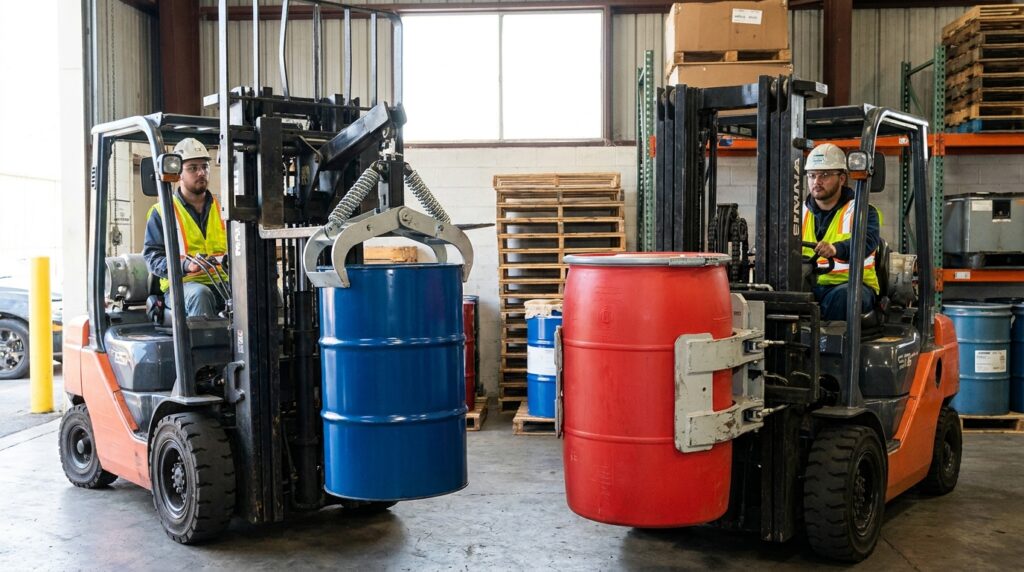
SEO Title: Drum Grabbers vs. Drum Clamps: Expert Guide to Choosing the Right Drum Handling Equipment
Meta Description: Warehouse managers, engineers, and buyers: Discover the key differences between drum grabbers and drum clamps. Learn which industrial drum handling equipment best suits your needs for safety, efficiency, and cost-effectiveness. Explore applications, selection factors, and maintenance tips.
Understanding Drum Handling Equipment: Grabbers vs. Clamps
In the bustling environment of warehouses, manufacturing plants, and chemical processing facilities, the safe and efficient handling of drums is paramount. Drums, whether they contain raw materials, finished goods, or hazardous substances, present unique challenges. Their cylindrical shape, often considerable weight, and sometimes volatile contents necessitate specialized equipment. Two of the most common and effective solutions for this task are drum grabbers and drum clamps. While both serve the primary purpose of lifting and moving drums, their operational mechanisms, applications, and suitability for different scenarios vary significantly. Making the right choice between a drum grabber and a drum clamp can dramatically impact operational efficiency, employee safety, and the overall integrity of your inventory. This comprehensive guide will delve deep into the nuances of each type of equipment, helping warehouse managers, plant engineers, safety managers, and industrial equipment buyers make an informed decision. We will explore their core functionalities, examine their advantages and disadvantages, discuss critical selection factors, and provide insights into their applications and maintenance.
When considering the best options for handling drums, it’s essential to understand the various types of material handling equipment available. For a deeper insight into the essential tools that can enhance efficiency in your operations, you might find the article on types of material handling equipment helpful. It provides a comprehensive overview of different tools, including drum grabbers and clamps, and how they can impact your workflow. You can read more about it here: Types of Material Handling Equipment: Essential Tools for Efficiency.
How Drum Grabbers Work: Versatility in Action
Drum grabbers are a popular choice for their versatility and ease of use. Their fundamental design relies on a gripping mechanism that encircles the drum, typically around its circumference, to secure it for lifting. This mechanism can vary, but the principle remains the same: external pressure is applied to the drum’s body to create a stable hold.
The Mechanism of a Drum Grabber
The most common type of drum grabber utilizes an overhead frame with a series of jaws or arms that extend outwards and then inwards to embrace the drum. As the grabber is lowered onto a drum, the jaws automatically adjust to the drum’s diameter. Once the drum is snugly enclosed, the grabber’s locking mechanism engages, ensuring a secure grip. Some models feature a spring-loaded system that maintains tension on the jaws, providing a constant and reliable hold. Others employ a more active clamping mechanism that requires manual engagement. The design often includes rubber or polyurethane lining on the gripping surfaces to prevent damage to the drum’s exterior.
Key Features and Benefits of Drum Grabbers
- Ease of Use: Drum grabbers are generally straightforward to operate. They can often be attached and detached from a drum quickly, minimizing the time spent on each handling cycle.
- Versatility in Drum Types: Many drum grabbers are designed to accommodate a wide range of drum sizes and materials, including steel, plastic, and fiber drums. This adaptability makes them suitable for facilities that handle diverse drum inventories.
- Hands-Free Operation: Once secured, the grabber holds the drum, allowing operators to manage other tasks or focus on the movement itself without needing to maintain a physical grip.
- Reduced Risk of Drum Damage: With proper padding and careful design, drum grabbers are less likely to puncture or deform the drum compared to some other handling methods.
- Good for Stacking and Transport: Their secure grip makes them effective for lifting drums for stacking in warehouses or for maneuvering them onto transport vehicles.
Potential Limitations of Drum Grabbers
While highly effective, drum grabbers do have some limitations to consider:
- Grip Strength Variation: The holding strength of a drum grabber can be influenced by the drum’s material and surface condition. Smooth or slippery drums might pose a challenge for some grabber designs.
- Drum Circumference Requirement: Grabbers are designed for specific drum circumference ranges. While many are adjustable, a facility handling extremely small or exceptionally large drums might require specialized grabber models.
- Potential for Drum Deformation (Extreme Cases): In rare instances, if a grabber is overtightened or used on a particularly thin-walled drum, there’s a slight risk of minor deformation.
Common Applications for Drum Grabbers
Drum grabbers are widely employed across various industries:
- General Warehousing: Moving drums of finished goods, raw materials, or packaging supplies.
- Chemical and Pharmaceutical Industries: Handling drums of chemicals, solvents, and pharmaceutical ingredients, provided the drums are compatible.
- Food and Beverage Sector: Transporting drums of syrups, oils, and other food-grade ingredients.
- Manufacturing Plants: Moving drums of lubricants, coolants, and waste materials.
- Logistics and Distribution Centers: Efficiently loading and unloading trucks and containers.
Explore Fredon Handling’s range of drum grabbers at https://fredonhandling.com/drum-handling-equipment/drum-grabbers/.
How Drum Clamps Work: Precision and Secure Gripping
Drum clamps operate on a different principle, employing a clamping force that usually engages with the drum’s rim or chimes. Instead of encircling the entire drum body, drum clamps typically grip the reinforced upper or lower edge of the drum, offering a very secure and stable hold.
The Mechanism of a Drum Clamps
The defining characteristic of a drum clamp is its interaction with the drum’s rim. The clamp features one or more opposing jaws that are designed to fit over and grip the lip or chime of the drum. As the clamp is positioned over the drum and engaged, these jaws exert a strong inward force, creating a vice-like grip. This mechanism is particularly effective for steel drums with pronounced rims. Many advanced drum clamp designs also incorporate a mechanism to secure the drum’s body itself, preventing it from sliding or tipping once the rim is clamped. This often involves a secondary set of grippers or a stabilizing arm.
Key Features and Benefits of Drum Clamps
- Superior Grip Security: The clamping action on the rim provides an exceptionally strong and reliable hold, often considered more secure than general body grabbing, especially for heavier or more challenging drums.
- Reduced Risk of Drum Damage to Body: By focusing grip on the rim, drum clamps typically avoid direct pressure on the drum’s body, minimizing the risk of dents, punctures, or damage to labels or printed information.
- Excellent for Stacking: The secure, rim-based grip makes drum clamps ideal for precise stacking and unstacking of drums in vertical storage configurations.
- Handling Heavier Drums: Due to the robust nature of their grip, drum clamps are often preferred for handling heavier loads.
- Less Affected by Drum Surface: The grip is less dependent on the drum’s surface material or condition, making them effective even on drums with slick exteriors.
Potential Limitations of Drum Clamps
- Drum Rim Requirement: Drum clamps are most effective on drums with well-defined rims or chimes. Drums that lack a prominent rim, such as some specialized plastic drums, may not be compatible.
- Less Versatile for Mixed Drum Types: If your operation frequently handles a wide variety of drum types with different rim designs, a single drum clamp might not be universally compatible.
- Can Require More Precise Positioning: Aligning the clamp jaws with the drum rim can sometimes require more careful positioning than simply lowering a grabber over the drum.
- Potential for Rim Damage (If Misused): While generally safe, improper use or excessive force could potentially cause minor deformation of the drum’s rim.
Common Applications for Drum Clamps
Drum clamps are indispensable in environments where secure and precise drum handling is critical:
- High-Volume Warehousing: Efficiently moving and stacking large quantities of drums.
- Chemical Manufacturing: Handling drums of hazardous chemicals where a secure grip is paramount.
- Oil and Gas Industry: Moving drums of lubricants, fuels, and other petrochemicals.
- Metal Processing: Handling drums of oils, degreasers, and finished metal products.
- Environments Requiring Precise Stacking: Facilities that utilize narrow aisles or high-density racking systems benefit from the stability offered by drum clamps.
Discover Fredon Handling’s robust drum clamp solutions at https://fredonhandling.com/drum-handling-equipment/drum-clamps/.
Drum Material, Size, Weight, and Capacity: Crucial Considerations
When selecting between drum grabbers and drum clamps, understanding the specifications of the drums themselves is non-negotiable. This includes their material composition, dimensions, and the weight they typically carry, as well as the equipment’s rated capacity.
Drum Material
- Steel Drums: These are robust and common. Both grabbers and clamps can be effective, though clamps often have an advantage in grip security due to the rim’s integrity.
- Plastic Drums (HDPE): Lighter and often used for less hazardous materials. Grabbers can be very suitable, but the grip must be adjusted to avoid crushing the plastic. Clamps might not be ideal if the plastic rim is not sufficiently rigid.
- Fiber Drums: Typically used for solids. Their construction is less rigid, making them more susceptible to deformation. Grabbers designed for lighter duty and flexible enough to conform might be preferred over clamps that rely on rigid rim contact.
Drum Size and Diameter
Drums come in various standard sizes, with common diameters including 55-gallon (approximately 23.5 inches or 59.7 cm) and 30-gallon (approximately 17.5 inches or 44.4 cm) drums.
- Grabbers: Many grabbers are adjustable and designed to accommodate a range of diameters within a specified range. Always check the product specifications for the minimum and maximum drum diameters supported.
- Clamps: While some clamps are adjustable, their effectiveness is tied to the drum’s rim. Ensure the clamp is designed for the specific diameter and rim style of your drums.
Drum Weight and Equipment Capacity
This is arguably the most critical factor. Drums can weigh from a few pounds to over 1,000 pounds (453 kg) when full.
- Rated Capacity: Both drum grabbers and drum clamps have a maximum rated lifting capacity. This is the absolute maximum weight the equipment can safely handle. Exceeding this capacity is extremely dangerous and can lead to catastrophic failure.
- Working Load Limit (WLL): Always refer to the WLL, which is typically a fraction of the breaking strength, ensuring a significant safety margin.
- Material Compatibility: Consider if the equipment is designed to handle the specific weight of your drums. For instance, a lightweight plastic drum weighing 50 lbs will require less robust equipment than a steel drum of hazardous chemicals weighing 500 lbs.
- Forklift Attachments: If you are using a forklift attachment, the combined weight of the attachment, the drum, and the load must be within the forklift’s rated capacity.
Drum Capacity (Volume)
While the equipment is rated by weight, the volume (e.g., gallons) influences the overall size and therefore the potential weight of the drum. A 55-gallon drum filled with a dense chemical will be significantly heavier than a 55-gallon drum filled with a lighter substance.
Fredon Handling offers a wide array of drum handling equipment with varying capacities. Visit https://fredonhandling.com/drum-handling-equipment/ to find the right fit for your operational needs.
When considering the best options for securing your drums, you might also find it helpful to explore the advantages and disadvantages of different lifting equipment. A related article that delves into various types of drum handling solutions can provide valuable insights. For more information, check out this informative piece on drum handling equipment to enhance your understanding of how to choose the right tools for your needs.
Equipment Compatibility and Integration: Seamless Operations
The choice between a drum grabber and a drum clamp is also influenced by the existing material handling infrastructure and the types of lifting devices used in your facility.
Forklift Attachments
Many drum grabbers and drum clamps are designed as attachments for forklifts.
- Forklift Drum Clamps/Grabbers: These are specialized attachments that mount directly onto a forklift’s forks or carriage. They offer the advantage of integrating drum handling into existing forklift operations, allowing operators to pick up, move, and place drums without leaving the forklift.
- Compatibility: Ensure the attachment’s mounting style (e.g., single-point, dual-point, walk-behind forklift compatible) is compatible with your forklifts. Also, verify that the forklift’s hydraulic system can power the attachment if required.
Hoists and Cranes
In some environments, drums are handled by overhead hoists or cranes.
- Sling-type Grabbers: Some drum grabbers are designed to be suspended from a hoist or crane hook. These are common in areas where forklifts may not have access or where precise overhead movement is needed.
- Attachment Points: The lifting device must have appropriate attachment points for the drum grabber or clamp.
Pallet Racking and Storage Systems
The type of storage system impacts how drums are handled.
- Stacking: As mentioned, clamps often excel at precise stacking due to their secure rim grip.
- Aisle Width: The maneuverability required for placing drums in narrow aisles might favor equipment that offers precise control.
Drum Palletizers and Depalletizers
For automated systems, specialized drum handling equipment, which may incorporate grabber or clamp technology, is used.
- Integration with Automation: If you are looking to automate drum handling, consult with Fredon Handling about integrated solutions that can interface with your existing or planned automation systems.
Other Material Handling Equipment
Consider how the drum handling equipment will interact with other machinery, such as conveyors or filling machines. The chosen equipment should facilitate smooth transitions between different stages of the material handling process.
When considering the best options for securing your drums, it’s essential to explore various tools and techniques that can enhance efficiency and safety in your operations. A related article that delves deeper into the nuances of drum handling equipment is available for those interested in learning more about the advantages and disadvantages of different methods. You can find valuable insights and guidance by visiting this link, which provides additional resources to help you make an informed decision.
Safety First: Minimizing Risks with Drum Handling Equipment
Safety is paramount when dealing with drums, especially those containing hazardous materials. The right drum handling equipment plays a crucial role in mitigating risks.
Preventing Drops and Spills
- Secure Grip: Both grabbers and clamps, when used correctly and appropriate for the drum type, provide a secure grip that drastically reduces the risk of accidental drops.
- Material Integrity: Choosing equipment that doesn’t damage the drum is vital. A punctured or compromised drum is a recipe for a spill.
- Operator Training: Comprehensive training on the operation of the specific drum grabber or clamp is essential. Operators must understand weight limits, proper engagement techniques, and emergency procedures.
Ergonomic Benefits and Reducing Strain
- Minimizing Manual Lifting: Drum handling equipment eliminates the need for manual lifting, which is a major cause of musculoskeletal injuries.
- Reduced Fatigue: Automating the lifting and moving process reduces operator fatigue, leading to fewer errors and a safer work environment.
Handling Hazardous Materials
- Containment: For hazardous materials, the integrity of the drum and the security of the handling equipment are critical for preventing leaks and spills.
- Specialized Equipment: In some cases, specialized drum grabbers or clamps designed for specific types of hazardous materials or containers might be necessary. Always consult safety data sheets (SDS) for the materials you are handling.
- Explosion-Proof Options: For environments with flammable vapors, explosion-proof versions of drum handling equipment may be required.
Routine Inspections and Maintenance
- Regular Checks: Implement a schedule for daily and weekly inspections of all drum handling equipment. Look for signs of wear, damage, or potential failure in cables, chains, jaws, and locking mechanisms.
- Preventive Maintenance: Follow the manufacturer’s recommendations for lubrication, adjustments, and part replacements. Proactive maintenance prevents unexpected breakdowns and safety hazards.
- Record Keeping: Maintain detailed records of all inspections, maintenance, and repairs.
Fredon Handling prioritizes safety in all its product designs. For more information on safety best practices and equipment selection, contact our expert team.
Maintenance and Longevity: Keeping Your Equipment in Top Shape
Investing in quality drum handling equipment is only the first step. Proper maintenance ensures its longevity, reliability, and continued safe operation.
Daily Checks
Before each shift, operators should perform a quick visual inspection:
- Cleanliness: Remove any debris or residue from the gripping mechanisms.
- Moving Parts: Ensure all moving parts operate smoothly and without binding.
- Pads and Linings: Check rubber or polyurethane pads for wear or damage. Damaged pads can reduce grip or scratch drums.
- Structural Integrity: Look for any visible cracks, dents, or loose bolts on the frame and jaws.
Weekly Inspections
A more thorough inspection should be conducted weekly:
- Lubrication: Lubricate pivot points and any moving parts as recommended by the manufacturer.
- Fasteners: Tighten any loose bolts or nuts.
- Hydraulic/Pneumatic Systems (if applicable): Check for leaks in hoses and connections. Ensure pressure gauges are reading correctly.
- Operation Test: Test the gripping and release mechanisms through a full cycle.
Periodic Maintenance
Manufacturers typically recommend periodic maintenance, which may include:
- Replacement of Wear Parts: This includes grips, pads, seals, and sometimes even entire jaw assemblies if they show significant wear.
- Calibration: For equipment with pressure sensors or load cells, periodic calibration might be necessary to ensure accuracy.
- Professional Servicing: For complex hydraulic or automated systems, consider scheduling professional servicing by qualified technicians.
Storage
- Clean and Dry Environment: When not in use, store drum handling equipment in a clean, dry area, protected from the elements.
- Positioning: Store the equipment in a way that prevents damage to its delicate parts.
Repair vs. Replacement
- Assess Damage: If a piece of equipment is damaged, assess the extent of the damage and the cost of repair.
- Cost-Benefit Analysis: Sometimes, the cost of significant repairs can approach the cost of a new unit, especially when factoring in potential downtime.
- Safety Criticality: For safety-critical components, replacement might be the only acceptable option, even if repair is technically possible.
By adhering to a strict maintenance schedule, you can maximize the lifespan of your drum grabbers and drum clamps, ensuring they continue to operate efficiently and safely for years to come.
Making the Right Choice: Drum Grabbers vs. Drum Clamps
Deciding between a drum grabber and a drum clamp isn’t always a clear-cut choice and often depends on a detailed analysis of your specific operational needs.
Key Decision Factors Summarized
- Drum Type and Rim: Do your drums have prominent rims (favoring clamps) or are they mostly rimless plastic drums (favoring grabbers)?
- Weight and Material of Drums: For heavier loads, clamps often provide a more secure grip. For lighter, less rigid drums, a well-designed grabber might be more suitable.
- Stacking Requirements: If precise, high stacking is a priority, the secure rim grip of clamps can be advantageous.
- Frequency of Drum Type Changes: If you handle a wide variety of drum sizes and types frequently, a versatile, adjustable grabber might offer more flexibility.
- Existing Infrastructure: How will the equipment integrate with your forklifts, cranes, or other material handling systems?
- Safety Considerations: For highly hazardous materials, the absolute security of a clamp might be preferred, assuming rim compatibility.
- Budget: While initial costs can vary, consider the long-term operational efficiency and maintenance costs.
When to Choose a Drum Grabber:
- You handle a variety of drum types, including plastic and fiber drums, without prominent rims.
- Ease of use and quick attachment/detachment are high priorities.
- You need a general-purpose solution for moving drums in various settings.
- Damage to the drum’s body is a significant concern, and the grabber’s design offers good protection.
When to Choose a Drum Clamp:
- You primarily handle steel drums with robust rims.
- Maximum grip security and stability, especially for heavy drums, are essential.
- Precise and high stacking of drums is a core operational requirement.
- Minimizing the risk of drum slippage or tipping is paramount.
Ultimately, the best approach is to conduct a thorough site assessment and consult with experts. Fredon Handling has a team of specialists ready to help you evaluate your needs and recommend the most appropriate drum handling solution.
Frequently Asked Questions About Drum Handling Equipment
Q1: Can a drum grabber damage a plastic drum?
While designed to minimize damage, improper use or overtightening of a drum grabber on a thin-walled plastic drum could potentially lead to deformation. It’s crucial to select a grabber designed for plastic drums and to ensure its grip is adjusted appropriately.
Q2: Are drum clamps suitable for 55-gallon steel drums?
Yes, drum clamps are exceptionally well-suited for 55-gallon steel drums, as they typically have strong, well-defined rims that the clamp can grip securely. This is one of their primary applications.
Q3: What is the difference in capacity between drum grabbers and drum clamps?
Capacity is not inherently tied to whether a device is a grabber or a clamp. Both types of equipment are manufactured with varying weight capacities. You must always check the specified Working Load Limit (WLL) of the individual unit, regardless of its mechanism.
Q4: How often should I inspect my drum handling equipment?
Daily visual checks by operators are recommended before use. A more thorough inspection, including lubrication and checking for wear, should be performed weekly. Refer to the manufacturer’s manual for specific recommended maintenance schedules.
Q5: Can I use a drum grabber or clamp on drums containing hazardous materials?
Yes, but with extreme caution. The compatibility depends on the drum’s integrity and the specific hazardous material. Ensure the equipment provides a secure hold to prevent spills, and always follow all safety protocols, including consulting the material’s Safety Data Sheet (SDS). For some hazardous materials, specialized containment and handling equipment might be required.
Conclusion: Partnering with Fredon Handling for Your Drum Handling Needs
Choosing the right drum handling equipment – whether it’s a versatile drum grabber or a secure drum clamp – is a critical decision that impacts safety, efficiency, and operational costs. By understanding the distinct mechanisms, benefits, limitations, and application-specific advantages of each, you can make an informed choice that aligns perfectly with your facility’s unique requirements.
At Fredon Handling, we are committed to providing industrial solutions that enhance productivity and ensure the safety of your workforce. Our extensive range of drum handling equipment, including a variety of high-quality drum grabbers and robust drum clamps, is designed to meet the diverse needs of modern industrial operations.
Don’t leave your drum handling challenges to chance. Contact Fredon Handling today for a personalized consultation. Our expert team will help you assess your specific needs, explore the best equipment options, and ensure you find the ideal solution for safe, efficient, and reliable drum management.